
Canned Tuna Supplier
for Australia
Top Tide Canning is a B2B canned tuna exporter supplying Woolworths and Coles private label programmes, ALDI Australia, Metcash/IGA, and food service distributors Bidfood and PFD across Australia. Every shipment includes FSANZ Food Standards Code compliant labelling, CoOL-ready artwork with the gold triangle logo and proportion bar chart, DAFF IFIS biosecurity documentation, FSSC 22000 food safety certification, and Dolphin-Safe IMMP and DPCIA credentials. We deliver CIF Sydney, Melbourne, and Brisbane.
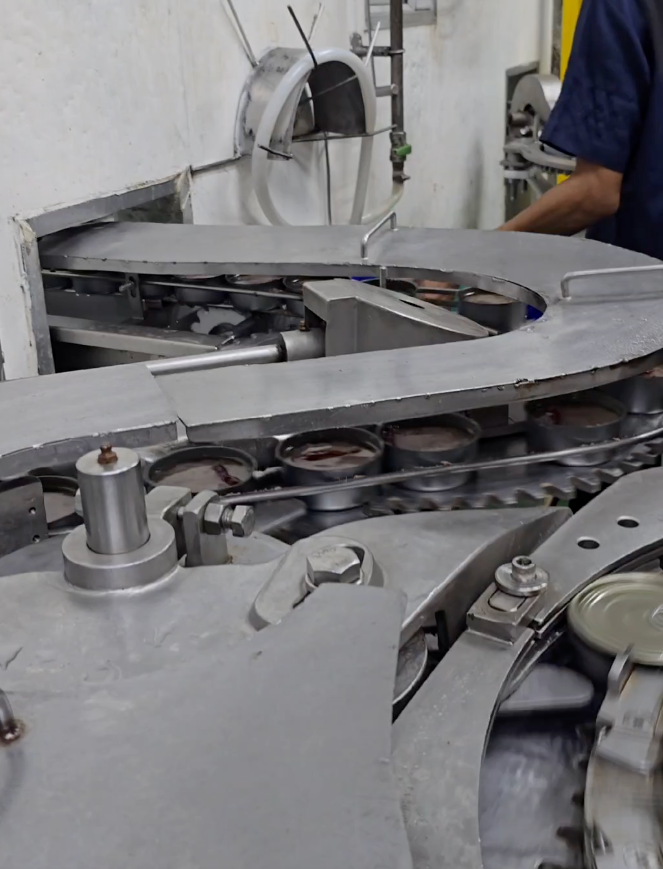
Australia: High-Income, Sustainability-First, and Dominated by the Woolworths–Coles Duopoly
Australia is one of the world’s most demanding export markets for canned tuna — combining a $65,000+ GDP per capita, a retail sector controlled by two supermarket chains, and the planet’s most stringent Country of Origin Labelling system. Woolworths and Coles together hold over 65% of national grocery revenue, making their private label programmes the primary commercial entry point for any foreign canned tuna manufacturer. Australian consumers rank among the highest globally for sustainability awareness — Dolphin-Safe certification is a non-negotiable minimum, and NGO campaigns by CHOICE Australia and the Australian Marine Conservation Society actively shape buyer purchasing decisions.
Australia’s Grocery Duopoly and the Private Label Opportunity
Woolworths Group and Coles Group between them generate approximately $90 billion AUD in annual grocery revenue and run large private label programmes — ‘Woolworths’ and ‘Woolworths Essentials’; ‘Coles’ branded — where own-brand accounts for roughly 30% of canned goods range. Both retailers run annual tender cycles open to FSSC 22000-certified manufacturers from Southeast Asia. ALDI Australia, on a hard-discount model, adds a third private label sourcing stream through its Hofer International procurement structure.
- Woolworths private label — WQA supplier qualification
- Coles private label — CQA programme
- ALDI Australia — Hofer buying office
- Annual tender cycles · Volume commitments
1,600+ Independent Stores via Metcash — Australia’s Alternative Entry Channel
Metcash Limited distributes to approximately 1,600 IGA-branded supermarkets plus Foodland (South Australia) and various unaffiliated independents from national DCs in every state capital. Metcash’s central buying team manages both branded and ‘IGA Brand’ / ‘Black & Gold’ private label canned goods — an accessible first-entry channel for international suppliers before engaging the Woolworths/Coles tender process. Drakes Supermarkets (60+ stores, SA and QLD) sources directly, outside the Metcash network.
- Metcash central buying — IGA & Black & Gold
- Foodland SA / Drakes SA & Qld
- Accessible onboarding vs Woolworths/Coles
- National DC network — every state capital
Dolphin-Safe, MSC, and ACCC-Enforced Environmental Claims
Both Woolworths and Coles mandate Dolphin-Safe certification (DPCIA/IMMP) as a condition of canned tuna supply — without it, product will not be listed. The ACCC actively enforces the Competition and Consumer Act 2010 against misleading sustainability claims, with penalties up to $250,000 per corporation for false environmental statements. Premium buyers (Harris Farm Markets, Amazon Australia health food sellers) additionally value MSC certification or pole-and-line designations. Top Tide Canning holds both IMMP and DPCIA Dolphin-Safe certifications with batch-level verification.
- DPCIA Dolphin-Safe — ACCC-endorsed
- IMMP Dolphin-Safe certification
- MSC certification available on request
- ACCC $250K max penalty for false claims
Six Australian Compliance Requirements Every Canned Tuna Importer Must Satisfy
Australia’s import framework combines FSANZ food standards, the unique CoOL origin labelling law, DAFF biosecurity inspection, and major retailer private label qualification requirements. No pre-market registration is required — but every layer demands specific documentation prepared before engaging Australian buyers.
FSANZ (Food Standards Australia New Zealand) administers the Australia New Zealand Food Standards Code — the joint AU/NZ regulatory instrument governing all food sold in Australia. For canned tuna, the key standards are Standard 1.2.8 (Nutrition Information Panel), Standard 1.4.1 (contaminant limits including mercury at 1.0 mg/kg), and Standard 2.2.3 (fish and fish products). Australia does not require pre-market product registration for imported canned tuna — enforcement is post-market by state food authorities and the ACCC.
No pre-market registration. CODEX-aligned CoA with ISO 17025 accreditation covers all FSANZ contaminant limits.
Australia’s CoOL system under the Competition and Consumer Act 2010 is the world’s most detailed food origin disclosure framework. Every retail package must carry: (1) a text origin statement; (2) a gold triangle logo for imported goods; (3) a quantified proportion bar chart showing % Australian ingredients. For fully imported canned tuna, the bar displays 0% Australian content. The ACCC enforces CoOL with fines up to $250,000 per corporation.
CoOL artwork must be finalised before production. ACCC enforcement is active — add 4–8 weeks to first-shipment timeline for label approval.
DAFF’s Imported Food Inspection Scheme (IFIS) under the Biosecurity Act 2015 classifies canned tuna from SE Asia as a Surveillance Food — subject to random (not mandatory) documentary or physical inspection. The IFIS risk engine rewards suppliers with FSSC 22000 certification and a clean inspection history by reducing their inspection frequency over time. All import declarations are filed through the Integrated Cargo System (ICS) by a licensed Australian customs broker.
Full documentation — FSSC 22000, ISO 17025 CoA, Dolphin-Safe, CoO — dramatically reduces hold likelihood at first entry.
Australia has eliminated tariffs on canned tuna (HS 1604.14) under the ASEAN-Australia-New Zealand Free Trade Agreement (AANZFTA) — covering Indonesian, Thai, Vietnamese, and Philippine origins. The general MFN tariff is also 0% for most manufactured food imports. Canned fish is GST-free under Division 38 of the GST Act — Australia’s 10% general Goods and Services Tax does not apply to basic foods. Zero duty + zero GST produces the cleanest cost model of any major Anglophone export market.
No tariff barrier for SE Asian origin canned tuna. Confirm FTA preference origin at time of commercial invoice and certificate of origin.
Woolworths Quality Assurance (WQA) and Coles Quality Assurance (CQA) programmes require: FSSC 22000 or BRCGS certification; Dolphin-Safe (DPCIA or IMMP); factory audit by an approved third-party auditor (SGS, Bureau Veritas, NSF); NATA-equivalent NIP verification; and CoOL-ready label artwork pre-approved by the retailer. Both retailers manage supplier qualification through digital portals — Woolworths Supplier Extranet and Coles Supplier Portal. The full qualification cycle typically takes 6–18 months from first contact to purchase order.
Onboarding to private label typically takes 6–18 months. Metcash/IGA is faster — a better first-entry channel for smaller initial volumes.
FSANZ Standard 1.4.1 sets a 1.0 mg/kg total mercury limit for canned fish — matching CODEX STAN 193-1995. Skipjack tuna (Katsuwonus pelamis), the primary species in canned light meat, typically tests at 0.05–0.15 mg/kg — well below the limit. FSANZ’s dietary guidance separately recommends pregnant women limit canned albacore to one serve per week due to higher mercury, but places no restriction on canned skipjack. Top Tide Canning provides batch ISO 17025 CoA confirming mercury, lead, and cadmium per consignment.
Skipjack (light tuna) is FSANZ mercury-safe without restriction. ISO 17025 CoA is required by Woolworths and Coles for private label qualification.
Introduced in 2016 after high-profile food safety incidents, CoOL goes further than any other country’s origin rules — requiring not just a text declaration but a quantified visual bar chart showing the precise percentage of Australian ingredients. No equivalent exists in the US, EU, Canada, or any Asian market.
Four Australian Buyer Channels — Private Label, Metcash/IGA, Food Service, and Online Grocery
The Woolworths–Coles duopoly dominates, but Metcash/IGA provides a faster first-entry path, Australia’s food service sector rivals North America in institutional volume, and the online grocery channel is the fastest-growing route for premium and sustainably certified canned tuna brands.
How to Import Canned Tuna into Australia — Six Steps from Factory to Shelf
Australia combines DAFF biosecurity inspection, Australian Border Force (ABF) customs processing, and ACCC CoOL compliance into a streamlined but documentation-intensive import process. Unlike Mexico’s COFEPRIS pre-registration or Canada’s CFIA licence requirement, Australia is post-market compliance only — but DAFF’s IFIS can hold any shipment at the border if documentation is incomplete.
| Origin | Agreement | Duty |
|---|---|---|
| Indonesia | AANZFTA + IA-CEPA | 0% |
| Thailand | AANZFTA / TAFTA | 0% |
| Vietnam · Philippines | AANZFTA | 0% |
| China | ChAFTA | 0% |
| MFN (any non-FTA origin) | General elimination | 0% |
| GST — canned fish | Div 38 GST Act 1999 | 0% (GST-free) |
Australia has zero tariff + zero GST on canned fish — the cleanest cost model of any major export destination globally.
Five Canned Tuna Formats Optimised for Australia’s Retail, ALDI, Food Service, and Premium Channels
From 95g Woolworths private label through ALDI 6-pack club format, Bidfood 1.7kg institutional, and solid yellowfin in olive oil for Harris Farm’s premium shoppers — each format is engineered to meet the specific buying specification of its target channel.
95g & 185g Retail Can — Woolworths and Coles Private Label
The 95g (single serve) and 185g (family size) cans are Australia’s dominant retail SKUs, used extensively in Woolworths and Coles private label programmes. Labels must include a FSANZ-compliant NIP in kJ (not kcal), CoOL mark with 0% bar chart, Dolphin-Safe logo, fish allergen declaration, and NATA-verified nutritional values. Both brine and sunflower oil mediums are listed — Australian consumers accept both formats with roughly equal frequency.
185g Branded Can — Metcash/IGA, Harris Farm, and Amazon Australia
For branded retail distribution through Metcash/IGA, Harris Farm, and Amazon.com.au, the 185g branded can is the primary format. The branded canned tuna category in Australia includes John West (Thai Union), Sirena, and Greenseas — new entrants typically differentiate on sustainability credentials (Dolphin-Safe, pole-and-line designation) or species quality (solid yellowfin vs. flaked skipjack) rather than competing on price. Harris Farm consumers and Amazon health food buyers respond to verifiable provenance claims backed by third-party certification.
6-Pack 185g Multipack — ALDI Australia Hard Discount Club Format
ALDI Australia operates on the Hofer hard-discount model — a very limited own-brand assortment (‘Westacre’ house label) sourced on long-term volume contracts. The standard ambient seafood format is a heat-shrink 6-pack at competitive per-unit pricing. ALDI requires FSSC 22000, CoOL-ready artwork, Dolphin-Safe documentation, and price competitiveness as the primary selection criterion. ALDI’s volume commitments can be significant, making it an attractive channel for manufacturers competing on cost per unit.
1.7kg Institutional Can — Bidfood, PFD, Aged Care, and Hospital Dietary
The 1.7kg A10 tin is Australia’s standard institutional food service format — supplied through Bidfood and PFD to aged care homes, hospitals, school canteens, and FIFO mining camp catering in WA and QLD. HACCP documentation, FSSC 22000 certificate, batch-level CoA, and allergen declarations are mandatory for all institutional food service supply contracts. Government hospital procurement (state RHA tender) and the Department of Education’s school canteen programme specify CODEX-compliant certificates of analysis as bid documentation requirements.
Solid Yellowfin in Olive Oil — Premium Retail, Harris Farm, and Health Food Online
Australia’s premium canned seafood segment — Harris Farm Markets, Thomas Dux, Eataly Sydney, and iHerb AU — values solid-pack yellowfin (Thunnus albacares) in extra virgin olive oil over flaked or chunk skipjack in brine. Buyers at this price tier expect Dolphin-Safe IMMP certification, optional MSC or Friend of the Sea credentials, and a transparent provenance story (ocean zone, fishing method, catch certification). Top Tide Canning’s solid yellowfin in EVOO with full FSSC 22000 and IMMP documentation is positioned for this channel at a significant margin premium over the private label segment.
FSANZ Label Requirements for Canned Tuna in Australia — NIP, CoOL, Allergens, and Dolphin-Safe
Australia’s label requirements are structurally distinct from every other English-speaking market: energy must be in kilojoules (kJ), not calories; the CoOL proportion bar chart exists nowhere else; and Woolworths/Coles require NATA-equivalent lab-verified NIP values, not manufacturer database estimates. Getting the label right before production saves 4–8 weeks.
Mandatory FSANZ Label Elements — Canned Tuna
- Product name with species: ‘Skipjack Tuna in Springwater’, ‘Light Meat Tuna in Brine’, ‘Yellowfin Tuna in EVOO’ — species accuracy is a legal requirement under the Food Act
- Net quantity + drained weight: ‘185 g net · Drained Weight 130 g’ — both required for fish packed in liquid medium (FSANZ 1.2.6)
- Ingredient list with scientific name: ‘Skipjack Tuna (Katsuwonus pelamis) (80%), Springwater, Salt’ — species name in parentheses required
- Fish allergen declaration: ‘Contains: Fish (Tuna)’ in bold — mandatory under FSANZ Standard 1.2.3; one of 14 mandatory allergens
- Nutrition Information Panel (NIP): Per-serve AND per 100g columns; energy in kJ (kcal optional); Protein, Fat, Saturated fat, Carbohydrate, Sugars, Sodium — FSANZ Standard 1.2.8
- CoOL mark: Gold triangle logo + ‘Product of [Country]’ + 0% bar chart — Competition and Consumer Act 2010; ACCC-enforced
- Dolphin-Safe logo: IMMP or DPCIA mark with certification body name — commercially mandatory for Woolworths, Coles, ALDI
- Best Before date: ‘Best Before MM/YYYY’ — canned goods use Best Before, not Use By
- Australian importer name & address: Trading name and Australian street address — product liability anchor
- GS1 EAN-13 barcode: Registered in GS1 AU database — required for Woolworths, Coles, ALDI, Metcash retail scanning
Australian NIP vs. Canada FDR vs. Mexico NOM-051
| Element | Australia FSANZ | Canada FDR | Mexico NOM-051 |
|---|---|---|---|
| Panel name | NIP | NFt — Nutrition Facts | TIN — Tabla Nutrimental |
| Energy unit | kJ (kcal optional) | Calories (kcal) | kcal |
| Reference columns | Per serve + per 100g | Per serving only | Per serving only |
| Front-of-pack warning | Not required | Not required | Black octagons — NOM-051 |
| Origin labelling | CoOL logo + bar chart | Text statement only | Text statement only |
| Language | English only | EN + FR bilingual | Spanish only |
| NIP lab verification | NATA-equivalent required (major retail) | Accredited lab recommended | Not mandated |
| Pre-market registration | Not required | CFIA SFCL licence | COFEPRIS per-SKU RS |
CoOL-specific artwork — gold triangle, “Product of [country]” text, proportion bar chart — must be created, submitted to the Australian buyer for review, and approved before the production run begins. No other export market requires a visual proportion element on packaging. Plan label lead time accordingly.
Australia Canned Tuna FAQ
Common questions from Australian importers, Woolworths and Coles category buyers, Metcash procurement teams, and food service distributors about FSANZ compliance, CoOL labelling, DAFF inspection, tariffs, and private label qualification.
What are Australia’s FSANZ labeling requirements for imported canned tuna?
FSANZ (Food Standards Australia New Zealand) administers the Australia New Zealand Food Standards Code — the mandatory framework for all food sold in Australia. For canned tuna, every retail pack must include: a species-accurate product name; net quantity and drained weight in grams; an ingredient list with scientific species name; a fish allergen declaration; a Nutrition Information Panel (NIP) in kJ per serve and per 100g; Country of Origin Labelling (CoOL) with the gold triangle logo and proportion bar chart; Dolphin-Safe logo; best before date; and Australian importer name and address. Australia does not require pre-market product registration — enforcement is post-market by state food authorities and the ACCC.
What does CoOL require and what happens if I get it wrong?
Australia’s Country of Origin Labelling (CoOL) system requires three elements on every retail pack: a text origin statement (‘Product of Thailand’); a gold triangle logo for imported goods; and a proportion bar chart showing the percentage of Australian-origin ingredients — 0% for fully imported canned tuna. The ACCC enforces CoOL under the Competition and Consumer Act 2010 with penalties up to $250,000 per corporation for misleading claims. CoOL artwork must be developed and approved before the production run — allow 4–8 weeks. Top Tide Canning provides CoOL-ready label artwork templates for Australian buyer review.
Does Australia require pre-market food registration for imported canned tuna?
No — Australia does not require a pre-market product registration certificate for imported canned tuna, unlike Mexico (COFEPRIS Registro Sanitario per SKU) or Canada (CFIA Safe Food for Canadians Licence). The regulatory framework operates on post-market compliance: state food authorities conduct market surveillance, the ACCC monitors labelling, and DAFF inspects shipments at the border through the Imported Food Inspection Scheme (IFIS). This makes Australia one of the faster-entry markets among high-income destinations — the compliance burden is in documentation and label artwork, not government pre-approval.
How does DAFF IFIS inspection work for canned tuna shipments?
DAFF’s Imported Food Inspection Scheme (IFIS) classifies canned tuna from Southeast Asia as a Surveillance Food — subject to random documentary or physical inspection rather than mandatory inspection of every consignment. The IFIS risk engine considers the manufacturer’s compliance history: FSSC 22000-certified suppliers with prior clean DAFF inspections receive progressively lower inspection frequencies. For a first shipment, comprehensive documentation — FSSC 22000 certificate, ISO 17025 CoA, Dolphin-Safe certificate, certificate of origin, commercial invoice — filed through the Integrated Cargo System (ICS) by a licensed Australian customs broker is the most effective way to minimise hold risk.
What import tariff applies to canned tuna entering Australia?
Australia has eliminated tariffs on canned tuna (HS 1604.14) for all major Southeast Asian origins under the ASEAN-Australia-New Zealand Free Trade Agreement (AANZFTA), covering Indonesian, Thai, Vietnamese, and Philippine origin goods. For origins outside an applicable FTA, Australia’s MFN tariff on manufactured food is 0% — Australia has broadly eliminated tariffs on processed food imports. Canned tuna is also GST-free (0% Goods and Services Tax) under Division 38 of the GST Act as a basic food item, producing a zero duty, zero GST landed cost profile.
What do Woolworths and Coles require to qualify as a canned tuna private label supplier?
Woolworths Quality Assurance (WQA) and Coles Quality Assurance (CQA) both require: FSSC 22000 or BRCGS food safety certification; a factory audit by an approved third-party (SGS, Bureau Veritas, or NSF International); Dolphin-Safe certification (DPCIA or IMMP); CoOL-ready label artwork pre-approved by the retailer; NATA-equivalent lab-verified Nutrition Information Panel (NIP) values; and GS1 barcode registration. Both programmes manage supplier onboarding through digital portals — Woolworths Supplier Extranet and Coles Supplier Portal. The full process from first contact to first purchase order typically takes 6–18 months.
What mercury limits does FSANZ set for canned tuna, and which species is safest?
FSANZ Standard 1.4.1 sets a maximum of 1.0 mg/kg total mercury for canned fish — matching the CODEX Alimentarius general limit. Skipjack tuna (Katsuwonus pelamis), used in canned light meat tuna, typically tests at 0.05–0.15 mg/kg — well below the limit and carrying no FSANZ dietary consumption restrictions for any population group. Top Tide Canning provides batch-level ISO 17025 certificates of analysis confirming mercury, lead, and cadmium per consignment — meeting Woolworths/Coles private label CoA requirements.
How long does transit take and which Australian ports handle canned tuna imports?
The primary Australian receiving ports for canned tuna are Port Botany (Sydney, NSW) and Port of Melbourne (VIC), with Port of Brisbane (QLD) handling eastern seaboard distribution. Transit time from Southeast Asia (Indonesia, Thailand) to Sydney or Melbourne is approximately 12–18 days. Top Tide Canning quotes CIF Port Botany, CIF Port of Melbourne, and CIF Port of Brisbane — goods are delivered to Woolworths’ national DC at Silverwater (NSW), Coles’ NDC at Laverton (VIC), or Metcash state DCs after DAFF IFIS clearance.
Top Tide Canning Australia Capabilities — FSANZ, CoOL, Woolworths, Coles, Metcash, and Bidfood
Every document, certification, and format Australian buyers require — from FSSC 22000 and CoOL artwork through Woolworths WQA and Coles CQA qualification packages, ALDI club packs, Bidfood/PFD institutional supply, and CIF pricing to three Australian port gateways.
Explore Other Top Tide Canning Export Markets
Top Tide Canning exports canned tuna to buyers across North America, Europe, the Caribbean, the Middle East, Africa, and Asia-Pacific. Each market page covers the specific regulatory, commercial, and logistical requirements for that destination.
Request a Quote for Australia
Tell us your channel — Woolworths or Coles private label tender, ALDI Australia, Metcash/IGA distribution, Bidfood or PFD food service, or premium specialty retail. We respond within one business day with CIF Sydney, Melbourne, or Brisbane pricing, CoOL-ready label artwork templates, Dolphin-Safe certificates (IMMP + DPCIA), FSSC 22000 certification, a complete DAFF IFIS documentation package, and ISO 17025 certificates of analysis covering mercury, lead, cadmium, and microbiological testing.
Get an Australia Quote →