
Canned Tuna Supplier
for Papua New Guinea
Top Tide Canning is a B2B canned tuna exporter for Papua New Guinea — supplying Stop & Shop, Steamships Trading, and Papindo retail networks, WFP and UNICEF aid procurement programmes, and fly-in-fly-out mining and resource sector camp catering at Ok Tedi, Porgera, and Lihir. Every shipment includes IRC ASYCUDA customs documentation, NFA fisheries compliance, FSSC 22000 food safety certification, Dolphin-Safe IMMP credentials, and Halal MUI certification. We price CIF Port Moresby and Lae.
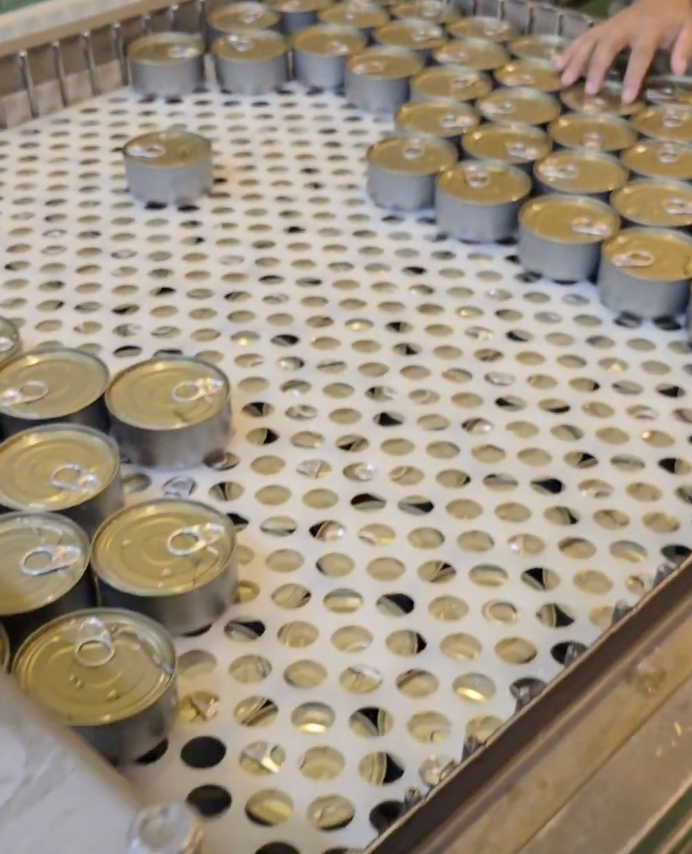
PNG: The Pacific’s Largest Tuna Processing Hub — A Nation That Catches Tuna But Imports Canned Tuna for Its Own Market
Papua New Guinea presents one of the Pacific’s most commercially interesting paradoxes: it is the world’s most important tuna fishing ground, responsible for over 25% of global skipjack catch, yet its domestic retail shelves are stocked almost entirely with imported canned tuna from Southeast Asia. PNG’s own canneries — RD Pacific (Philippines-backed) and Pacific Nations Seafoods (PNS) — export their entire output, primarily to EU buyers, leaving a domestic supply gap that Thai, Indonesian, and Philippine importers fill. With a population of over 10 million growing at 3.2% annually, a resource-sector boom driving middle-class growth in Port Moresby and Lae, and a rural population for whom canned tuna is the primary affordable animal protein, PNG represents a significant and underserved canned tuna import market.
PNG Catches 25%+ of Global Skipjack — But Imports Canned Tuna for Its Own Shops
The waters of the Western and Central Pacific surrounding Papua New Guinea are the planet’s richest skipjack tuna fishing ground — PNG’s Exclusive Economic Zone generates over 25% of global skipjack catch volume. Yet RD Pacific (a Philippines-backed cannery at Madang) and Pacific Nations Seafoods (PNS) at Lae are export-oriented operations: their output is EU-bound under trade agreements, not available to Honiara or Apia supermarkets. PNG retailers in Port Moresby, Lae, Mt Hagen, and Goroka stock Thai and Indonesian canned tuna — creating a persistent import demand in the country that generates the raw material.
- RD Pacific (Madang) — EU export-focused
- Pacific Nations Seafoods (PNS) — primarily exports
- Stop & Shop PNG — imports Thai/Indonesian tuna
- Steamships Trading — major import distributor
Ok Tedi, Porgera, Lihir — PNG’s Resource Sector Creates Large-Scale Institutional Tuna Demand
Papua New Guinea’s mining and resource sector is one of the world’s most significant, with major operations including Ok Tedi copper mine (Western Province), Porgera gold mine (Enga Province), Lihir gold mine (New Ireland Province), and the PNG LNG project (ExxonMobil). Each mine site operates fly-in-fly-out (FIFO) camp catering for thousands of workers — creating institutional demand for 1.7kg A10 canned tuna tins at scale. Mining camp caterers including Sodexo PNG and Compass Group PNG source canned tuna on multi-year supply contracts. FSSC 22000, batch-level CoA, and HACCP documentation are required for all mine site food supply tenders.
- Ok Tedi mine — Western Province FIFO camp
- Porgera gold mine — Enga Province
- Lihir gold mine — New Ireland FIFO camp
- PNG LNG (ExxonMobil) — construction and operations catering
Stop & Shop, Steamships, Papindo, and Trukai — PNG’s Commercial Food Distribution Network
Stop & Shop is Port Moresby’s most recognized supermarket brand. Steamships Trading Company (part of the Swire group) operates retail stores, wholesale distribution, and the RH Hypermarkets chain across PNG’s main urban centres. Papindo Trading operates supermarkets across PNG including Lae, Madang, and Wewak. Trukai Industries is PNG’s dominant food distributor — known for rice but distributing a broad range of shelf-stable food products including canned tuna to retail and wholesale customers throughout the country. Inter-provincial distribution beyond Port Moresby and Lae relies on coastal shipping (to island provinces) and PNG’s limited road network.
- Stop & Shop — Port Moresby’s primary grocery chain
- Steamships / RH Hypermarkets — Swire group retail
- Papindo Trading — Lae, Madang, Wewak stores
- Trukai Industries — national food distributor
Five PNG Compliance Requirements: NFA Fisheries, IRC ASYCUDA Customs, Food Safety Act, Import Tariff/GST, and Mining Sector FSSC 22000
Papua New Guinea’s import framework combines NFA fisheries documentation, IRC ASYCUDA customs processing, the Food Sanitation Act, a 12% import duty (reducible under PACER Plus), and FSSC 22000 certification for mining and institutional procurement — with no pre-market product registration required.
The National Fisheries Authority (NFA) administers Papua New Guinea’s Fisheries Management Act 1998, which governs all aspects of fishery resource access, processing, and trade. For canned tuna imports, NFA’s primary concern is species identification accuracy and documentation of catch origin — preventing the mislabelling of species caught in PNG’s EEZ under foreign fishing access agreements. Importers are not required to obtain an NFA licence to import canned tuna for domestic sale, but product labelling must accurately declare species (skipjack, yellowfin, albacore) and origin. NFA also administers PNG’s participation in WCPFC (Western and Central Pacific Fisheries Commission) — the multilateral body setting tuna catch quotas in the Pacific.
Species accuracy on label mandatory. NFA has no pre-market registration for canned tuna imports.
The Internal Revenue Commission (IRC) administers Papua New Guinea’s Customs Act and processes all import declarations through the ASYCUDA World electronic customs system. All commercial food imports into PNG must be declared via a licensed PNG customs broker using ASYCUDA. Import duty on canned tuna (HS 1604.14) is 12% under PNG’s standard tariff schedule. Under PACER Plus (Pacific Agreement on Closer Economic Relations Plus), qualifying Southeast Asian origins can access a preferential tariff rate that progressively moves toward 0% — importers should confirm current PACER Plus staging schedules with a PNG customs broker. A 10% GST applies to all goods at import — PNG has no food GST exemption.
Licensed PNG customs broker required for ASYCUDA. PACER Plus reduces 12% duty toward 0% for qualifying SE Asian origins.
Papua New Guinea’s primary food safety legislation is the Food (Sanitation) Act 1991 and the Health (Food) Act, administered by the National Department of Health (NDoH). Unlike Australia or New Zealand, PNG does not have a standalone food standards authority — food safety enforcement is conducted by environmental health officers at provincial and local level. PNG aligns broadly with Codex Alimentarius standards — mercury limits for canned fish are 1.0 mg/kg (matching CODEX STAN 193-1995). No pre-market product registration is required for imported canned tuna — customs clearance with compliant labelling and an ISO 17025 CoA covering contaminants constitutes sufficient documentation.
No pre-market registration. ISO 17025 CoA (Hg, Pb, Cd) is the primary documentary safeguard at PNG customs.
Papua New Guinea applies a 12% import duty on canned tuna (HS 1604.14) under its standard Custom Tariff Act schedule — one of the higher Pacific island rates for this commodity. Under PACER Plus, which PNG signed and began implementing from 2020, preferential tariff staging reduces this rate for qualifying Southeast Asian origins (Indonesia, Thailand, Vietnam, Philippines) over time. Additionally, a 10% GST applies to all imported goods — unlike Australia (0% GST on basic food) or New Zealand (15% GST uniform on food), PNG’s 10% rate is applied uniformly. GST-registered importers claim the input tax credit against their GST liability. Factor both the 12% duty and 10% GST into CIF-to-landed-cost calculations.
12% + 10% GST = significant duty burden. PACER Plus origin documentation critical to duty reduction. Engage licensed PNG customs broker.
Papua New Guinea’s mining and resource sector — one of the most significant institutional food procurement markets in the Pacific — requires FSSC 22000 (or equivalent GFSI-recognised food safety certification) as a minimum condition for food supply tender bids. Sodexo PNG, Compass Group PNG, and independent mine caterers operating at Ok Tedi, Porgera, and Lihir each set their own tender specifications, but FSSC 22000, batch-level ISO 17025 CoA, HACCP documentation, allergen management, and Dolphin-Safe credentials are consistently required. Government institutional procurement — PNG Department of Health, PNG Defence Force — similarly requires GFSI certification. Top Tide Canning’s FSSC 22000 certification covers all manufacturing sites supplying canned tuna to PNG’s institutional sector.
FSSC 22000 is mandatory for mining camp food supply in PNG. Batch CoA required per consignment for all institutional contracts.
Papua New Guinea has a growing Muslim community, concentrated in the Western and Gulf provinces (border communities with Indonesia’s Papua province) and in Port Moresby’s South Seas Evangelical community. The Islamic Society of Papua New Guinea (ISPNG) is the primary Halal certification body in PNG. Indonesian-origin canned tuna carrying MUI Halal certification is broadly accepted by the PNG Muslim community and by buyers who include Halal-certified products in their range for export to neighbouring Indonesia or for Melanesian communities with Indonesian cultural ties. Top Tide Canning’s MUI Halal certification satisfies PNG Halal market requirements for all supply channels.
MUI Halal (Indonesia) accepted by PNG Islamic Society. Relevant for Western Province border communities and Port Moresby Muslim market.
| Origin | Agreement | Tariff HS 1604.14 | GST |
|---|---|---|---|
| Indonesia · Thailand · Vietnam · Philippines | PACER Plus (staging) | Reducing toward 0% | 10% |
| Standard MFN | Customs Tariff Act | 12% | 10% |
| Note: GST applies to all goods including food — no PNG food GST exemption | 10% |
Four PNG Buyer Channels — Supermarket Retail, Aid/NGO Institutional, Mining Camp Catering, and Government Procurement
PNG’s canned tuna demand spans urban supermarket retail (Port Moresby, Lae), large-scale WFP and UNICEF nutrition procurement, high-value FIFO mining camp institutional supply at Ok Tedi/Porgera/Lihir, and PNG government health and defence procurement — each requiring different documentation packages.
PNG’s Supermarket and Wholesale Grocery Network — Three Major Chains Covering Port Moresby, Lae, Highlands
Stop & Shop (Port Moresby’s best-known supermarket) and Steamships Trading Company’s RH Hypermarkets (Swire group) are the two dominant urban retail channels in PNG’s capital. Papindo Trading extends coverage to Lae, Madang, Wewak, and provincial towns. Trukai Industries — PNG’s largest food distributor — supplies shelf-stable food including canned tuna to these chains as well as to thousands of smaller retail stores. The urban consumer base in Port Moresby (population ~400,000) and Lae (~150,000) forms the core commercial canned tuna retail market. PNG’s outer provincial retail is served by smaller Chinese-owned wholesale trading stores.
Aid and NGO Institutional Procurement — Canned Tuna as Core Nutrition in PNG’s Aid Programmes
Papua New Guinea receives significant development assistance from Australia (DFAT), the Asian Development Bank, and UN agencies — and canned tuna is a core protein commodity in PNG’s nutrition intervention programmes. World Food Programme (WFP) and UNICEF Papua New Guinea procure canned tuna for school feeding programmes, maternal nutrition kits, and disaster response food rations in PNG’s rural provinces. Australian Aid (DFAT) funds nutrition programmes through local NGOs that distribute canned tuna as part of complementary feeding packages. FSSC 22000 certification, ISO 17025 CoA, and Dolphin-Safe credentials are standard procurement requirements for UN agency tenders.
PNG’s Mining Sector FIFO Camp Catering — The Highest-Value Institutional Canned Tuna Channel
PNG’s resource extraction sector operates some of the Pacific’s largest fly-in-fly-out (FIFO) worker camps — Ok Tedi copper mine (Western Province, ~2,500 workers), Porgera gold mine (Enga Province, ~3,000 workers, operated by Barrick), and Lihir gold mine (New Ireland Province, ~6,000 workers, operated by Newcrest/Newmont). Each site operates 24/7 catering operations with institutional food supply on tender contract. Sodexo PNG, Compass Group PNG, and local catering operators procure 1.7kg A10 canned tuna on multi-year contracts. FSSC 22000, HACCP, allergen declarations, and batch CoA are mandatory for all mine site food supply.
PNG Government Institutional Procurement — Health, Defence, and Provincial Administration
The PNG National Department of Health procures food for provincial hospitals (17 provincial hospitals, hundreds of rural health centres) through the government tender system — canned tuna is a standard ward-diet protein. The Papua New Guinea Defence Force (PNGDF) catering runs institutional supply contracts for barracks in Port Moresby, Lae, and Wewak. Provincial government rest houses and administration centres also procure shelf-stable food through centralized procurement. Government institutional procurement in PNG typically requires FSSC 22000 or equivalent, allergen declarations, and a Dolphin-Safe certificate as part of the public tender documentation.
How to Import Canned Tuna into Papua New Guinea — Five Steps from Factory to Port Moresby Shelf
PNG’s import process runs through IRC ASYCUDA customs, NFA documentation check, and PNG Department of Health oversight — with no pre-market registration but a 12% import duty (PACER Plus staging applicable) plus 10% GST at the border.
| Origin | Rate | Note |
|---|---|---|
| Indonesia · Thailand · Vietnam | PACER Plus staging | Reducing toward 0% |
| Philippines | PACER Plus staging | Confirm current rate |
| MFN (any other) | 12% | Standard Customs Tariff |
| GST (all origins) | 10% | No food exemption in PNG |
Five Canned Tuna Formats for Papua New Guinea — Retail, Wholesale Club, Aid, Mining Institutional, and Branded
From 185g Stop & Shop retail through 24-can wholesale cases for Trukai distribution, WFP nutrition packs, 1.7kg mining camp institutional tins, to Halal-certified formats for PNG’s growing Muslim community — each format matched to its PNG channel.
185g Retail Can — Stop & Shop, Steamships, and Papindo Supermarket Shelves
The 185g can is PNG’s primary retail SKU for urban supermarket distribution through Stop & Shop, Steamships/RH Hypermarkets, and Papindo stores. Labels in English with species name, NIP, fish allergen declaration, ‘Product of [country]’, best before date, and NZ importer contact. Both brine (springwater) and sunflower oil variants are active in PNG retail — oil variants at a slight premium. GS1 barcode required for all PNG supermarket retail scanning. PNG’s urban middle class, growing from the resource sector boom, represents the primary buyer cohort for 185g retail.
24-Can Wholesale Case — Trukai Distribution and Provincial Retail Network
The 24×185g wholesale case (sometimes 48×95g) is the standard wholesale unit sold through Trukai Industries and distributed to PNG’s hundreds of smaller provincial retail stores, general trade stores (*stoa* in Tok Pisin), and community markets. Provincial PNG outside Port Moresby and Lae relies heavily on general trade — small Chinese-owned trading stores that stock shelf-stable food essentials. Wholesale case pricing needs to account for the 12% import duty and 10% GST on landed CIF cost to remain competitive with locally-sourced Thai or Philippine brands already in the Trukai distribution network.
WFP and UNICEF PNG Nutrition Pack — School Feeding and Disaster Relief Format
WFP and UNICEF Papua New Guinea procurement specifications for canned tuna typically call for 185g skipjack in brine — the most cost-effective protein format. Label requirements for aid procurement are minimal: species, net weight, best before date, and lot number for traceability. Dolphin-Safe certification (IMMP or DPCIA), FSSC 22000, and ISO 17025 CoA (mercury, lead, cadmium, microbiological) are standard UN agency procurement requirements. PNG is prone to severe tropical cyclones (TC Harold-level events) — cyclone preparedness food stockpiles maintained by National Disaster Centre (NDC) include canned tuna as a core long-shelf-life protein.
1.7kg A10 Tin — Ok Tedi, Porgera, Lihir Mining Camp Catering and Hospital Kitchens
The 1.7kg A10 institutional tin is the standard format for PNG’s mining camp catering operations, provincial hospitals, PNGDF barracks, and school canteens. Sodexo PNG and Compass Group PNG specify FSSC 22000, HACCP documentation, allergen declarations, and batch-level CoA per consignment — all of which Top Tide Canning provides. Ok Tedi mine (Western Province) alone operates catering for several thousand workers at any time. Lihir gold mine on Lihir Island (New Ireland) uses coastal shipping for food supply — CIF Lihir Island Port (or CIF Kavieng for New Ireland) can be quoted for mine site supply contracts.
Halal MUI Format — PNG Islamic Society and Cross-Border Indonesia Trade
PNG shares a land border with Indonesia’s Papua and West Papua provinces — creating a cross-border trade corridor and cultural overlap with Melanesian and Papuan communities maintaining Islamic identity. The Islamic Society of Papua New Guinea (ISPNG) serves communities in Western Province, Gulf Province, and Port Moresby’s diaspora population. MUI Halal certification from Indonesia is broadly recognised and accepted by ISPNG as sufficient Halal compliance. Top Tide Canning’s MUI Halal credential covers all standard skipjack and yellowfin canned tuna formats — important for any PNG buyer also exporting or retransporting to Indonesia or to Halal-market channels in Melanesia.
PNG Canned Tuna Label Requirements — English, NIP, Allergens, Origin, and Tok Pisin Optional
PNG applies food labelling requirements under the Food (Sanitation) Act 1991, broadly aligned with Codex Alimentarius. English is the official label language — Tok Pisin is the lingua franca and is valued for retail shelf presence but not legally required. No CoOL bar chart, no pre-market registration.
Mandatory PNG Label Elements
- Product name with species: ‘Skipjack Tuna in Springwater’, ‘Yellowfin Tuna in Sunflower Oil’ — species accuracy required
- Net quantity + drained weight: ‘185 g net · Drained Weight 130 g’ — both required for fish in liquid medium
- Ingredient list: ‘Skipjack Tuna (Katsuwonus pelamis) (80%), Springwater, Salt’ — descending order by weight
- Fish allergen declaration: ‘Contains: Fish (Tuna)’ — Codex allergen requirement, bold text
- Nutrition Information Panel: Energy (kJ), Protein, Fat, Sat fat, Carbohydrate, Sugars, Sodium per 100g minimum
- Country of origin: ‘Product of Thailand’ or ‘Made in Indonesia’ — text statement only; no bar chart required
- Best Before date: ‘Best Before MM/YYYY’ — standard canned goods format
- Importer name & address: PNG distributor or importer contact details
- Dolphin-Safe logo: IMMP or DPCIA — commercially required by all major PNG buyers
- Halal logo: MUI Halal (Indonesia) or ISPNG — if Halal channel
- Tok Pisin name: Optional — e.g. ‘Pis bilong solwara’ (seafood) — valued for rural PNG retail
PNG Label vs. Neighbouring Pacific Markets
| Element | PNG | Fiji | Samoa |
|---|---|---|---|
| Food standards body | NDoH / Food Sanitation Act | FSSI | SBS |
| Pre-market registration | Not required | Not required | Not required |
| CoOL bar chart | Not required | Not required | Not required |
| Label language | English (Tok Pisin optional) | English | English + Samoan opt. |
| Import duty | 12% (PACER Plus staging) | 32% (PACER Plus: 0%) | 0–5% |
| GST/VAT | 10% — no food exemption | 15% VAT | 15% VAGST |
| Halal authority | ISPNG / MUI accepted | FIAMM / MUI accepted | SSMC / MUI accepted |
Papua New Guinea Canned Tuna FAQ
Common questions from PNG importers, Stop & Shop and Steamships buying teams, mining camp caterers, WFP procurement officers, and IRC customs brokers about import duty/PACER Plus, MPI documentation, NFA fisheries compliance, mining tender requirements, and the PNG tuna paradox.
What import duty applies to canned tuna entering Papua New Guinea?
Papua New Guinea applies a 12% import duty to canned tuna (HS 1604.14) under its standard Customs Tariff Act schedule. Under the Pacific Agreement on Closer Economic Relations Plus (PACER Plus), which PNG signed in 2017 and began implementing from 2020, qualifying Southeast Asian origins (Indonesia, Thailand, Vietnam, Philippines) access a preferential tariff that stages progressively toward 0% — importers should confirm current staging with a licensed PNG customs broker. In addition to the import duty, a 10% GST applies to all goods at the PNG border including food — unlike Australia (0% GST on basic food), PNG has no food GST exemption. Total duty burden is approximately 12% + 10% GST on CIF value under standard MFN rates; PACER Plus reduces the 12% component.
Does Papua New Guinea require pre-market food registration for imported canned tuna?
No — Papua New Guinea does not require pre-market product registration for imported canned tuna. The primary regulatory framework is the Food (Sanitation) Act 1991 and Health (Food) Act, administered by the National Department of Health (NDoH) — enforcement is through random inspection at the border and in the market by environmental health officers. All commercial imports must be declared via IRC ASYCUDA customs with a licensed PNG customs broker, and labelling must comply with Codex-aligned standards (species accuracy, NIP, allergen declaration, best before date). The ISO 17025 certificate of analysis (mercury, lead, cadmium, microbiological) is the primary documentary safeguard for NDoH compliance.
Who are the main canned tuna buyers in Papua New Guinea?
The main commercial buyers of imported canned tuna in PNG are: Stop & Shop (Port Moresby’s largest supermarket chain); Steamships Trading Company (Swire group) operating RH Hypermarkets; Papindo Trading (Lae, Madang, Wewak stores); and Trukai Industries (PNG’s dominant food distributor supplying thousands of smaller provincial retailers). For institutional procurement, the major buyers are mining camp caterers Sodexo PNG and Compass Group PNG (serving Ok Tedi, Porgera, Lihir, and PNG LNG); WFP and UNICEF Papua New Guinea (nutrition programme procurement); and the PNG National Department of Health for provincial hospital supply.
What is PACER Plus and how does it affect canned tuna import costs in PNG?
PACER Plus (Pacific Agreement on Closer Economic Relations Plus) is a regional trade agreement between Australia, New Zealand, and 14 Pacific island countries including Papua New Guinea — signed in June 2017 and progressively operational since 2020. For canned tuna (HS 1604.14) from qualifying Southeast Asian origins (Indonesia, Thailand, Vietnam, Philippines), PACER Plus provides a preferential tariff staging schedule that reduces PNG’s standard 12% import duty toward 0% over a defined period. The exact current rate depends on the product’s PACER Plus staging year — importers must obtain a PACER Plus certificate of origin from the exporting country and present it to IRC Customs at clearance. Top Tide Canning can provide PACER Plus origin documentation for all qualifying shipment origins.
Why does PNG import canned tuna when it catches so much tuna itself?
Papua New Guinea’s waters are responsible for over 25% of global skipjack catch — yet PNG’s retail shelves are stocked almost entirely with imported canned tuna. The reason is structural: PNG’s two major canneries, RD Pacific at Madang (Philippines-backed) and Pacific Nations Seafoods (PNS) at Lae, are export-oriented operations — their production is committed to EU buyers under trade agreement preferential terms (Pacific EPA) and international off-take contracts, not the domestic PNG market. The domestic supply gap — between abundant raw tuna in PNG waters and the absence of domestically-produced canned tuna on PNG retail shelves — is filled by importers bringing Thai and Indonesian branded canned tuna through Port Moresby and Lae ports.
What documentation do mining camp caterers in PNG require from canned tuna suppliers?
Mining camp caterers operating at Ok Tedi, Porgera, Lihir, and the PNG LNG project (including Sodexo PNG and Compass Group PNG) typically require the following documentation in food supply tenders: FSSC 22000 or equivalent GFSI-recognised food safety certification; batch-level ISO 17025 certificate of analysis covering mercury, lead, cadmium, and microbiological parameters per consignment; HACCP plan documentation; allergen management declaration; Dolphin-Safe certification (IMMP or DPCIA); and a species identification declaration. Mining camp food supply in PNG is bid competitively — price, documentation completeness, and supply reliability (meeting vessel schedules to remote ports like Tabubil for Ok Tedi, or Lihir Island port) are the key selection criteria.
What are PNG’s major ports for receiving imported canned tuna?
Port Moresby’s commercial port is operated by PNG Ports Corporation Ltd (PNGPCL) at Motukea — the primary gateway for imports into PNG’s capital and serving the National Capital District. Lae Port (Lae, Morobe Province) is PNG’s second-largest container port and serves the Highlands (via the Highlands Highway) — the country’s most densely populated region. For mine site supply, specialized logistics apply: Ok Tedi mine (Western Province) receives goods via Tabubil airstrip and Kiunga river port; Lihir gold mine receives vessels directly at Lihir Island port (New Ireland). Transit time from Southeast Asia (Indonesia, Thailand) to Port Moresby or Lae is approximately 7–14 days — shorter than Samoa or Solomon Islands due to PNG’s relative proximity to Indonesian and Philippine origin ports.
Does Top Tide Canning supply Halal-certified canned tuna for PNG’s Muslim community?
Yes — Top Tide Canning holds MUI Halal certification (Majelis Ulama Indonesia) for all standard skipjack and yellowfin canned tuna formats. The Islamic Society of Papua New Guinea (ISPNG) recognises MUI Halal as sufficient for PNG Halal market compliance. PNG’s Muslim community is concentrated in Western Province (border communities sharing cultural ties with Indonesia’s Papua province), Gulf Province, and in Port Moresby’s diaspora population. Additionally, for buyers who re-export or transport goods across the PNG-Indonesia border to Indonesian markets, MUI Halal certification is the mandatory Indonesian Halal standard (BPJPH — Halal Product Assurance Organizing Agency — requires MUI Halal for imported food sold in Indonesia).
Top Tide Canning PNG Capabilities — NFA, IRC, Stop&Shop, Mining Camp Institutional, WFP Aid, and CIF Port Moresby/Lae
Every certification, document, and format PNG buyers require — NFA fisheries compliance through IRC ASYCUDA customs clearance, Stop & Shop retail supply, Trukai wholesale distribution, Ok Tedi/Porgera/Lihir mining camp institutional, WFP nutrition procurement, and Halal MUI certification.
Explore Other Pacific and Oceania Export Markets
Top Tide Canning exports canned tuna to buyers across the Pacific, Oceania, North America, Europe, the Middle East, and Africa.
Request a Quote for Papua New Guinea
Tell us your channel — Stop & Shop or Steamships retail, Trukai wholesale distribution, Ok Tedi, Porgera, or Lihir mining camp catering, WFP or UNICEF humanitarian procurement, or Papua New Guinea government institutional supply. We respond within one business day with CIF Port Moresby or Lae pricing, complete NFA and IRC ASYCUDA documentation, FSSC 22000 certification, ISO 17025 certificates of analysis, Dolphin-Safe certification, and Halal MUI certification.
Get a PNG Quote →