
Canned Tuna Supplier
for Japan
Top Tide Canning is a Thailand-based B2B canned tuna manufacturer supplying Japan importers, retailers, and food service operators. We produce FSSC 22000-certified skipjack, yellowfin, and albacore tuna for AEON Topvalu and Ito-Yokado private label, Costco Japan, 7-Eleven konbini food production, and institutional food service — CIF Osaka and Yokohama with full MHLW and FAMIC documentation.
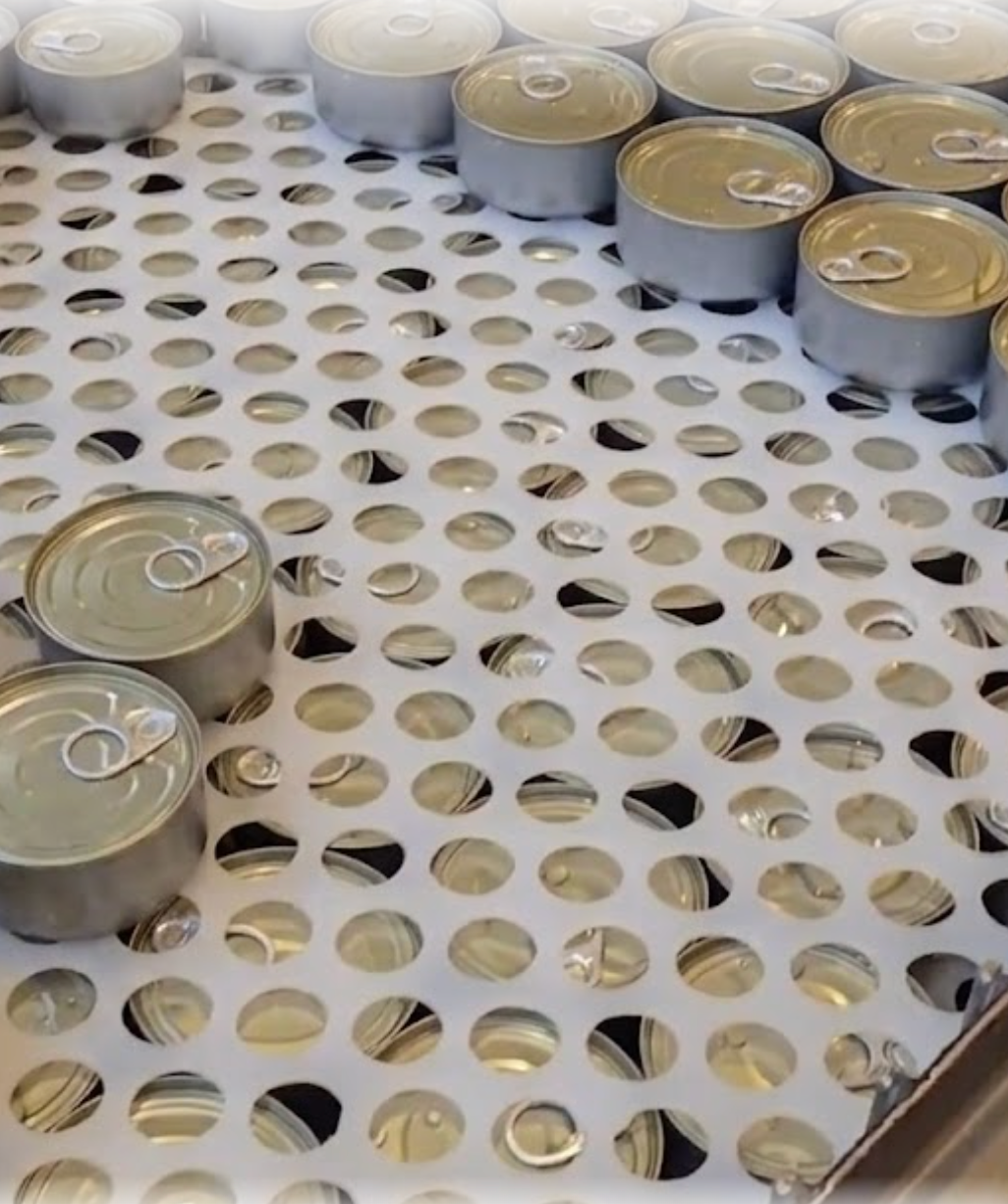
Japan: The World Largest Per-Capita Tuna Consumer — Demanding Quality, Japanese Labelling, and Dolphin-Safe Compliance
Japan is one of the world most demanding export markets for canned tuna — MHLW Food Sanitation Act compliance, mandatory Japanese-language labels, FAMIC border testing for new suppliers, and strong retailer Dolphin-Safe requirements. It is also one of the most rewarding, with 125M consumers and active AEON and Ito-Yokado private label programmes.
AEON Topvalu and Ito-Yokado — Japan Private Label Drives the Category
AEON Group (AEON SuperCenter, MaxValu, Ministop) and Seven & i Holdings (Ito-Yokado) together control a majority of Japan supermarket revenue. Both run active private label canned tuna programmes — AEON Topvalu and Ito-Yokado own-brand — sourcing from FSSC 22000-certified Asian manufacturers. Costco Japan (26 warehouses) adds a major bulk private label channel via Kirkland Signature.
- AEON — Topvalu own-brand
- Ito-Yokado — Seven & i own-brand
- Costco Japan — Kirkland Signature bulk
- Don Quijote / TRIAL — discount channels
Food Labelling Act — Japanese Language Required on All Retail Products
Japan Food Labelling Act (enforced by Consumer Affairs Agency) requires all retail food products to carry a Japanese-language label. For canned tuna: prescribed species name in Japanese (katsuwo/kihada/binnaga), MHLW-approved additive names, allergen declaration, kcal/100g nutrition facts, country of origin in Japanese (Thai-san), and Japanese importer address. English-only labels cannot be sold in Japanese retail.
- Japanese-language label — mandatory
- Species name: katsuwo / kihada / binnaga
- Country of origin: Thai-san (Thai-san)
- JAN barcode (GS1 Japan) required
55,000+ Konbini Stores and High Dolphin-Safe Expectations
Japan 55,000+ convenience stores (konbini) — 7-Eleven, Lawson, FamilyMart — source tuna at scale for onigiri, tuna-mayo sandwiches, and prepared meal kits. This channel demands large-format pouches (500g–1kg). Japan NGOs (WWF Japan, Greenpeace Japan) drive strong retailer Dolphin-Safe requirements — AEON and Costco Japan require IMMP + EII as a condition of supply.
- 7-Eleven / Lawson / FamilyMart konbini
- 500g–1kg large-format pouch required
- Dolphin-Safe IMMP + EII — AEON required
- MSC valued by Costco Japan and Amazon JP
Six Japan Compliance Requirements — MHLW Food Sanitation Act, FAMIC Declaration, Japanese Labelling, FSSC 22000, Dolphin-Safe IMMP+EII, and ISO 17025 CoA
Japan import compliance is governed by MHLW and enforced by FAMIC at the border. Japanese-language labels are mandatory, FAMIC tests new Thai suppliers for mercury and histamine, and Dolphin-Safe IMMP + EII is required by all mainstream Japan retail buyers.
All food imports into Japan require a Food Import Declaration filed with FAMIC (Food and Agricultural Materials Inspection Center) at the port of entry. FAMIC tests new Thai suppliers for mercury, histamine, and additive compliance on the first 2–3 shipments. A licensed Japanese customs broker is required to file the declaration.
FAMIC documentation package (CoA, ingredient declaration, additive statement) provided with every shipment. Confirm requirements with a licensed Japanese customs broker.
Japan Food Labelling Act (Consumer Affairs Agency) requires all retail canned tuna to carry a Japanese-language label: prescribed species name in Japanese; MHLW-approved additive names; allergen declaration; kcal/100g nutrition facts; country of origin in Japanese (Thai-san); best-before date; and Japanese importer name/address. English-only labels are not permitted for retail sale.
Top Tide Canning provides Japanese-language label artwork development and MHLW regulatory pre-check as part of our Japan private label service.
JAS (Japanese Agricultural Standards) certification for canned tuna is not legally mandatory but is commercially valued by institutional buyers and some AEON and Ito-Yokado buying specifications for species identification verification. Top Tide Canning provides species identification documentation and production records to support JAS-referenced specifications.
JAS applicability should be confirmed with the specific Japan buyer — not universally required for all private label programmes.
FSSC 22000 (GFSI-recognised) is required by AEON, Ito-Yokado, and Costco Japan for supplier qualification. Top Tide Canning holds a current FSSC 22000 certificate covering canned fish manufacturing. BRC (BRCGS) is an accepted alternative for most Japan retail buyers.
Full certificate and most recent third-party audit summary available on request for buyer qualification.
Dolphin-Safe IMMP and EII certification is required by AEON, Ito-Yokado, and Costco Japan at supplier qualification. NGO pressure from WWF Japan and Greenpeace Japan drives strong retailer Dolphin-Safe policy across all mainstream Japan retail channels. Top Tide Canning holds both IMMP and EII certification with batch-level vessel declaration documentation.
IMMP and EII certificates and batch-level vessel declarations available on request per shipment.
Top Tide Canning provides an ISO/IEC 17025-accredited CoA per production batch covering mercury, cadmium, histamine, and microbiological parameters — formatted to address FAMIC testing scope for imported canned tuna from Thailand. Included with FAMIC documentation package on every Japan shipment.
CoA per batch; included with shipping docs. MHLW mercury and histamine limits apply — subject to importer verification of current standards.
Four Japan Buyer Channels — AEON Topvalu Private Label, Konbini Food Production, Costco Bulk, and Premium Specialty
Japan retail spans private label supermarket supply (AEON, Ito-Yokado), high-volume konbini food production (7-Eleven, Lawson, FamilyMart), Costco Japan bulk, and a premium import specialty segment. Each channel has distinct format, certification, and labelling requirements.
How to Import Canned Tuna into Japan — Six Steps from Factory to Retail Shelf
Japan import process is governed by FAMIC and MHLW. Japanese-language label approval must precede production. FAMIC tests new Thai suppliers for mercury and histamine on initial shipments. Transit from Thailand is 7–14 days CIF Osaka or Yokohama.
| Origin | Agreement | Rate |
|---|---|---|
| Thailand | JTEPA preferential | Reduced — verify with broker |
| Non-EPA origin | Japan MFN | ~6.0–9.6% |
| Consumption tax (food) | Japan Consumption Tax Act | 8% reduced rate (at retail) |
JTEPA preferential rate and current HS classification should be confirmed with a licensed Japanese customs broker prior to each shipment.
Six Canned Tuna Formats for Japan — AEON Topvalu Private Label, Konbini Production, Costco Bulk, Food Service, Premium Albacore, and Halal
From 70g AEON Topvalu private label through Costco Japan Kirkland Signature multipacks, 7-Eleven konbini large-format pouches, Sysco Japan food service cans, and premium albacore for Kaldi — each format is specification-matched to its Japan channel. All formats MHLW-compliant, CIF Osaka or Yokohama.
70g / 140g Retail Can — AEON Topvalu & Ito-Yokado
Japan standard retail SKU sizes. MHLW Food Labelling Act-compliant Japanese-language label — prescribed species name in Japanese, MHLW-approved additive names, allergen declaration, kcal/100g nutrition facts, Thai-san country of origin, best-before date, and Japanese importer name/address. JAN barcode (GS1 Japan registered) required.
- 70g / 140g single-serve tin
- Japanese-language label
- JAN barcode (GS1 Japan)
- MHLW additive compliant
500g–1kg Large-Format Pouch — 7-Eleven, Lawson & FamilyMart
Flexible retort pouch in large food-production format for Japan konbini chains. Used in onigiri, sandwich, and bento production lines. Skipjack in brine (plain) standard specification. MHLW additive compliance critical — no unapproved preservatives. Consistent fill weight ±1% required for konbini production scheduling.
- 500g–1kg retort pouch
- Skipjack in brine (MHLW compliant)
- Fill weight ±1% consistency
- Onigiri / bento production
140g × 6 Multipack — Costco Japan Kirkland Signature
140g pull-tab × 6 heat-shrink multipack for Costco Japan and bulk grocery. Kirkland Signature label or buyer artwork with MHLW-compliant Japanese label. BPA-NI tin lining available. FSSC 22000 and Dolphin-Safe IMMP required for Costco Japan qualification. JAN barcode registered GS1 Japan.
- 140g × 6 multipack
- BPA-NI tin lining available
- Costco Japan / Don Quijote
- Dolphin-Safe IMMP + FSSC 22000
1.7kg A10 Institutional Can — Sysco Japan, Hotel & Hospital
Standard A10 tin for Japan food service — Sysco Japan, Sojitz food service, hotel banqueting kitchens, school and hospital dietary departments. Skipjack or yellowfin in brine. 6 × 1.7kg outer carton with Japanese-language carton label. MHLW-compliant, batch-level CoA and allergen declarations as standard.
- 1.7kg A10 institutional can
- Japanese-language carton label
- Batch CoA + allergen declarations
- Sysco Japan / hotel kitchens
Solid Albacore in EVOO — Kaldi Coffee Farm & Amazon Japan
Solid-pack albacore (binnaga — びんなが) in extra-virgin olive oil for Kaldi Coffee Farm, specialty food importers, and Amazon Japan premium grocery. 120g–150g pull-tab tin. Dolphin-Safe IMMP certified. Japanese-language label with binnaga species name. Supports Japan growing premium import segment.
- 120g–150g pull-tab tin
- Solid albacore in EVOO
- Japanese label — binnaga species
- Kaldi Coffee Farm / Amazon JP
MUI Halal Certified — Japan Halal Food Distributors
MUI Halal-certified skipjack and yellowfin tuna for Japan halal food specialty distributors, Muslim-friendly hotel catering, and halal food e-commerce. Japan Muslim community (~200,000 residents plus tourist traffic) is a niche but growing import channel. MUI Halal is the certification most recognised by Japan halal food importers.
- MUI Halal certified
- Halal food e-commerce Japan
- Muslim-friendly hotel catering
- Halal logo and cert number on-pack
Japan Canned Tuna Import — Frequently Asked Questions
Common questions from Japan importers, AEON and Ito-Yokado category buyers, konbini food production teams, and Costco Japan procurement about MHLW compliance, FAMIC inspection, Japanese labelling, tariff, private label qualification, and port logistics.
What MHLW documentation is required to import canned tuna into Japan?
All food imports require a Food Import Declaration filed with FAMIC at the port of entry. Standard documentation: ISO 17025 CoA for mercury and histamine, MHLW additive compliance statement, Thai DoF health/sanitary certificate, commercial invoice, packing list, and Bill of Lading. New Thai suppliers are subject to FAMIC lab testing on the first 2–3 shipments. Top Tide Canning provides a complete FAMIC documentation package with every Japan-bound shipment. A licensed Japanese customs broker is required to file the declaration.
What labelling is required for canned tuna sold in Japan?
Japan Food Labelling Act requires a Japanese-language label on all retail food. For canned tuna: prescribed species name in Japanese (katsuwo for skipjack, kihada for yellowfin, binnaga for albacore); ingredient list with MHLW-approved additive names; allergen declaration; nutrition facts in kcal per 100g; country of origin in Japanese (Thai-san for Thailand); best-before date; and Japanese importer name and address. English-only labels are not permitted for retail sale. Top Tide Canning provides Japanese-language label artwork development and MHLW pre-check as part of our Japan service.
Does FAMIC test canned tuna from new Thai suppliers?
Yes — FAMIC typically tests new Thai seafood suppliers on the first 2–3 commercial shipments for mercury (total Hg), histamine, and additive compliance. FSSC 22000 certification and a clean FAMIC inspection record reduce the likelihood of testing on repeat shipments. Top Tide Canning provides ISO 17025 CoA and MHLW additive compliance documentation with every shipment to support smooth FAMIC clearance.
What import tariff applies to canned tuna entering Japan from Thailand?
Japan MFN tariff on canned tuna (HS 1604.14) is approximately 6.0–9.6% depending on species and pack form. Thailand-origin tuna may benefit from a preferential rate under JTEPA (Japan-Thailand Economic Partnership Agreement). The applicable rate should be verified with a licensed Japanese customs broker against current Japan Customs tariff schedules prior to each shipment. Japan consumption tax (8% reduced rate for food) applies at retail.
How do I qualify as a private label supplier to AEON or Ito-Yokado?
AEON and Ito-Yokado supplier qualification typically requires: FSSC 22000 certificate; third-party factory audit report; product specification; ISO 17025 CoA; Dolphin-Safe IMMP + EII documentation; MHLW-compliant Japanese-language sample label artwork; and JAN barcode registered in GS1 Japan database. Category reviews at both retailers occur approximately twice annually for ambient grocery. Top Tide Canning can support direct supplier qualification through Japan-based importers.
Is JAN barcode registration required for Japan retail?
Yes — all products sold through Japanese retail checkout systems (AEON, Ito-Yokado, Costco Japan) require a JAN barcode (Japanese Article Number) registered in the GS1 Japan database. Top Tide Canning holds GS1 Japan barcode registration. For buyer-owned private label brands, the Japan importer typically holds or acquires the GS1 Japan registration for their own-brand barcode prefix.
Can Top Tide Canning supply the konbini food production channel?
Yes — Top Tide Canning produces large-format pouches (500g–1kg) suitable for 7-Eleven Japan, Lawson, and FamilyMart konbini food production. Konbini supply requires precise fill weight consistency (typically ±1%), MHLW additive compliance (no unapproved preservatives), and reliable delivery scheduling. Please contact us with your production brief and required volume for a quotation.
What is the minimum order quantity for Japan?
Minimum order is typically one 20ft container (approximately 20–22 MT net product). For AEON Topvalu or Ito-Yokado private label trials, we can discuss smaller pilot shipments. Please contact us for a CIF Osaka or Yokohama quotation including full FAMIC documentation package.
Top Tide Canning Japan Capabilities — MHLW, FAMIC, AEON Topvalu, Ito-Yokado, Costco Japan, Konbini, and Food Service
Every certification, document, and product format Japan buyers need — from FSSC 22000 and FAMIC documentation packages through AEON and Ito-Yokado qualification records, Costco Japan multipack, konbini large-format pouch, and CIF pricing to Osaka or Yokohama.
Explore Other Top Tide Canning Export Markets
Top Tide Canning supplies canned tuna across East Asia, Southeast Asia, and the Pacific. Explore our dedicated market pages for country-specific regulatory, retail, and logistics information.
Request a Quote for Japan
Tell us your channel — AEON Topvalu or Ito-Yokado private label, Costco Japan bulk, konbini food production, or food service. We respond within one business day with CIF Osaka or Yokohama pricing, Japanese-language label artwork, FAMIC documentation package, Dolphin-Safe IMMP + EII certificates, FSSC 22000 certification, and ISO 17025 CoA.
Get a Japan Quote →