
Canned Tuna Supplier
for Oman
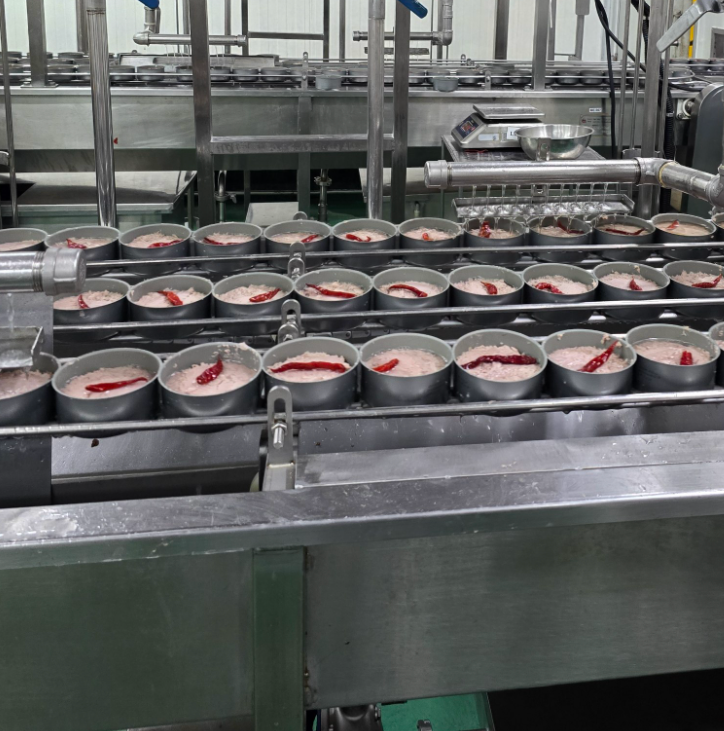
Top Tide Canning supplies halal-certified, MOCIIP-compliant canned tuna to Oman’s importers, hypermarkets, wholesalers, and foodservice operators — with Arabic labelling, full Omani customs documentation, and FCL shipping to Port Sultan Qaboos and Sohar Port.
Aligned with Oman’s Seafood Market & Import Framework
Oman combines a strong domestic appetite for canned tuna with a well-structured import framework administered by MOCIIP. Top Tide Canning is positioned to serve both — with documentation, logistics, and product formats that match what Omani buyers and regulators require.
MOCIIP-Ready Documentation
Oman’s Ministry of Commerce, Industry and Investment Promotion (MOCIIP) oversees all food import approvals in coordination with the Ministry of Agriculture, Fisheries and Water Resources. We prepare the complete document package — health certificate, halal certificate, certificate of origin, commercial invoice, packing list, and bill of lading — structured for Oman’s import clearance process and ready before your vessel sails.
Sohar Free Zone Advantage
Sohar Port & Freezone, 200 km north of Muscat on the Gulf of Oman, offers bonded warehousing and re-export capabilities that make it an attractive entry point for buyers who want to serve both the Omani domestic market and neighbouring GCC markets from a single inventory location. We route and document shipments specifically for Sohar free zone clearance when required.
Halal Certification — Oman Accepted
Our halal certificate is issued by an internationally recognised body accepted by Omani import authorities. The certification covers the full production chain — raw material sourcing, processing, and packaging — providing the traceability evidence Oman’s food inspectors expect. We include certified copies suitable for Omani product registration with every shipment.
Oman’s Seafood-Positive Market
Oman has one of the highest per-capita seafood consumption rates in the Arab world, driven by a long fishing tradition and a population that includes canned tuna as a daily household staple. This creates consistent, high-volume demand across Muscat, Salalah, Sohar, and Nizwa — and a receptive market for both value and premium SKU positioning.
Arabic GSO Labelling Compliance
Oman follows GCC Standardisation Organisation (GSO) food labelling standards. We produce fully GSO-compliant Arabic labels in-house covering product name, ingredients, nutrition declaration, net weight, country of origin, and expiry date — reviewed against current Omani requirements before each production run so your customs broker has nothing to query at the port.
Consistent Supply Across Oman’s Long Coastline
Oman’s geography stretches over 3,000 km of coastline — from Musandam in the north to Salalah in the south. We work with distributors who serve Muscat, the Batinah Coast, Dhofar (Salalah), and interior wilayats on regular restocking schedules. Our production planning accommodates Oman’s diverse regional demand without supply gaps.
Canned Tuna Products Tailored to Oman’s Demand
Oman’s canned tuna market spans everyday household cooking, growing health-conscious urban retail, a premium hotel sector, and a traditional trade network reaching deep into the interior. Our product range covers every tier.
Skipjack Tuna in Sunflower Oil
The everyday household staple across Oman’s retail market — from Muscat hypermarkets to Salalah supermarkets and Nizwa’s traditional trade. Available in 80g, 160g, and 185g easy-open cans. The mild oil finish and firm texture suit Omani cooking applications including saloona, sandwiches, and mezze spreads that incorporate canned tuna.
Yellowfin Tuna in Brine
Growing strongly in Muscat’s urban retail and gym-adjacent nutrition channels. Yellowfin in brine is positioned as a premium, high-protein, low-fat alternative to oil-packed tuna — appealing to Oman’s younger, health-aware consumer segment and the country’s substantial expat population in the Muscat Capital Area.
Whole Muscle Tuna Loins
A premium format in growing demand among Muscat’s fine dining and hotel kitchens, and among specialty grocery importers targeting Oman’s expatriate consumer market. Whole tuna loin sections in oil or brine, in 185g retail cans and 400g catering-format cans, delivered with full halal traceability.
Shredded Tuna in Tomato Sauce
Oman’s household cooking tradition creates distinct demand for tuna in tomato-based sauces — used in pasta, rice dishes, and traditional Omani stews. We supply shredded tuna in tomato sauce in 160g and 185g formats with GSO-compliant Arabic labelling and full MOCIIP documentation.
Institutional Catering Cans
Oman’s hospitality sector — anchored by Muscat’s luxury hotel corridor, Salalah’s beach resort strip, and Nizwa’s heritage tourism industry — creates sustained institutional demand. We supply 1kg and 1.88kg bulk catering cans to foodservice distributors serving hotels, hospital catering, the Royal Oman Police, and military commissaries.
Private Label for Oman Retail
We offer a full OEM programme for Omani retailers, trading companies, and FMCG brands building own-brand tuna ranges. This includes Arabic label design and GSO compliance review, MOCIIP import documentation in your brand name, and production to your specification on a scheduled basis across every container we ship.
Who We Supply in Oman
Oman’s food import market spans a sophisticated Muscat urban core, a growing Sohar industrial hub, a unique Salalah southern market, and an interior traditional trade network — each with its own supply requirements.
Food Importers & Trading Companies
MOCIIP-licensed general trading companies and food importers based in Muscat, Sohar, and Salalah. We prepare the full Omani customs dossier — health certificate, halal certificate, certificate of origin, and commercial documents — to achieve first-attempt clearance at Port Sultan Qaboos or Sohar.
Hypermarkets & Supermarkets
Lulu Hypermarket Oman, Carrefour Oman (Majid Al Futtaim), Al Meera Consumer Goods (Oman’s largest listed supermarket chain), Markaz Al Bahja, and Safeer Group Oman. Retail-ready Arabic-labelled cans with GSO-compliant barcoding and consistent supply cadence.
Wholesale Distributors
Wholesale buyers operating in Muscat’s Ruwi commercial district, the Sohar industrial area, and Salalah’s Al Husn trading zone — who supply Oman’s traditional trade outlets, baqalas, and regional mini-markets across all eleven governorates including remote interior wilayats.
Sohar Free Zone Operators
Companies using Sohar Port & Freezone for bonded storage and GCC re-export. We prepare shipments specifically for free zone entry — including dual documentation sets where required — to support buyers who manage pan-GCC inventory from Sohar’s strategically positioned logistics hub.
Hotels & Resort Operators
Muscat’s luxury hotel corridor (Al Mouj, Madinat Al Irfan, Qurum), Salalah’s beach resorts, and Nizwa and Wahiba Sands eco-tourism and heritage properties. Halal-certified institutional supply to hotel purchasing managers and their nominated foodservice distributors.
Foodservice & Catering Distributors
Restaurant chains, school catering, hospital nutrition departments, oil and gas camp catering contractors in the Muscat-Sohar industrial belt, and Salalah Port’s marine supply sector. We supply catering-format cans sized for Oman’s diverse professional kitchen market.
Pharmacy & Health Retail
Oman’s fast-expanding health and wellness retail sector — pharmacy chains including Muscat Pharmacy and Al Nahdi, gyms, and sports nutrition retailers. We supply premium tuna-in-brine SKUs positioned as high-protein, low-fat health products for this growing channel.
Private Label Brands
Omani trading houses and entrepreneurs building own-brand food lines. Full OEM: Arabic GSO label design, MOCIIP documentation in your brand name, halal certification support, and production to your specification — with the consistency of supply that a retail listing demands.
FCL Shipping to Port Sultan Qaboos & Sohar
Oman is served by two principal container ports. Port Sultan Qaboos in Mutrah, Muscat, is the country’s historic main port for consumer goods — adjacent to the Muscat wholesale and retail distribution network, with MOCIIP food safety inspection conducted on arrival. Most FCL shipments destined for Muscat, the Batinah Coast, and the Omani interior are routed through Port Sultan Qaboos.
Sohar Port & Freezone, located on the Gulf of Oman approximately 200 km north of Muscat, is Oman’s second major container gateway. Its integrated free zone makes it the preferred entry point for buyers who want bonded warehousing, re-export flexibility into the UAE and broader GCC, or proximity to the Sohar-Muscat-Salalah Highway for interior distribution. We route and fully document shipments for either port based on your warehouse location and commercial structure.
Transit time from our production facility to either Omani port is typically 14 to 20 days depending on vessel schedule and routing through the Gulf of Oman and Arabian Sea. Production lead time from confirmed purchase order is 4 to 6 weeks — covering halal-supervised processing, Arabic label printing, quality inspection, and container stuffing. The full MOCIIP document set is couriered to your customs agent before the vessel sails.
Salalah Port in Dhofar Governorate, Oman’s southernmost commercial port and a major transshipment hub on the Indian Ocean trade lanes, handles select direct cargo for buyers supplying the Dhofar region. We can advise on Salalah routing for buyers based in southern Oman.
✓ Health Certificate
✓ Certificate of Origin
✓ Commercial Invoice & Packing List
✓ Bill of Lading (Full Set)
✓ Phytosanitary Certificate (where required)
Can Sizes & Labelling for Oman’s Market
From the 80g convenience can to 1.88kg bulk catering formats — and from Muscat hypermarket retail labels to Sohar Free Zone re-export documentation — we cover every packaging requirement the Omani market demands.
Can Formats & Sizes
- 80g — convenience & impulse format
- 160g — standard Oman retail & wholesale
- 185g — hypermarket shelf leader
- 400g — twin-pack & family value format
- 1kg — hotel, hospital & catering
- 1.88kg — bulk foodservice & camp catering
- Custom size to buyer specification
Label & Packaging Options
- Arabic-English bilingual — GSO-compliant for Oman retail
- Arabic-only — traditional trade & interior wholesale
- GCC multi-market label — six GSO member states on one label
- Private label / OEM — full Arabic artwork to your brand identity
- Sohar Free Zone documentation — dual doc sets for bonded re-export
- Salalah-specific variants — Dhofar regional distribution labelling
Every label produced for Oman is reviewed against current GCC Standardisation Organisation (GSO) requirements before going to print — eliminating compliance queries at MOCIIP inspection and protecting your shelf timeline.
Oman’s Regional Markets & Logistics Gateways
Oman’s geography — a 3,000 km coastline spanning the Gulf of Oman, the Arabian Sea, and the Indian Ocean — creates four distinct regional markets, each with its own port access, distribution dynamics, and consumer profile.
Muscat Retail & Wholesale
The Muscat Capital Area — encompassing Mutrah, Ruwi, Qurum, Al Khuwair, and Madinat Al Sultan Qaboos — is Oman’s dominant retail and wholesale market. Hypermarkets, supermarkets, and wholesale distributors based in Muscat’s Ruwi commercial district supply the Capital Area’s 1.5 million population and serve as the national distribution hub for canned goods.
Batinah Coast & Sohar Industrial Belt
The Al Batinah coast — stretching from Muscat to Sohar — is Oman’s most densely populated region outside the Capital Area. Sohar’s growing industrial workforce and the coastal population create strong demand for canned protein. Sohar Port’s free zone provides bonded distribution options for buyers managing Oman and UAE inventory simultaneously.
Salalah & Dhofar Governorate
Salalah is Oman’s second city and the capital of Dhofar Governorate — a distinct market with its own supply chain, reached either via Salalah Port directly or by road via the Muscat–Salalah Highway. Dhofar’s Khareef monsoon tourism season creates peak hospitality demand, and the region’s growing population sustains year-round retail sales.
Interior Wilayats — Traditional Trade
Oman’s interior — Nizwa, Ibri, Sur, Rustaq, and remote wilayats in Al Dakhiliyah and Al Dhahirah — is served by wholesale distributors who supply traditional trade baqalas, cooperative stores, and small supermarkets. These markets require consistent volume at competitive pricing with Arabic labelling compliant for rural retail.
Key Logistics Gateways
Port Sultan Qaboos — Muscat
Oman’s primary consumer goods port, located in Mutrah directly adjacent to Muscat’s wholesale trading district. MOCIIP food safety inspection is conducted on-site. Consignments from Port Sultan Qaboos reach Muscat wholesale buyers within hours and Batinah Coast distributors on the same day.
Sohar Port & Freezone
A dual-purpose gateway: standard port entry for northern Oman distribution, and a free zone facility offering bonded warehousing, value-added services, and re-export capacity into the UAE (just 100 km from the Hatta border crossing). Ideal for buyers managing Oman + UAE inventory from one location.
Salalah Port — Indian Ocean Hub
A major transshipment port on the Indian Ocean shipping lane, handling direct cargo for Dhofar Governorate and serving as an alternative entry point during Muscat peak congestion periods. We can route and document shipments directly to Salalah for southern Oman buyers.
Oman Canned Tuna Import — FAQ
What documentation is required to import canned tuna into Oman?
Oman’s Ministry of Commerce, Industry and Investment Promotion (MOCIIP) — in coordination with the Ministry of Agriculture, Fisheries and Water Resources — requires a health certificate, a halal certificate from a recognised certifying body, a certificate of origin, a commercial invoice, a packing list, and a bill of lading. We prepare the complete document set for every Oman-bound shipment.
What role does MOCIIP play in Oman food imports?
MOCIIP is the primary government body responsible for commercial import licensing and product registration in Oman. Food safety inspections are conducted in coordination with the Ministry of Agriculture. Importers must hold a valid commercial registration and MOCIIP import licence. Our documentation is prepared to satisfy MOCIIP’s current requirements for canned seafood imports.
Which port should I use for importing canned tuna into Oman?
For buyers based in Muscat or serving the Batinah Coast and interior, Port Sultan Qaboos in Mutrah is the standard entry point — it’s adjacent to the Muscat wholesale district and has MOCIIP inspection on-site. For buyers using Sohar’s free zone for bonded storage or GCC re-export, Sohar Port & Freezone is the better option. We route to either port based on your warehouse location.
What is the Sohar Free Zone and why does it matter for canned tuna imports?
Sohar Port & Freezone is an integrated port and industrial free zone on Oman’s Gulf of Oman coast, 200 km north of Muscat. The free zone allows imported goods to be stored in bonded warehouses without paying Omani customs duties until they enter the domestic market — or to be re-exported to the UAE, Saudi Arabia, or other GCC countries duty-free. For importers managing multi-market inventory, Sohar is more efficient than clearing goods through multiple national ports.
Does Oman require Arabic labelling on imported food?
Yes. Oman follows GCC Standardisation Organisation (GSO) labelling standards, requiring Arabic-language text covering product name, ingredients, nutrition declaration, net weight, country of origin, manufacturer details, and best-before date. We produce GSO-compliant Arabic labels in-house, reviewed against current Omani requirements before each production run.
How long does transit take from your factory to Oman?
Transit time from our production facility to Port Sultan Qaboos or Sohar Port is typically 14 to 20 days depending on vessel routing through the Gulf of Oman and Arabian Sea scheduling. Our production lead time from confirmed purchase order is 4 to 6 weeks. We provide an estimated vessel arrival date as soon as the booking is confirmed.
Does Oman have a strong domestic market for canned tuna?
Yes — Oman has one of the highest per-capita seafood consumption rates in the Arab world, supported by a long fishing tradition and a population that uses canned tuna as a household cooking staple across Muscat, Salalah, the Batinah Coast, and the interior. Demand is consistent year-round with seasonal peaks during Ramadan and the Dhofar Khareef monsoon tourism season.
Can you supply canned tuna for re-export from Oman to other markets?
Yes. Buyers using Sohar Port’s free zone can re-export to the UAE, Saudi Arabia, and other GCC countries from bonded storage. We can produce GCC multi-market labels covering all six member states and prepare dual documentation sets suitable for both Omani domestic clearance and GCC re-export. Salalah Port’s transshipment capabilities also serve routes to Yemen and East Africa.
What private label options do you offer for Oman?
We provide a complete OEM programme for Omani retailers and trading companies — Arabic GSO label design, MOCIIP import documentation in your brand name, halal certification under your commercial identity, and consistent production scheduling. Both retail-ready formats and institutional bulk cans are available in custom packaging.
Can you supply the Salalah and Dhofar market directly?
Yes. We can route FCL shipments directly to Salalah Port in Dhofar Governorate — bypassing Muscat and reducing inland trucking costs for buyers whose warehouse and distribution network is based in southern Oman. Salalah Port handles container cargo and has customs clearance facilities. We advise on Salalah-specific routing based on your shipment volume and schedule.
Oman Export Capabilities at a Glance
Every capability an Oman importer, free zone operator, or private label buyer needs from a canned tuna export partner — including Sohar Free Zone and Salalah Port support that most suppliers don’t offer.
More Middle East Export Markets
Top Tide Canning exports canned tuna across the full Middle East. Explore any country market below.
Request an Oman Export Quotation
Tell us your preferred Oman port — Muscat, Sohar, or Salalah — your can format, annual volume, and whether you need Sohar Free Zone documentation. We respond with FCL pricing, lead times, and a full MOCIIP document checklist within one business day.
Halal Certified · MOCIIP-Compliant · Three Port Options · GSO Arabic Labels