
Canned Tuna Supplier
for Italy
Top Tide Canning exports EU-compliant canned tuna to Italy — supplying tonno sott’olio in olive oil quality tiers demanded by the world’s most discerning canned tuna buyers — via Genova and Trieste ports, with MiSAAF-compliant import documentation, Italian-language EU FIC labelling, and production specifications aligned to the conserve ittiche industry and the GDO retail buying offices of Coop Italia, Conad, and Esselunga.
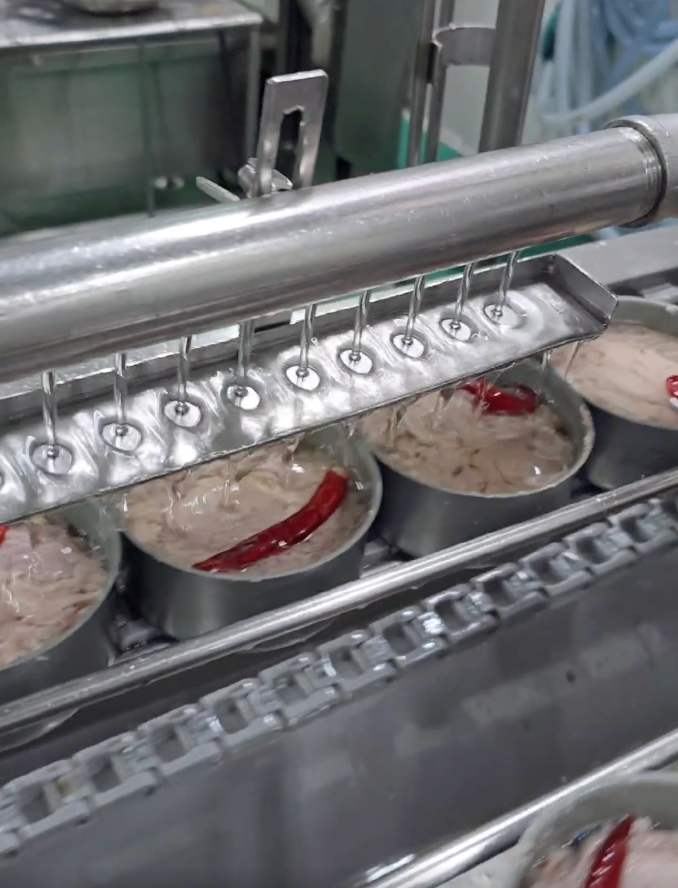
The Olive Oil Quality Gate: Italy’s Unique Market Qualifier
Why Olive Oil Quality Is Italy’s Defining Qualification Standard
Italy is not simply a large canned tuna market — it is a market with a fundamentally different quality framework from every other European country. While France judges canned tuna by culinary tradition and Germany by redistribution logistics, the Italian market is organised around a single primary quality axis: the grade and authenticity of the olive oil used to pack the tuna.
Tonno sott’olio (tuna under oil) is the dominant Italian canned tuna format — representing over 85% of Italian retail canned tuna sales. Italian consumers distinguish actively between three olive oil quality tiers: olio di oliva (blended refined and virgin olive oil), olio di oliva vergine (virgin olive oil), and olio extravergine di oliva (extra-virgin olive oil, EVO). These distinctions are defined by EU Regulation 1308/2013 and enforced by ICQRF — any label claim for a higher olive oil tier that is not supported by the actual oil used constitutes a food fraud offence under Italian law.
Italian retail buyers — from GDO centrali d’acquisto (central buying offices) to conserve ittiche manufacturers — evaluate incoming canned tuna samples against olive oil quality declarations before commercial approval. Suppliers whose olive oil quality is inconsistent or whose declared oil grade cannot be verified are rejected from the Italian market at the qualification stage. This quality gate has historically made Italy one of the most selective markets in the world for canned tuna.
At Top Tide Canning, olive oil sourcing is managed separately from tuna procurement — we verify oil provenance, acidity levels, and organoleptic characteristics batch by batch to ensure that our declared olive oil grade matches the specification. Our Italian buyers receive full oil quality documentation as part of the standard product file.
ICQRF (Ispettorato Centrale per la Repressione delle Frodi) actively tests canned tuna olive oil grade claims in the Italian market. Misrepresentation of olio di oliva as extravergine is a food fraud criminal offence under Italian law (D.Lgs. 231/2001). Our batch-level oil quality documentation protects Italian buyers from compliance exposure.
Four Buyer Segments That Define the Italian Canned Tuna Trade
Italy’s canned tuna import market splits across four structurally distinct buyer types — each with different technical requirements, qualification processes, and commercial priorities.
Industria Conserve Ittiche
Italy’s industria delle conserve ittiche (canned fish manufacturing industry) is centred in Emilia-Romagna, Sardinia, and Sicily — producing branded Italian canned tuna for domestic sale and international export under names recognised globally. These manufacturers purchase bulk canned tuna as an ingredient or semi-finished product for reprocessing, repacking, and relabelling under Italian and export brands. The Italian conserve ittiche sector is one of the most technically demanding industrial buyers in the world — their quality specifications for species, olive oil grade, drained weight, and organoleptic profile are exacting.
GDO — Grande Distribuzione Organizzata
Italy’s GDO (large-format organised retail) accounts for approximately 75% of Italian canned tuna volume. The major GDO chains — Coop Italia, Conad, Esselunga, Carrefour Italia, Auchan Retail Italia, and Eurospin — each run own-label (marchio del distributore) canned tuna programmes purchased from international suppliers. Italian GDO buyers evaluate suppliers through a formal qualification process requiring product technical files (schede tecniche), olive oil quality declarations, EU FIC-compliant Italian label artwork, and a factory audit or third-party quality certification.
HoReCa & Ristorazione Collettiva
Italy’s HoReCa (hotels, restaurants, catering) sector is one of Europe’s largest — Italian restaurant culture is globally famous, and the use of canned tuna in ristoranti, trattorie, pizzerie, and institutional catering (mense aziendali — corporate canteens) is substantial. HoReCa buyers purchase canned tuna through Italian foodservice distributors — Metro Italia, Brake Italia, Transgourmet Italia — in catering can formats (1.7kg and 1.8kg bulk tins). Restaurant-grade tuna must meet Italian restaurant standards for consistency, oil quality, and flavour profile.
Export Re-Processing
Italy’s food industry re-exports canned seafood products globally — Italian conservifici (canneries) produce premium Italian-branded canned tuna that is sold in export markets across Europe, North America, and the Middle East under Italian origin and quality designations. Purchasing bulk canned tuna from international suppliers and reprocessing under Italian brand specifications is a recognised commercial model in the Italian food industry. This re-export buyer segment requires very high product consistency, because the Italian brand reputation depends on the underlying product quality.
Genova & Trieste — Italy’s Two Import Corridors
Italy’s peninsular geography and the location of its food industry clusters mean that two distinct port corridors serve the Italian canned tuna import trade. Port selection significantly affects inland distribution cost to Northern Italy’s food manufacturing and retail hubs.
Italy’s primary container port for food imports from Southeast Asia via the Suez Canal route. Genova’s Voltri Multipurpose Terminal (VTE) handles the majority of Italian food FCL container volume. It is ideally positioned for northwest Italy — Milan (140km, 1.5h), Turin (170km, 2h), Parma (150km, 1.5h), and Bologna (220km, 2h) — the core of Italy’s food manufacturing and GDO buying office geography. Coop Italia’s and Esselunga’s buying offices are in Milan; Barilla and Mutti are based in Parma. The A7 and A26 motorways connect Genova directly to the Po Valley food industry cluster.
Italy’s largest port by tonnage and the primary Adriatic gateway for food imports into northeast Italy, Austria, Slovakia, and Hungary. Trieste’s free port (porto franco) status allows goods to be stored duty-deferred under EU customs suspended status — a significant advantage for buyers managing import duty timing. For buyers based in Venice (115km), Verona (215km), and northeast Italy’s food industry — as well as buyers looking to on-forward via the Adriatic to Eastern Europe — Trieste offers both logistical and customs-timing advantages over Genova.
Italy’s Six Major Retail Buyers — From Coop to Eurospin
Italy’s GDO (Grande Distribuzione Organizzata) is the world’s most quality-stratified retail buying market for canned tuna — spanning premium EVO-grade tonno sott’olio at Esselunga to high-volume value own-label at Eurospin.
Coop Italia — The Cooperative Powerhouse
Coop Italia is Italy’s largest food retailer — a federation of consumer cooperatives operating Ipercoop, Superstore Coop, Coop, and smaller formats across all regions of Italy. Coop’s own-label programme (prodotto Coop, Coop voiché, and the premium Fior Fiore Coop) includes a comprehensive canned tuna range spanning all olive oil quality tiers. Coop’s buying office in Bologna (Emilia-Romagna) is one of Italy’s most technically sophisticated — qualifying as a Coop Italia canned tuna supplier requires full product technical files, declared olive oil quality, and compliance with Coop’s sustainability sourcing policy.
Esselunga — The Quality-First Retailer
Esselunga — Italy’s most profitable food retailer per store — operates predominantly in northern Italy (Lombardy, Piedmont, Tuscany, Liguria). Its premium positioning makes it the most quality-demanding Italian GDO buyer for canned tuna. Esselunga’s own-label canned tuna includes an extravergine tier and a ventresca range — and its buyers evaluate product samples with the rigour of a conserve ittiche manufacturer. Esselunga is the Italian retailer most likely to require EVO-quality olive oil documentation as a commercial condition.
Conad — Italy’s Cooperative Network
Conad is Italy’s second-largest food retailer by turnover, operating through a cooperative of independent retailers across all Italian regions. Its premium format Conad Sapori&Dintorni carries artisan and premium canned seafood including ventresca-style products. Conad’s own-label canned tuna programme is purchased through its central buying structure and serves a broad geographic and socioeconomic range of Italian consumers — from value tiers in the south to premium formats in northern and central Italy.
Carrefour Italia & Auchan
Carrefour Italia operates hypermarkets and supermarkets throughout Italy, with a significant own-label canned tuna programme aligned to the European Carrefour buying standards (IFS Food or BRCGS). Auchan Retail Italia — operating as Simply Market and Auchan — has its buying office in Milan and sources own-label canned tuna to French-influenced quality specifications, requiring the same Italian-language EU FIC compliance as domestic Italian GDO buyers. Both chains represent straightforward qualification pathways for suppliers already approved by European Carrefour or other French GDO buyers.
Eurospin — Italy’s Value Leader
Eurospin is Italy’s leading hard-discount food retailer — with over 1,200 stores, it is one of the largest and most price-competitive food retailers in Italy. Eurospin’s own-label canned tuna programme at olio di oliva quality tier represents the highest-volume, most price-sensitive own-label buying opportunity in the Italian market. Qualifying as an Eurospin canned tuna supplier requires competitive FOB pricing, consistent volume capacity, full EU FIC label compliance, and CHED-PP documentation capability — but Eurospin’s buying criteria are volume-focused rather than premium-specification focused.
LIDL & ALDI Italia
Germany-headquartered LIDL and ALDI operate extensive Italian networks — LIDL with 700+ stores and ALDI (through its Hofer/ALDI Sud structure) growing rapidly in northern Italy. Both purchase own-label canned tuna through their European buying programmes (aligned to German/Austrian standards), but Italian-language EU FIC labels are required for Italian market stock. LIDL and ALDI’s supplier qualification processes (BRCGS Grade A required) are consistent across European markets, meaning suppliers already approved by LIDL Germany can be onboarded to LIDL Italia relatively efficiently.
Six Italian Product Formats — From Ventresca EVO to HoReCa Catering
The Italian canned tuna market has the most differentiated product range in Europe — from bulk olio di oliva own-label through artisan glass-jar ventresca EVO to catering-format ristorazione tins. We produce across all six formats.
Tonno all’Olio di Oliva — Il Formato Dominante
Tuna in olio di oliva (refined + virgin olive oil blend) is the volume format of the Italian retail market — the backbone of every GDO own-label programme and the primary format of branded Italian tuna. We produce tonno all’olio di oliva in the two dominant Italian retail formats: 80g drained weight / 160g net in glass jar, and 80g drained weight / 160g net in easy-open tin. Both formats require peso sgocciolato (drained weight) declaration on the Italian-language label, enforced by ICQRF.
Tonno all’Olio Extravergine di Oliva (EVO)
Premium tonno all’olio extravergine di oliva commands Italy’s highest canned tuna retail price points — stocked in Esselunga, Coop Fior Fiore, and the gastronomia sections of major Italian food retailers. We source and verify EVO olive oil to acidity ≤0.8% and provide full oil traceability documentation to Italian buyers. EVO-grade production requires batch-segregated oil lines and separate quality verification — both of which are built into our production management system for Italian orders.
Ventresca di Tonno
Ventresca — the ventral belly flap of the tuna, the fattiest and most prized cut — is Italy’s premium canned tuna product and has no equivalent in any other European market. Ventresca is always packed in EVO olive oil, typically in glass jars or premium tins, and commands prices 3–5× the standard loins format. Major Italian brands (Rio Mare, Callipo, Ortiz) have established the ventresca category globally, and GDO own-label ventresca programmes are a growing category. We produce ventresca from yellowfin tuna belly cuts to Italian buyer specification.
Tonno al Naturale — Segmento Salute
The health and wellness segment in Italy is driving growth for tonno al naturale (tuna in brine, no oil). Italian health-conscious consumers — particularly in northern Italy’s urban centres — are shifting toward natural brine format for calorie and fat content reasons. The Italian tonno al naturale segment is expanding across Esselunga, Coop, and Conad’s health ranges. We produce tonno al naturale in 80g drained weight format with Italian EU FIC-compliant labelling.
Filetti di Tonno — Artisan Premium
Filetti di tonno (tuna fillets) — whole muscle strips rather than minced or reconstructed loins — represent the artisan premium segment of the Italian canned tuna market. Filetti are sold in glass jars, always in EVO olive oil, and are particularly strong in the specialist gastronomia (delicatessen) channel and the growing Italian specialty food e-commerce market. The filetti segment is dominated by Sicilian and Calabrian artisan brands, but there is growing demand from GDO premium own-label buyers.
Formato Ristorazione — Catering & HoReCa
Italian HoReCa buyers purchase canned tuna in large-format catering tins — 1.7kg and 1.8kg gross weight — distributed through Metro Italia, Brake Italia, and Transgourmet. Restaurant-grade specification requires consistent flavour profile, oil coverage of the tuna surface, and a drained weight yield sufficient for portioning. We produce catering-format tonno all’olio di oliva to Italian HoReCa specification with the production consistency required for high-volume restaurant kitchen use.
MiSAAF, ICQRF & L’Etichettatura EU FIC in Italiano
MiSAAF — Italy’s Competent Authority for Fish Imports
MiSAAF (Ministero delle Politiche Agricole, Alimentari e Forestali — Ministry of Agricultural, Food and Forestry Policies) is Italy’s competent authority for fisheries product import controls under EU Regulation 1379/2013 and 2017/625. MiSAAF oversees border inspection at Italian entry points — Genova and Trieste Border Inspection Posts (BIPs) — and requires CHED-PP pre-arrival notification via EU TRACES NT for all canned fishery product imports. MiSAAF also manages Italy’s national fisheries labelling enforcement programme in coordination with ICQRF.
ICQRF — Italy’s Food Fraud Enforcement Body
ICQRF (Ispettorato Centrale per la Repressione delle Frodi) is Italy’s food fraud enforcement authority — the most active food labelling enforcement body in Western Europe. ICQRF conducts systematic market surveillance on canned tuna across three enforcement priorities: olive oil quality declarations (extravergine fraud), species identity (DNA testing for tuna species verification), and peso sgocciolato (drained weight) accuracy. ICQRF’s enforcement actions against Italian and imported canned tuna brands have been some of the highest-profile food fraud cases in European food law history.
Etichettatura EU FIC in Italiano — Obblighi Legali
All canned tuna sold at retail in Italy must carry Italian-language labels complying with EU Regulation 1169/2011 (EU FIC). Mandatory declarations include: denominazione dell’alimento (Tonno, Tonno Pinna Gialla, or Tonnetto Striato/Listao), elenco degli ingredienti with allergen emphasis (Pesce in bold), tabella nutrizionale in EU format, peso netto and peso sgocciolato (drained weight), zona di cattura (FAO zone code) and paese di lavorazione (country of processing), termine minimo di conservazione (TMC — best before date), and the nome e indirizzo dell’operatore alimentare responsible for the Italian market.
Italian-language labels must declare the FAO fishing zone code for catch origin — e.g. Oceano Pacifico Centro-Occidentale (FAO 71) or Oceano Indiano (FAO 57). ICQRF enforcement includes zone-of-capture verification against fishing vessel documentation. Our production traceability system records catch zone per batch to support Italian label declarations.
ICQRF uses DNA species testing to verify that declared species (Thunnus albacares — yellowfin; Katsuwonus pelamis — skipjack; Thunnus alalunga — albacore) match the product in the tin. Italy is one of only three EU member states that regularly conducts DNA-based species verification on canned tuna market samples. Our species traceability documentation allows Italian buyers to pre-empt ICQRF enquiries.
Italy Canned Tuna Import — FAQ
Why is Italy considered the world’s most demanding canned tuna market?
Italy combines three demanding characteristics unique among European markets: first, an olive oil quality enforcement system where ICQRF actively conducts market surveillance and criminal prosecutions for mislabelled olive oil grade in canned tuna; second, a food industry buyer base (conserve ittiche manufacturers) whose technical evaluation standards for species, drained weight, and oil quality are as rigorous as any food manufacturing sector in the world; and third, consumer market sophistication around ventresca, filetti, and premium artisan formats that does not exist at scale in any other European country.
What documentation does Italy require for canned tuna imports?
Italy requires: a health certificate from the competent authority of the exporting country, a CHED-PP pre-arrival notification via EU TRACES NT, a certificate of origin, commercial invoice and packing list, and a full set of bills of lading. MiSAAF enforces border inspection at Genova and Trieste BIPs. ICQRF separately enforces Italian-language EU FIC labelling compliance — including olive oil quality declaration, peso sgocciolato (drained weight), zona di cattura (FAO zone code), and species identification accuracy.
What olive oil quality does Italy require for canned tuna?
Italian canned tuna is sold in three olive oil quality tiers: olio di oliva (blended refined + virgin, acidity ≤1%), olio di oliva vergine (virgin, single pressing, acidity ≤2%), and olio extravergine di oliva (EVO, first cold-press, acidity ≤0.8%). The declared oil quality must match the actual oil used — ICQRF actively tests for extravergine fraud. We provide batch-level olive oil quality declarations, acidity test certificates, and oil provenance documentation to Italian buyers for each production run.
What is ventresca and can you produce it?
Ventresca is the ventral belly section of the tuna — the fattiest, most tender, and most premium cut, always packed in extra-virgin olive oil (EVO). Ventresca commands a 3–5× price premium over standard loins and is uniquely important in the Italian market — it has no equivalent in French, German, or UK canned tuna culture. We produce ventresca from yellowfin tuna belly cuts to Italian buyer specification in glass jar and premium tin formats, with EVO olive oil documentation appropriate for ICQRF scrutiny.
What is the difference between Genova and Trieste for Italian imports?
Genova (Porto di Genova) is the preferred entry port for buyers in northwest Italy — Milan, Parma, Turin, and Bologna — where Italy’s major GDO buying offices and conserve ittiche manufacturers are concentrated. Transit from Southeast Asia: 24–26 days. Trieste (Porto di Trieste) is preferred for northeast Italy buyers and those seeking duty-deferred storage under Trieste’s porto franco (free port) status — the customs timing advantage can be significant for buyers managing import duty cash flow. Transit: 26–28 days.
Do you produce for the Italian conserve ittiche (canned fish manufacturing) industry?
Yes. We supply bulk canned tuna as ingredient or semi-finished product to Italian conserve ittiche manufacturers — canneries that reprocess, relabel, and brand canned tuna for Italian domestic and export sale. Conserve ittiche buyers require detailed schede tecniche (product technical files), batch-level drained weight data, species DNA traceability documentation, and olive oil quality declarations. Our production documentation system is specifically designed to support the Italian conserve ittiche qualification process.
Does Italy have specific rules on tuna species labelling?
Yes — EU Regulation 1379/2013 (Common Fisheries Policy labelling regulation) and EU FIC Regulation 1169/2011 together require species-specific labelling in Italian. Correct Italian species names are: Tonno Pinna Gialla (yellowfin — Thunnus albacares), Tonnetto Striato / Listao (skipjack — Katsuwonus pelamis), and Tonno Bianco / Alalunga (albacore — Thunnus alalunga). ICQRF uses DNA testing to verify declared species against actual product. We provide species traceability documentation to Italian buyers to support label accuracy compliance.
What certification does Italy’s GDO require from canned tuna suppliers?
Major Italian GDO retailers — Coop Italia, Esselunga, Conad, Carrefour Italia — require either IFS Food certification (Italian retailers were involved in the IFS standard development alongside France and Germany) or BRCGS Grade A as baseline supplier qualification. Esselunga additionally requires detailed olive oil quality documentation and organoleptic sample evaluation. Eurospin and the discount channel prioritise BRCGS Grade A and competitive FOB pricing. Our facility operates to IFS Food-aligned quality systems with documentation available to Italian buyers during qualification.
Italy Export Capabilities
From MiSAAF import documentation and olive oil quality declarations to ventresca EVO production and ICQRF-ready label compliance — everything Italy’s most demanding buyers require.
Explore More Markets We Supply
Top Tide Canning exports canned tuna across Europe, the Middle East, Africa, and Asia. Explore related markets below.
Request an Italy Export Quotation
Specify your product format (tonno all’olio di oliva, EVO, ventresca, or tonno al naturale), target olive oil quality tier, preferred entry port (Genova or Trieste), and GDO buyer or conserve ittiche manufacturer. We respond within one business day with FCL pricing, transit timing, and a full MiSAAF/ICQRF compliance document checklist.
MiSAAF Compliant · ICQRF-Ready Labels · EVO Declared · Genova & Trieste