
Canned Tuna Supplier
for the United States
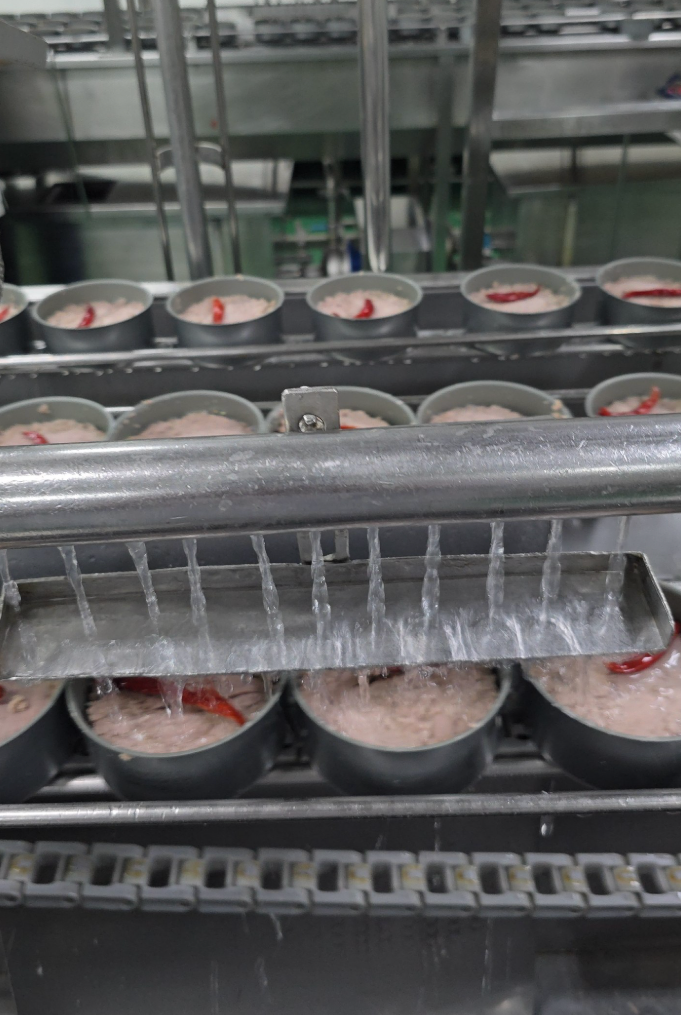
Top Tide Canning is a B2B canned tuna exporter built for the world’s most demanding seafood import market. We supply US retail private label buyers, Sysco and US Foods food service distributors, Defense Logistics Agency military procurement, and Amazon channel buyers — with complete dolphin-safe DPCIA, FDA FSMA FSVP, Prior Notice, COOL, and California Prop 65 compliance included as standard.
Why the United States Demands a Different Kind of Canned Tuna Supplier
The US canned tuna market generates over $2.8 billion in annual retail sales and imports more canned tuna than any other country in the world. It is also the most regulation-dense seafood import market on earth — requiring compliance with six distinct regulatory frameworks administered by four different federal agencies. A supplier who meets EU, GCC, or CODEX standards may still be non-compliant with US requirements across multiple dimensions simultaneously.
World’s Largest Single-Country Tuna Import Market
The United States consumes approximately 1.2 billion pounds of canned tuna annually, driven by a population of 335 million with one of the highest per-capita tuna consumption rates among developed economies. The three dominant brands — Bumble Bee (now owned by FCF), Chicken of the Sea (Thai Union), and StarKist (Korea’s Dongwon Group) — are all foreign-owned, signalling that global supply chains are fully embedded in the US market. Private label programs at Walmart, Costco, Kroger, and Trader Joe’s collectively account for a significant share of total category volume, making them the primary B2B commercial opportunity for capable foreign manufacturers.
Six Compliance Layers, Four Federal Agencies
No other market in this export series — not the EU, Gulf, Japan, or Africa — requires as many simultaneous compliance frameworks as the US. The FDA administers three separate requirements (Seafood HACCP under 21 CFR Part 123, FSMA’s Foreign Supplier Verification Program under 21 CFR Part 1 Subpart L, and Prior Notice under the Bioterrorism Act). NOAA and USDA each administer additional requirements. California state law adds a seventh layer through Proposition 65. Understanding all six federal requirements as a unified compliance package — not as separate transactions — is the first commercial skill a US-bound supplier must develop.
Four Distinct Buyer Ecosystems, Each with Different Economics
US buyers operate in four commercially separate ecosystems: retail private label (large-volume, specification-driven, multi-year contracts), food service distribution (institutional pack formats, broadline distributor relationships), government and military procurement (DLA Troop Support MIL-SPEC contracts via SAM.gov), and e-commerce (Amazon FBA/Vendor Central, Thrive Market, direct-to-consumer subscription). Each channel has different price points, documentation requirements, label formats, and sales cycle lengths. A supplier entering the US market must decide which channel or channels to target before designing their compliance and labelling approach.
Six Regulatory Requirements Every US-Bound Shipment Must Satisfy
The US imposes six distinct, non-overlapping compliance requirements on imported canned tuna — each administered by a different agency, each with its own filing system and enforcement mechanism. A shipment that clears one requirement can still be detained for failing another. Meeting all six simultaneously, before the vessel departs origin port, is the non-negotiable baseline for any supplier seeking sustained US market access.
The US Dolphin Protection Consumer Information Act (DPCIA, 16 U.S.C. § 1385) was enacted in 1990 following public concern over dolphin bycatch in Eastern Tropical Pacific tuna fisheries. It prohibits false dolphin-safe claims and establishes the certification standard: no purse seine net sets on or around dolphin schools, verified by a vessel captain’s signed declaration and, for large ETP vessels, an independent on-board observer. The Earth Island Institute’s International Marine Mammal Project (IMMP) administers the most commercially recognised certification program — its dolphin logo is required by every major US retailer.
Commercially mandatory across all US retail and food service channels
FDA’s Seafood Hazard Analysis and Critical Control Points regulation (21 CFR Part 123, effective December 1997) applies to all seafood processors, including foreign facilities whose products enter US commerce. For canned tuna, required CCPs include thermal processing validation (ensuring commercial sterility against Clostridium botulinum and other pathogens), histamine control for scombroid-forming species, and economic fraud prevention (species substitution). HACCP records must be maintained for one year for refrigerated products and two years for shelf-stable products, and made available to FDA inspectors on request.
Required for all foreign facilities; records must be retained and available for FDA inspection
The Food Safety Modernization Act (FSMA, Public Law 111-353) fundamentally shifted US food safety from reactive recall to proactive prevention. The Foreign Supplier Verification Program (21 CFR Part 1 Subpart L) requires every US importer to verify their foreign supplier provides the same level of public health protection as applicable FDA standards. Verification activities may include supplier audits, product testing, or review of the supplier’s food safety records — with a third-party FSSC 22000 or BRC certificate typically accepted as the primary verification activity for low-to-moderate risk products like commercially sterile canned tuna.
Applies to every US importer; TTC provides the full FSVP documentation package
Section 307 of the Public Health Security and Bioterrorism Preparedness and Response Act of 2002 (21 CFR Part 1 Subpart I) requires electronic Prior Notice of all food shipments before arrival at a US port of entry, submitted via FDA’s Prior Notice System Interface (PNSI). For ocean freight, filing must occur no less than 8 hours before vessel arrival. Required information includes product description and HTS code, manufacturer and grower details, country of origin, country of processing, US consignee, and anticipated port and date of arrival. Failure to file results in the shipment being held or refused at the US port.
Must be filed before every US-bound shipment — no exceptions, no grace period
Country of Origin Labeling (COOL) for seafood at US retail is mandated under the US Farm Bill, currently implemented through USDA Agricultural Marketing Service regulations (7 CFR Part 60). Retail-packaged seafood must declare country of origin at the point of sale — for canned tuna, this means the label must state the country where the tuna was processed (canned), not necessarily where it was caught. Top Tide Canning provides a COOL certificate of origin for every batch shipped to the US, enabling the importer’s Nutrition Facts artwork to include the correct origin statement before printing.
Required on all retail-packaged seafood at US point of sale
FDA’s food labeling regulation (21 CFR Part 101) requires a Nutrition Facts panel in a specific US format that differs from EU GDA-style, Canadian NFT, and most other international label formats. Key US-specific requirements include: serving size declared in both household measure and metric per FDA’s Reference Amount Customarily Consumed (for canned fish: approximately 56g / 2 oz drained); % Daily Value columns based on a 2,000-calorie reference diet; added sugars declared separately; vitamin D and potassium listed. Top Tide Canning provides print-ready US Nutrition Facts artwork, including updated 2016 format compliance, for all retail private label programs.
Required on all US retail-packaged products; format differs significantly from international standards
California’s Safe Drinking Water and Toxic Enforcement Act (Prop 65, Health & Safety Code §25249.5) lists methylmercury as a reproductive toxicant. Canned tuna sold in California may trigger a mandatory warning label unless the product qualifies for the FDA/EPA mercury advisory safe harbor. Skipjack-based canned light tuna (lower mercury) generally satisfies the safe harbor and avoids a mandatory Prop 65 warning; albacore products may require one. Top Tide Canning provides batch-level mercury certificates of analysis from accredited third-party laboratories to support your Prop 65 compliance review and legal risk assessment for California distribution.
Four US Buyer Channels — Each with Distinct Economics, Pack Formats, and Compliance Requirements
US buyers do not operate in a single market — they operate in four commercially separate ecosystems. The channel you target determines your pack format, label design, certification priority, price point, and sales cycle. Top Tide Canning is qualified to supply all four.
The FDA Import Clearance Sequence — Seven Steps from Supplier Qualification to US Port Release
Every US-bound canned tuna shipment passes through the same seven-step sequence. A failure at any stage — an unregistered facility, a missing Prior Notice, a lapsed dolphin-safe declaration, or a non-compliant Nutrition Facts label — results in FDA detention or refusal at the US port. Understanding each step, its timing requirements, and who is responsible (supplier vs. US importer vs. freight forwarder) is essential for predictable US market supply.
| Product | HTS Code | MFN Duty |
|---|---|---|
| Skipjack / other, not in oil (brine/water) | 1604.14.30 | ~12.5% |
| Yellowfin in oil | 1604.14.10 | ~35% |
| Skipjack in oil | 1604.14.22 | ~35% |
| SE Asian origin (Thailand, Indonesia) | — | MFN rate applies |
| China origin (Section 301 tariff) | — | MFN + 25% additional |
SE Asian origin carries a material tariff advantage over Chinese-origin product. Always verify current rates with a licensed US customs broker — tariff schedules may change by executive action.
Six Canned Tuna Formats Engineered for US Channel Requirements
Each US buyer channel demands a specific pack format, species, pack medium, and documentation stack. The 5oz retail can, 66.5oz food service tin, 3oz premium DTC format, DLA MIL-SPEC grade, BPA-free premium SKU, and dolphin-safe yellowfin in water are commercially distinct products — not variations of the same item. We produce all six with the specific certifications, label artwork, and documentation each channel requires.
5oz (142g) — US Mass Market Standard
The 5oz can is the US baseline retail SKU, sold as single units and 5-can multipacks at every major grocery chain. It aligns with the FDA Reference Amount Customarily Consumed (RACC) for canned fish. We produce 5oz skipjack and yellowfin in brine and sunflower oil, with US Nutrition Facts label artwork, COOL statement, GS1 UPC assignment support, and dolphin-safe documentation as standard for all retail private label programs.
3oz (85g) — Premium Single-Serve & DTC
The 3oz format serves the premium DTC subscription, Thrive Market, Trader Joe’s, and Whole Foods/Amazon natural channel. It positions well as a single-serve lunch-portion and is the preferred format for D2C subscription seafood boxes. BPA-free can lining, water-pack with no added salt, and MSC certification are available for buyers requiring the full premium sustainability and clean-label credential stack.
66.5oz No. 10 — Institutional Food Service
The 66.5oz No. 10 can is the US food service standard format, used in commercial kitchens, school cafeterias, hospital dietary departments, and all Sysco, US Foods, and PFG distribution programs. Labelling follows distributor-brand specification rather than consumer Nutrition Facts format. We produce this format in skipjack brine and skipjack oil, case-packed to standard food service specifications, with distributor-brand label artwork available.
DLA MIL-SPEC — Defense Logistics Agency Grade
DLA Troop Support contracts require minimum drained weight per purchase description, dolphin-safe DPCIA documentation, FSSC 22000, and case marking per military specification: lot number, pack date, use-by date, and facility identification code. We provide the full DLA supplier qualification package including product specification sheets conforming to DLA purchase description format. All supply is through DLA-registered US importer partners who hold active SAM.gov registrations.
BPA-Free — California & Natural Channel Standard
BPA-free can lining is now a commercial requirement for Whole Foods, Trader Joe’s, Target’s premium tier, and most natural channel retail programs. California Proposition 65 lists BPA as a reproductive toxicant, driving growing retailer pressure to eliminate it. We offer BPA-free (oleoresin alternative) can lining production across all pack sizes — 3oz, 5oz, and 66.5oz — for US buyers whose channel or category positioning requires this specification.
Dolphin-Safe Yellowfin in Water — Natural Channel Flagship
Yellowfin tuna in spring water — no added salt, dolphin-safe IMMP, BPA-free, MSC-certified — is the premium SKU for Thrive Market, Whole Foods/Amazon, and direct-to-consumer subscription buyers who compete on sustainability credentials. Full IMMP documentation, water-pack with no-sodium-added option, origin traceability to fishing vessel, and batch-level mercury CoA for Prop 65 due diligence are available. This format commands the highest per-unit price in the US retail channel.
What Must Appear on a Canned Tuna Label Sold in the United States
US retail food labeling is governed by FDA’s 21 CFR Part 101 and differs materially from EU, Canadian, Australian, and Gulf standards. A label produced for any other export market cannot be used for US retail without modification. Every element below is mandatory — a shipment with a non-compliant label may be detained at the port or result in a retail recall.
Mandatory US Label Elements
- Product name with FDA-correct species market name: ‘Light Tuna’ (skipjack), ‘White Tuna’ (albacore), ‘Yellowfin Tuna’ (yellowfin) — per FDA’s Seafood List
- Net weight in both US customary (oz) and metric (g) — e.g., ‘Net Wt 5 oz (142g)’ per 21 CFR 101.105
- Ingredients list in descending order of predominance by weight
- Major food allergen declaration under FALCPA and FASTER Act — fish is one of the nine major US allergens; must be declared in ‘Contains: Fish (Tuna)’ format
- FDA Nutrition Facts panel in updated 2016 format per 21 CFR 101.9 — serving size in household measure and grams, % Daily Values, added sugars declared separately, vitamin D and potassium listed
- Name and address of US importer (as manufacturer, packer, or distributor) per 21 CFR 101.5
- Country of origin per USDA COOL (7 CFR Part 60) — country of processing
- GS1 US UPC barcode (UPC-A or EAN-13) — required for retail POS scanning
- Dolphin-safe statement and logo (IMMP black dolphin logo) — commercially mandatory at all major retailers
Key Differences vs. Other Market Label Formats
| Element | US (FDA) | EU / International |
|---|---|---|
| Serving size | 56g / 2oz (RACC) | ~100g (reference) |
| Daily Values | % DV — 2,000 kcal basis | % RI — 2,000 kcal basis |
| Added sugars | Required separately | Not required |
| Vitamin D | Required | Optional |
| Vitamin A / C | No longer required (2016) | Optional |
| Dolphin-safe | Commercially mandatory | Voluntary only |
| COOL | Mandatory (USDA) | Mandatory (different format) |
| BPA-free claim | Premium channel expected | Not standard |
Top Tide Canning provides print-ready US Nutrition Facts artwork for all retail private label programs, pre-formatted in FDA 2016-compliant layout. Label files are delivered in vector format (AI/PDF) ready for print supplier submission.
US Canned Tuna Import FAQ — Dolphin-Safe, FSVP, Tariffs, Prop 65, Costco, and More
Answers to the most common questions from US importers, private label buyers, and food service procurement teams about sourcing canned tuna from Southeast Asian manufacturers.
What is FDA FSMA FSVP and does it apply to canned tuna imported into the United States?
Yes — the FDA Food Safety Modernization Act (FSMA) Foreign Supplier Verification Program (FSVP), which became mandatory under 21 CFR Part 1 Subpart L, requires US importers to verify that their foreign food suppliers produce food under safety standards at least as protective as FDA’s Preventive Controls and Produce Safety rules. For canned tuna, the FSVP requires the US importer to conduct hazard analysis of the product, evaluate foreign supplier performance, conduct supplier verification activities (which may include onsite audits, records review, or sampling and testing), and maintain records for at least two years. FSSC 22000 certification held by the foreign manufacturer — such as Top Tide Canning — significantly satisfies the ‘qualified facility’ and supplier verification documentation requirements under FSVP. The US importer (not the foreign manufacturer) holds primary FSVP compliance responsibility, but the manufacturer’s GFSI-recognised food safety certification (FSSC 22000, BRC, SQF) is the most efficient mechanism to meet the FSVP verification requirement.
What is the DPCIA and how does dolphin-safe labeling work for US market canned tuna?
The Dolphin Protection Consumer Information Act (DPCIA, 16 U.S.C. § 1385), administered by NOAA Fisheries (National Oceanic and Atmospheric Administration), establishes the legal definition and conditions for ‘dolphin safe’ labeling of canned tuna sold in the United States. Under the DPCIA, canned tuna may be labeled dolphin safe if: (1) no purse seine net was intentionally deployed on or used to encircle dolphins during the fishing trip; (2) no dolphins were killed or seriously injured in any net during the fishing trip; and (3) the vessel captain certifies compliance on a statement accompanying each trip. For skipjack tuna caught in the Western and Central Pacific Ocean — the primary source for Top Tide Canning’s product — purse seine fishing on free schools or FAD-associated schools without encircling dolphins is standard practice, and the DPCIA certification is routinely satisfied. The US importer must maintain the captain’s certification and observer reports for three years under DPCIA record-keeping requirements.
What is the HTSUS tariff classification and duty rate for canned tuna imported into the USA?
Canned tuna is classified under the Harmonized Tariff Schedule of the United States (HTSUS) Chapter 16, primarily under subheading 1604.14.30 (tuna and skipjack, not in oil, in airtight containers) at a MFN duty rate of approximately 12.5% ad valorem, and 1604.14.10 (in oil) at approximately 35% ad valorem — making oil-packed canned tuna significantly more tariff-exposed than water-packed in the US market. These are MFN rates; most Southeast Asian exporters to the US do not benefit from a US FTA, so MFN applies. Section 301 tariffs (imposed under the Trade Act of 1974) applied additional duties to Chinese-origin products — canned tuna of Chinese origin was subject to elevated tariff treatment. Thai, Indonesian, Vietnamese, and Philippine origin tuna pays MFN rates without additional Section 301 penalties. GSP (Generalized System of Preferences) eligibility for specific Southeast Asian countries should be verified with a licensed US customs broker as GSP programme status is subject to periodic Congressional renewal.
What are the US FDA Nutrition Facts panel requirements for canned tuna?
The US FDA’s Nutrition Facts panel requirements for canned tuna are governed by 21 CFR Part 101 (Food Labeling), with the 2016 Nutrition Facts Label update (effective January 2020 for large manufacturers) introducing significant changes. For canned tuna, the key requirements include: declaration of calories per serving in a larger, bolder font; added sugars declaration (separate from total sugars); updated Daily Values for nutrients including sodium, dietary fiber, and vitamin D; removal of ‘Calories from Fat’ line; and mandatory declaration of potassium and vitamin D. The serving size for canned tuna is regulated under 21 CFR § 101.12 Reference Amounts Customarily Consumed (RACC) — for canned fish, the RACC is 55g drained. The 2016 update also requires the serving size to reflect what consumers actually eat rather than a theoretical portion. A 140g net weight can of tuna (approximately 100g drained) would therefore declare a serving size of 55g drained (approximately ½ can) with about 2 servings per container. FDA’s labeling requirements apply to the US importer’s label — Top Tide Canning provides base label specifications that the US importer adapts to the 2016 Nutrition Facts format.
How does Sysco’s national distribution network work for canned tuna suppliers?
Sysco Corporation — with over 650,000 customer delivery points and approximately $68 billion in annual revenue — is the largest broadline foodservice distributor in North America and the most significant single-buyer relationship for any supplier entering the US foodservice channel. Sysco operates through a decentralised network of regional operating companies (OpCos) — approximately 70 across the US — each of which maintains its own buyer relationships, local vendor approvals, and product listings. A national Sysco supplier agreement (a ‘National Account’ or ‘Authorized Vendor’ agreement) provides access to all 70 OpCos through a single corporate-level qualification, but the practical penetration of individual OpCos still requires relationship development with local OpCo category managers. Sysco’s vendor qualification process for shelf-stable proteins requires: GFSI-recognised food safety certification (FSSC 22000 or SQF Level 2+), dolphin-safe documentation, US FDA food facility registration under FSMA, FSVP compliance documentation from the US importer, product specification sheets, and insurance documentation. Top Tide Canning’s FSSC 22000 certification satisfies Sysco’s primary food safety qualification criterion.
What is the FDA Prior Notice requirement and how does it affect canned tuna shipments to the US?
FDA Prior Notice (PN) is a mandatory pre-arrival notification requirement for all food imported or offered for import into the United States, established under Section 307 of the Bioterrorism Act (2002) and codified at 21 CFR Part 1, Subpart I. Prior Notice must be submitted electronically to FDA through the Prior Notice System Interface (PNSI) or through US Customs and Border Protection’s (CBP) Automated Broker Interface (ABI) not more than 15 days before arrival and no later than: 8 hours before arrival by ocean vessel, 4 hours before arrival by air, and 2 hours by truck or rail. The Prior Notice must include: FDA food facility registration number of the manufacturing facility, shipment identification (voyage, vessel name, bill of lading), product description (common name, quantity, lot numbers), anticipated US arrival port, and the name of the US importer. Failure to submit Prior Notice or submission of incomplete/inaccurate Prior Notice results in the shipment being held at the port of entry until FDA clears or refuses the submission. Top Tide Canning maintains active FDA food facility registration and provides the facility registration number and all required Prior Notice documentation to US importers with each shipment.
Does California Proposition 65 apply to canned tuna sold in California?
Yes — California Proposition 65 (the Safe Drinking Water and Toxic Enforcement Act of 1986, Cal. Health & Safety Code § 25249.5 et seq.) requires businesses to provide a ‘clear and reasonable warning’ before knowingly exposing any individual to a chemical listed by California’s Office of Environmental Health Hazard Assessment (OEHHA) as a known carcinogen or reproductive toxicant. Methylmercury is on the Proposition 65 list, and canned tuna contains naturally occurring methylmercury from the marine environment. As a result, canned tuna sold in California has historically carried Proposition 65 warnings, particularly for albacore (white) tuna which has higher methylmercury concentrations than skipjack (light) tuna. In 2024, OEHHA updated its Prop 65 Safe Harbor levels for methylmercury in fish. The practical implication for suppliers: canned tuna distributed to California retail or food service accounts may require a Prop 65 warning on the label or at the point of sale, depending on the species, methylmercury content of the specific lot, and serving size. The US importer or California distributor bears primary Prop 65 compliance responsibility, but Top Tide Canning provides batch methylmercury test results with each production lot to enable accurate Prop 65 compliance assessment.
What are the DLA Troop Support and military commissary requirements for canned tuna?
The Defense Logistics Agency (DLA) Troop Support, headquartered in Philadelphia and operating as the primary procurement arm of the US military food supply chain, procures canned tuna for military dining facilities (DFACs), commissaries (operated by DeCA — Defense Commissary Agency), and forward-deployed military units globally. DLA Troop Support purchases canned tuna under long-term contracts published on the SAM.gov procurement portal (System for Award Management). Supplier qualification for DLA contracts requires: compliance with DLA’s Subsistence Total Order and Receipt Electronic System (STORES) requirements; product specification compliance with the applicable Commercial Item Description (CID) or Military Specification (MIL-SPEC) for canned fish; FDA food facility registration; current GFSI food safety certification; dolphin-safe documentation; country of origin compliance under the Berry Amendment (which requires certain military food items to be of domestic US origin — canned tuna is generally exempt, but verify per contract); and cage code registration in SAM.gov. DeCA commissary supply contracts are separate from DLA procurement and are managed through DeCA’s Category Management programme, which sources through approved distributors including Sysco and McLane Company.
Top Tide Canning US Market Capabilities — Every Compliance Layer, Every Channel
From dolphin-safe DPCIA and FDA FSMA FSVP documentation through DLA MIL-SPEC grading, Costco Kirkland Signature specification, Amazon FBA pack compliance, and CIF LALB or USEC port pricing — we cover every requirement for every US channel.
Explore Other Top Tide Canning Export Markets
Top Tide Canning exports canned tuna across North America, Europe, the Middle East, Asia-Pacific, and Africa. Each market page covers the specific regulatory, commercial, and logistical requirements for that destination.
Request a US Market Canned Tuna Quotation
Tell us your channel — retail private label, Sysco/US Foods food service, DLA military via SAM.gov, or Amazon FBA. We respond within one business day with CIF LALB or USEC pricing, a complete dolphin-safe and FSVP documentation package, US Nutrition Facts label artwork, and a Prop 65 compliance advisory specific to your distribution channel.
Dolphin-Safe DPCIA · FDA FSMA FSVP · FSSC 22000 · US Nutrition Facts · COOL · BPA-Free · MIL-SPEC