
Canned Tuna Supplier
for Poland
Top Tide Canning exports EU-compliant canned tuna to Poland — Central Europe’s largest food economy and the EU’s foremost private-label food manufacturing hub. We supply tuńczyk w oleju słonecznikowym and tuńczyk w sosie własnym to Poland’s retail chains, food manufacturers, and the re-export production sector that packs under European retailer own-label brands — via the Gdańsk–Gdynia Baltic gateway.
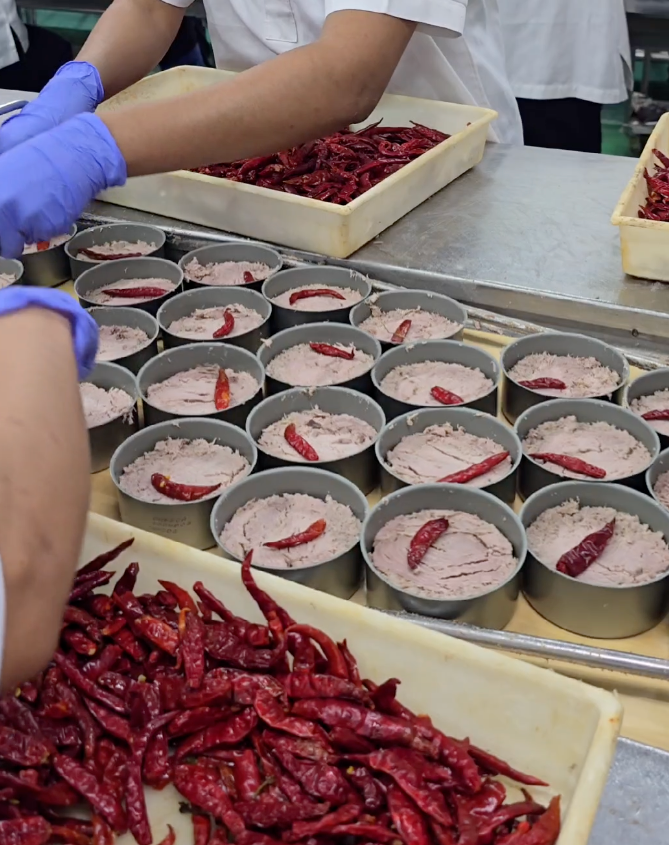
Poland: Central Europe’s Food Manufacturing Powerhouse and Re-Export Hub
The EU’s Largest Food Manufacturing Economy — and Its Re-Export Engine
Poland is not simply a canned tuna consumer market — it is the engine of European food manufacturing. Poland’s food and beverage industry is the largest in the EU by employment, generating over €37 billion in annual food exports — more than France, Italy, or Spain. Polish food factories supply private-label products to retailers across Germany, the UK, France, the Netherlands, and Scandinavia under those retailers’ own-label brands, making Poland the continent’s most important food manufacturing sub-contractor.
For canned tuna specifically, this manufacturing model creates a dual commercial opportunity. The first is the domestic Polish retail market — 38 million consumers with rapidly rising disposable incomes and growing appetite for protein-rich convenience foods including canned tuna. The second is the industrial re-export opportunity: Polish food manufacturers import bulk canned tuna from international producers, reprocess it under EU retailer own-label specifications, and export finished product across the EU. Canned tuna imported into Poland may end up on German Lidl shelves, French Carrefour shelves, or UK Tesco shelves under those retailers’ own-label brands.
Poland’s cost advantage in food manufacturing — skilled labour at significantly lower cost than Western Europe, modern processing infrastructure, EU food safety standards, and Central European logistics positioning — has made it the preferred production base for European retailers seeking to reduce own-label manufacturing costs without compromising EU compliance. This structural role is not likely to diminish: Poland’s food manufacturing sector continues to invest heavily in processing capacity and cold-chain infrastructure.
Domestic retail: 38M consumers · Biedronka, Lidl Polska, Carrefour Polska, Kaufland, Auchan Polska.
Re-export manufacturing: Polish food factories processing bulk imported tuna under EU retailer private-label specifications for export across Germany, France, UK, and Scandinavia.
Gdańsk & Gdynia — Poland’s Baltic Sea Gateway
The Tri-City port complex (Trójmiejski Kompleks Portowy) on Poland’s Baltic coast — comprising the ports of Gdańsk and Gdynia — is Poland’s primary maritime gateway for containerised imports from Southeast Asia and one of the Baltic Sea’s most strategically positioned logistics hubs, serving not only Poland but the broader Central and Eastern European hinterland.
Deepwater Container Terminal (DCT) Gdańsk is the Baltic Sea’s largest container terminal and the primary entry point for direct Asia–Baltic container services (Maersk, MSC, CMA CGM). DCT Gdańsk offers the shortest Baltic transit from Southeast Asian ports — avoiding the North Sea/English Channel congestion that affects Hamburg and Rotterdam services. From Gdańsk, Warsaw is 340km (3.5h by motorway), Łódź (Poland’s central logistics hub) is 390km (4h), Wrocław 490km (5h), and Kraków 560km (5.5h). Poland’s A1 motorway connects Gdańsk directly to the country’s north–south logistics spine.
Gdynia, immediately adjacent to Gdańsk in the Tri-City metropolitan area, handles feeder container services from Hamburg and Rotterdam, as well as direct services from select Asian carriers. Gdynia is preferred by smaller importers using European feeder networks and by buyers whose supply chains originate in North Sea ports before transhipment to the Baltic. Its Bałtycki Terminal Kontenerowy (BCT) offers competitive handling rates and flexible LCL consolidation services for importers needing less-than-container-load volumes.
Gdańsk–Gdynia’s hinterland extends well beyond Poland — the port complex serves as the de facto gateway for Central and Eastern European buyers using Polish logistics infrastructure for onward distribution. From Warsaw, road haulage to Prague (660km, 6h), Budapest (900km, 9h), Vilnius (550km, 5.5h), and Riga (630km, 6.5h) is routine. Polish logistics operators — DB Schenker Polska, DHL Poland, FM Logistic — offer hub-and-spoke distribution from Polish warehousing to CEE markets.
Poland as Europe’s Private-Label Production Base — Four Re-Export Channels
Beyond Poland’s domestic retail market, the country’s food manufacturing infrastructure serves as a production platform for European retailer private-label programmes — importing bulk canned tuna from international suppliers and exporting finished own-label product across the EU.
Germany — Lidl, Aldi, Edeka Own-Label
German retailers — Lidl, Aldi, Edeka, and Rewe — are among the largest users of Polish food manufacturing capacity for own-label production. German discounters with Polish operations source own-label canned seafood (including canned tuna) from Polish processors who import bulk tuna from Southeast Asia and repack under German retailer specification. This supply chain model — bulk tuna in via Gdańsk → Polish repacking → export to Germany under German retailer own-label — is well-established and represents the largest single re-export channel for canned tuna manufactured in Poland.
UK — Tesco, Sainsbury’s, Aldi UK
Polish food manufacturers supply own-label canned and processed seafood to UK retailers including Tesco, Sainsbury’s, Aldi UK, and Lidl UK. Post-Brexit, UK–Poland food trade requires additional documentation (UK import health certificates, IPAFFS pre-notification) but Polish food manufacturers are experienced in the UK regulatory requirements. UK-specification Polish-manufactured canned tuna typically carries UK FIC labels (distinct from EU FIC), UK-format nutrition information, and is produced to BRCGS Grade A standard — the UK retailer baseline.
Scandinavia — ICA, Coop Nordic, Rema 1000
Scandinavian retailers — ICA (Sweden/Norway), Coop Nordic, and Rema 1000 (Norway/Denmark) — source significant volumes of own-label food from Polish manufacturers, benefiting from Poland’s competitive manufacturing costs and Baltic Sea proximity. Gdańsk–Gdynia’s Baltic location makes Poland the natural production base for Scandinavian retailer private-label programmes seeking European compliance at competitive cost. Scandinavian own-label canned tuna from Polish manufacturers requires Swedish, Norwegian, or Danish EU FIC language labelling as applicable.
France & Benelux — Carrefour, Albert Heijn
French and Benelux retailers use Polish food manufacturing capacity for cost-competitive own-label production across multiple food categories. Carrefour France and Albert Heijn (Netherlands) have both used Polish food processors as own-label suppliers. For canned tuna specifically, Polish manufacturers with appropriate IFS Food certification and French/Dutch-language EU FIC label capability can supply into these Western European own-label programmes while benefiting from Poland’s lower manufacturing cost base versus Western European alternatives.
Six Polish Retail & Distribution Channels — From Biedronka to Eurocash
Poland’s retail landscape is dominated by discount formats — Biedronka’s 30%+ share and the rapid growth of Lidl and Aldi make Poland the most discount-penetrated major food market in Central Europe. Own-label (marka własna) strength is extreme.
Biedronka — Poland’s Retail Superpower
Biedronka (operated by Portugal’s Jeronimo Martins) is by far Poland’s largest food retailer — operating over 3,500 stores across Poland with a 30%+ market share, the highest of any single food retailer in Central Europe. Biedronka’s business model is built on own-label (marka własna) dominance — the vast majority of its food range is own-label, and its canned tuna is exclusively own-brand tuńczyk. Qualifying as a Biedronka canned tuna supplier is the single largest own-label volume opportunity in the Polish retail market. Biedronka’s buying team is based in Warsaw and is known for conducting rigorous supplier qualification processes.
Lidl Polska & Aldi Polska — German Discounters
Lidl Polska (800+ stores) and Aldi Polska (250+ stores, rapidly expanding) bring the German discount retail model to Poland. Both carry own-label canned tuna programmes aligned to their European parent standards — BRCGS Grade A required — with Polish-language EU FIC labels for the Polish market. Lidl’s own-label tuńczyk under its Nixe seafood own-label brand is a consistently strong-selling SKU in Polish stores. German discount retailers are gaining market share in Poland at the expense of traditional Polish supermarket chains, making them an increasingly important buyer channel.
Carrefour Polska & Auchan Polska
Carrefour Polska operates 90+ hypermarkets and 400+ supermarkets across Poland, with own-label canned tuna aligned to European Carrefour buying standards (IFS Food or BRCGS). Auchan Polska operates 25+ hypermarkets with a significant own-label food range. Both chains serve the middle and upper market segments of Polish retail, carrying own-label canned tuna at standard and mid-premium price tiers alongside branded product. Their buying processes align closely with the wider European Carrefour and Auchan Group frameworks, enabling efficient onboarding for suppliers already qualified by other Carrefour or Auchan European operations.
Kaufland Polska — German Hypermarket Network
Kaufland (a Schwarz Group company, sister brand to Lidl) operates 250+ hypermarkets across Poland and is one of Poland’s most significant food retail buyers in the hypermarket format. Kaufland’s own-label food range — including canned seafood — is purchased to German retail standards with Polish-language EU FIC labelling. Kaufland’s Polish buying office coordinates with the German Kaufland and Lidl buying teams, and supplier qualification for Kaufland Polska shares significant overlap with Lidl qualification requirements, giving already-qualified Lidl suppliers a streamlined pathway to Kaufland listing.
Żabka & Convenience — Urban Formats
Żabka is Poland’s largest convenience store chain — operating over 10,000 franchise stores across Poland, primarily in urban areas. While canned tuna is not a primary Żabka category, the chain’s growing food-to-go and own-label programme includes ambient protein products. More importantly, Żabka’s scale signals the broader growth of urban convenience retail in Poland — a channel increasingly relevant for single-serve canned tuna formats (tuńczyk 80g) and flavoured ready-to-eat tuna pouches targeting Poland’s growing urban professional consumer.
Eurocash & Wholesale Distribution
Eurocash Group is Poland’s largest food wholesale and distribution company — operating Cash&Carry, franchise retail networks (Delikatesy Centrum, abc, Lewiatan), and the Eurocash HORECA wholesale channel. For international canned tuna suppliers, Eurocash represents the route to thousands of independent Polish food retailers and the HoReCa (hotel, restaurant, catering) channel across all of Poland. Eurocash’s Cash&Carry format — available to all registered businesses — is widely used by Polish food entrepreneurs, small-scale caterers, and independent grocery operators as their primary canned goods sourcing channel.
Six Polish Product Formats — Sunflower Oil to Re-Export Ingredient
Poland’s domestic market preferences run from tuńczyk w oleju słonecznikowym through flavoured convenience formats to health-segment brine — while the re-export food manufacturing sector requires bulk industrial tins with full batch-level quality documentation.
Tuńczyk w Oleju Słonecznikowym — Dominant Format
Tuna in sunflower oil (tuńczyk w oleju słonecznikowym) is Poland’s dominant canned tuna format — mirroring Spain’s preference and reflecting the Northern/Central European preference for neutral-flavoured oil over olive oil. The 170g net / 80g drained weight easy-open tin is Poland’s standard retail size, sold under Biedronka own-label, Lidl Nixe, and branded products including Graal, Makrela, and Rio Mare. We produce tuńczyk w oleju słonecznikowym in the Polish standard 170g tin with Polish-language EU FIC-compliant labelling including masa po odsączeniu (drained weight) and obszar połowów (FAO fishing zone) declarations.
Tuńczyk w Sosie Własnym — Health Segment
Tuna in brine (tuńczyk w sosie własnym or tuńczyk w zalewie własnej) is Poland’s health-oriented format, growing strongly as Polish consumers — particularly in Warsaw, Kraków, Wrocław, and Poznań — increasingly follow fitness and high-protein diet trends. The tuńczyk w sosie własnym segment is expanding across all Polish retail chains, driven by the country’s rapid adoption of sports nutrition culture and the broader Central European shift toward protein-forward diets. We produce brine-packed tuna in 170g standard and 80g single-serve formats for Polish health-conscious retail.
Tuńczyk w Oleju z Oliwek — Mid-Premium
Tuna in olive oil (tuńczyk w oleju z oliwek) occupies Poland’s mid-premium retail tier — positioned significantly above sunflower oil format and primarily sold by Carrefour Polska, Auchan Polska, and specialist delicatessen chains. Polish consumer sophistication around olive oil has grown significantly as household incomes have risen, making the olive oil tuna segment a meaningful and growing category in Polish hypermarket and supermarket retail. We produce tuńczyk w oleju z oliwek to Polish buyer specification.
Tuńczyk Smakowy — Flavoured Convenience
Flavoured tuna (tuńczyk smakowy) — tuna with added flavours including sweet corn, paprika, lemon, chilli, or Mexican seasoning — is a growing Polish retail category primarily targeting younger urban consumers. These value-added formats carry significantly higher retail margins than plain tuna and are expanding in Żabka, Lidl Polska, and Biedronka’s convenience-oriented SKU ranges. We produce flavoured tuna in easy-peel 170g tins and 80g single-serve formats to Polish flavour specification for own-label and branded customers.
Puszka Cateringowa — HoReCa & Food Service
Poland’s institutional catering (żywienie zbiorowe) sector — serving school canteens (stołówki szkolne), corporate cafeterias (restauracje pracownicze), hospitals, and military — purchases canned tuna in large catering-format tins (1.7kg gross weight) distributed through Eurocash HoReCa, Metro Polska, and regional food wholesale operators. Polish HoReCa buyers prioritise consistent drained weight yield, neutral flavour profile, and competitive wholesale pricing — criteria well-suited to bulk skipjack production in sunflower oil.
Ingredient Supply — Re-Export Food Manufacturing
Polish food manufacturers — importing bulk canned tuna for reprocessing and re-export under European retailer own-label specifications — purchase in large-format bulk tins (2.8kg, 5kg) and retort pouches as industrial ingredient. These manufacturing buyers require batch-level documentation: drained weight yield tables per production run, species verification data, oil quality certificates, and FAO zone-level catch traceability. Our production documentation system is designed to support the Polish food manufacturing industry’s re-export compliance requirements for EU, UK, and Scandinavian retailer specifications.
IJHARS, GIS & Etykietowanie EU FIC po Polsku
IJHARS — Poland’s Trade Quality Inspection Authority
IJHARS (Inspekcja Jakości Handlowej Artykułów Rolno-Spożywczych — Trade Quality Inspection for Agri-Food Products) is Poland’s primary food import quality inspection authority, enforcing EU food trade quality standards at Polish border inspection posts including DCT Gdańsk and Gdynia. IJHARS conducts documentary, identity, and physical checks on imported fishery products — including canned tuna — for compliance with EU quality and labelling standards. IJHARS operates under the Ministry of Agriculture and Rural Development.
GIS — Chief Sanitary Inspectorate
GIS (Główny Inspektorat Sanitarny — Chief Sanitary Inspectorate) enforces food safety regulations in Poland — including Regulation (EC) 853/2004 (hygiene of food of animal origin) as it applies to imported fishery products. GIS coordinates with IJHARS at border inspection posts and conducts market surveillance of food products already in the Polish distribution chain. For canned tuna, GIS enforces health certificate validity, correct CHED-PP notification, and ongoing food safety monitoring of imported product in the Polish market.
Etykietowanie EU FIC po Polsku — Wymagania Prawne
All canned tuna sold at retail in Poland must carry Polish-language labels under EU Regulation 1169/2011 (EU FIC) as implemented in Polish food law. Mandatory Polish-language declarations include: nazwa żywności (Tuńczyk, Tuńczyk Żółtopłetwy, or Tuńczyk Biały/Opastun), wykaz składników with allergen emphasis (Ryba in bold), wartość odżywcza in EU format, masa netto and masa po odsączeniu (drained weight), obszar połowów (FAO zone code) and kraj przetworzenia (country of processing), termin przydatności do spożycia (best before date), and the nazwa i adres operatora responsible for the Polish market.
IFS Food certification is required by Polish subsidiaries of French and German retail chains — Carrefour Polska, Kaufland Polska, and Auchan Polska all require IFS Food (at Higher level) or BRCGS Grade A as supplier qualification. Biedronka (Jeronimo Martins) and Lidl Polska align to their respective parent standards. Our facility operates to IFS Food-aligned quality systems with full documentation available for Polish buyer qualification processes.
Polish food manufacturers re-exporting canned tuna under EU retailer own-label brands must comply with both Polish import standards (IJHARS/GIS) and the destination market’s labelling and food safety requirements — e.g. German EU FIC labelling for Lidl Germany, UK FIC for Tesco UK, or Swedish EU FIC for ICA. We produce documentation packages supporting multi-destination compliance for Polish re-export manufacturers.
Poland Canned Tuna Import — FAQ
Why is Poland strategically important for canned tuna beyond domestic consumption?
Poland is the EU’s largest food manufacturing economy by employment — generating over €37 billion in annual food exports — and operates as Central Europe’s foremost private-label food production hub. Polish food factories import bulk canned tuna from international suppliers, reprocess it under EU retailer own-label specifications, and export finished product across Germany, France, the UK, and Scandinavia under those retailers’ brands. This re-export manufacturing model means Poland’s canned tuna import demand reflects not just 38 million domestic consumers but the broader European private-label supply chain that uses Polish manufacturing capacity.
What documentation does Poland require for canned tuna imports?
Poland requires: a health certificate from the competent authority of the exporting country, a CHED-PP pre-arrival notification via EU TRACES NT, a certificate of origin, commercial invoice and packing list, and a full set of bills of lading. IJHARS conducts trade quality inspection at DCT Gdańsk and Gdynia BIPs. GIS enforces food safety regulations. Polish-language EU FIC-compliant labels — including masa po odsączeniu (drained weight) and obszar połowów (FAO fishing zone) — are mandatory for retail products sold in Poland.
Why is DCT Gdańsk faster than Hamburg or Rotterdam for Polish imports?
DCT Gdańsk (Deepwater Container Terminal) offers direct Asia–Baltic container services from Maersk, MSC, and CMA CGM that bypass the North Sea and English Channel routing used by Hamburg and Rotterdam services. This gives DCT Gdańsk transit times from Southeast Asia of 17–20 days — comparable to Hamburg’s 22–25 days but without the North Sea congestion that frequently delays Hamburg and Rotterdam calls. For Polish importers, the DCT Gdańsk direct service is both faster and increasingly cost-competitive with the traditional North Sea port routes.
How does the Biedronka supplier qualification process work?
Biedronka (Jeronimo Martins) conducts a rigorous own-label supplier qualification process managed from its Warsaw buying office. The process involves: product sample submission and evaluation against Biedronka’s internal specification, a factory audit by Biedronka’s quality team or accredited third party, competitive FCL pricing submission, Polish-language EU FIC-compliant label artwork, and sustained product consistency across qualification production runs. Biedronka requires full supply chain traceability and batch-level quality documentation. The process typically takes 6–9 months from initial contact to first commercial order.
What Polish labelling terms are mandatory for canned tuna?
Polish EU FIC labels must include: nazwa żywności (Tuńczyk, Tuńczyk Żółtopłetwy, or Tuńczyk Biały), wykaz składników with Ryba in bold (allergen emphasis), wartość odżywcza in EU format, masa netto and masa po odsączeniu (drained weight), obszar połowów (FAO zone code) and kraj przetworzenia (country of processing), termin przydatności do spożycia (best before date), and nazwa i adres operatora responsible for the Polish market. IJHARS conducts market surveillance checks on labelling compliance including drained weight accuracy.
Can you supply Polish food manufacturers for re-export production?
Yes. We supply bulk canned tuna to Polish food manufacturers who reprocess and re-export under European retailer own-label specifications. These industrial buyers require large-format tins (2.8kg, 5kg gross) or retort pouches, batch-level drained weight yield tables, species verification documentation, FAO zone-level catch traceability, and oil quality certificates. Our production documentation system is specifically designed to support re-export compliance requirements for multiple destination markets simultaneously — whether German EU FIC, UK FIC, or Swedish/Norwegian EU FIC label compliance.
Which format does the Polish retail market prefer?
Tuńczyk w oleju słonecznikowym (tuna in sunflower oil) is Poland’s dominant retail format — mirroring Spain’s preference and differing from the olive oil dominance of Italy and France. The 170g net / 80g drained weight easy-open tin is Poland’s standard retail size. Tuńczyk w sosie własnym (tuna in brine) is the fast-growing health-oriented format, while tuńczyk smakowy (flavoured tuna — with sweet corn, paprika, or lemon) is a growing convenience segment. Olive oil format is available but occupies a smaller mid-premium niche at hypermarket chains.
What certification do Polish retailers require?
Biedronka (Jeronimo Martins Portugal) conducts its own factory audit and does not formally require a third-party certification, but expects food safety management systems equivalent to BRC or IFS. Lidl Polska requires BRCGS Grade A. Carrefour Polska and Auchan Polska require IFS Food (Higher level) or BRCGS Grade A. Kaufland Polska aligns to Schwarz Group standards (BRCGS Grade A). Our facility operates to IFS Food-aligned quality systems with full documentation packages available to Polish buyers during their qualification process.
Poland Export Capabilities
From IJHARS import documentation and Polish EU FIC labelling to sunflower-oil own-label production and re-export manufacturing ingredient supply — everything Poland’s most demanding retail and industrial buyers require.
Explore More Markets We Supply
Top Tide Canning exports canned tuna across Europe, the Middle East, Africa, and Asia. Explore related markets below.
Request a Poland Export Quotation
Tell us your product format (tuńczyk w oleju słonecznikowym, w sosie własnym, smakowy, or bulk ingredient), preferred entry port (DCT Gdańsk or Gdynia), buyer type (Biedronka, Lidl, re-export manufacturer), and volume. We respond within one business day with FCL pricing, transit timing, and a full IJHARS/GIS compliance document checklist.
IJHARS & GIS Compliant · Polish EU FIC Labels · DCT Gdańsk Direct · Re-Export Ready