
Canned Tuna Supplier
for Spain
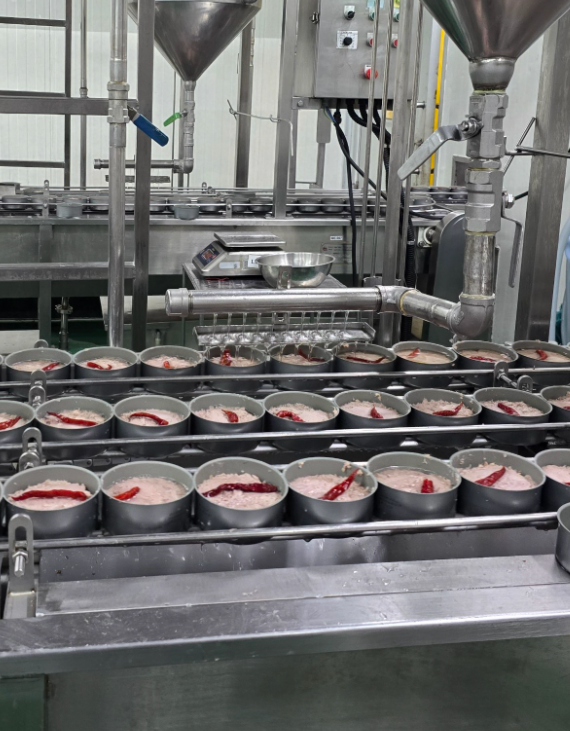
Top Tide Canning exports EU-compliant canned tuna to Spain — the world’s second-largest canned tuna market and home to the planet’s most concentrated seafood canning industry. We supply atún claro en aceite de girasol and bonito del norte to Spain’s Galician conservera manufacturers, and own-label marca del distribuidor programmes for Mercadona, Carrefour España, Lidl España, and Alcampo.
Vigo: The World’s Tuna Capital and Spain’s Industrial Buyer Hub
Why Vigo Is the Centre of Gravity for Global Tuna Trade
Vigo, on Galicia’s Atlantic coast, is the world’s largest fishing port by volume — handling more fish by weight than any other port on the planet. But what makes Vigo uniquely relevant for canned tuna exporters is not just its port infrastructure: it is the operational home of Spain’s industria conservera (canning industry), whose companies operate fishing fleets across the Pacific, Atlantic, and Indian Oceans and whose procurement teams purchase bulk canned tuna from international manufacturers at a scale found nowhere else in the world.
The Vigo-Ría de Arousa-Pontevedra triangle in Galicia contains the world’s highest concentration of tuna canning companies — including Jealsa Rianxeira (one of the world’s largest tuna canners), Calvo Grupo, Frinsa del Noroeste, Jealsa Grupo, and dozens of smaller conserveras that collectively produce hundreds of millions of cans of tuna annually for Spanish domestic consumption and global export. Many of these Galician companies import semi-finished bulk canned tuna from Southeast Asia to supplement their own fleet-caught supply — making Vigo’s procurement offices one of the most important B2B buyer clusters in the global canned tuna trade.
For international canned tuna suppliers, establishing a commercial relationship with Galician conservera buyers requires understanding their operating model: they are simultaneously fishers, processors, and brand owners — and they evaluate incoming canned tuna as industrial ingredient buyers, applying the most technically precise product specifications in the world. Meeting the Galician conservera qualification standard effectively qualifies a supplier for the global canned tuna trade.
Jealsa Rianxeira · Calvo Grupo · Frinsa del Noroeste · Jealsa Grupo · Conservas Ortiz · Jealsa · Isabel (Jealsa) · Jealsa · Bernardo Alfageme · Escurís — these Galician companies collectively purchase more bulk canned tuna from international markets than any comparable geographic cluster in the world.
Why Spain Chooses Sunflower Oil — Not Olive Oil
Spain’s canned tuna format preference is one of the most distinctive in Europe — and the most misunderstood by suppliers approaching the Spanish market for the first time.
Skipjack or light yellowfin tuna in sunflower oil — aceite de girasol — is Spain’s volume format, representing over 70% of retail canned tuna sales. The neutral flavour profile of sunflower oil allows the tuna taste to lead and integrates cleanly into Spanish salads, bocadillos, and ensaladas mixtas. All major Spanish retail own-label (Mercadona Hacendado, Carrefour España, Lidl España, Alcampo) runs atún claro en aceite de girasol as its primary canned tuna SKU.
Bonito del Norte — albacore tuna (Thunnus alalunga) caught in the Bay of Biscay — is Spain’s premium canned tuna and is always packed in olive oil. Protected by a geographic indication and deeply embedded in Basque and Cantabrian food culture, bonito del norte commands a significant premium over atún claro and is sold through specialist delicatessens, premium supermarkets, and the Basque/Cantabrian regional food economy. It represents the artisan tier of the Spanish canned tuna market.
Atún al natural (tuna in brine) is Spain’s health-conscious format, growing strongly in urban Spain as dietary awareness increases. The segment is led by Spanish fitness and wellness culture — particularly in Madrid and Barcelona — and is expanding in the lineales de dietética (health/diet aisles) of Mercadona, Carrefour Bio, El Corte Inglés Supercor, and Alcampo. Atún al natural currently represents approximately 15% of Spanish retail canned tuna volume.
Galician conserveras purchase bulk canned tuna — large-format tins (1.7kg–5kg) and retort pouches — as industrial ingredient for further processing, rebranding, and export. Bulk buyers apply the most technically rigorous specifications in the Spanish market: precise drained weight yield, species verification, oil coverage standards, and organoleptic profile consistency across production batches. Bulk sales to the Galician conservera cluster represent the highest-volume B2B opportunity in the Spanish canned tuna trade.
Six Spanish Retail Buyers — From Mercadona to Eroski
Spain’s gran distribución alimentaria (GDA) is dominated by Mercadona’s extraordinary 27% market share — but the full Spanish retail opportunity spans cooperative groups, German discounters, and premium department store formats that each require a distinct commercial approach.
Mercadona — Spain’s Undisputed Retail Leader
Mercadona controls approximately 27% of Spanish food retail — the highest market share of any single food retailer in Western Europe. Its own-label brand Hacendado is Spain’s best-selling canned tuna brand, sold exclusively through Mercadona’s 1,650+ stores across Spain and Portugal. Mercadona does not engage external advertising agencies or brand consultants — it purchases directly from manufacturers against detailed product specifications and demands exclusive supply agreements. Qualifying as a Hacendado canned tuna supplier is one of the most commercially transformative opportunities in Spanish food retail — and one of the most demanding qualification processes, requiring sustained product quality consistency and full traceability from sea to can.
Carrefour España — Hypermarket Own-Label
Carrefour España operates over 170 hypermarkets plus supermarkets and convenience stores across Spain. Its own-label tiers — Carrefour (standard), Carrefour Bio, and Carrefour Selección — carry canned tuna ranges at all price tiers. Carrefour España’s buying office aligns with the European Carrefour centrale d’achat and requires the same IFS Food or BRCGS Grade A supplier qualification applicable across Carrefour’s European operations. The marca del distribuidor programme for Carrefour España represents straightforward onboarding for suppliers already approved by European Carrefour buying teams.
Lidl España & Aldi España — German Discounters
Lidl España (750+ stores) and Aldi España (500+ stores) both operate significant own-label canned tuna programmes in Spain. Their Spanish operations use the same European supplier qualification frameworks as their German parent operations — BRCGS Grade A required — but Spanish-language EU FIC-compliant labels are mandatory for Spanish market stock. The German discount model of deep own-label penetration works particularly well in Spain’s price-sensitive retail segments, and both Lidl and Aldi have gained market share rapidly across Spain’s secondary cities and suburban markets.
Alcampo (Auchan España) & Hipercor
Alcampo, operated by Auchan Retail España, runs 60+ hypermarkets across Spain under the Alcampo and Simply brands, with own-label canned tuna aligned to Auchan’s European buying standards. Hipercor — El Corte Inglés’s hypermarket division — serves Spain’s premium urban consumer base in major cities, carrying branded premium canned tuna including bonito del norte and premium ventresca ranges. El Corte Inglés is Spain’s most important premium food retail channel and is the highest-prestige placement for any Spanish food brand.
Eroski — Basque Cooperative Retailer
Eroski, the Basque Country consumer cooperative operating through Eroski Center, Eroski Supermarket, and the Caprabo banner in Catalonia, has a culturally important role in the Spanish canned tuna market — its geographic base in the Basque Country makes it the primary retail channel for bonito del norte and Basque artisan conservas. Eroski’s cooperative buying structure and its regional identity make it a distinct buyer from the national GDO chains — its buyers are among the most knowledgeable in Spain on the premium canned seafood category.
Consum & Dia — Valencia & Value
Consum (cooperative, 800+ stores, primarily Valencia and Mediterranean coast) and Dia (value discount chain, 3,000+ stores across Spain) both carry own-label canned tuna and represent the value and regional cooperative segments of the Spanish retail market. Dia’s own-label canned tuna programme is Spain’s most price-sensitive retail own-label opportunity — and its supplier requirements focus on competitive FOB pricing, volume capacity, and EU FIC label compliance rather than premium quality certification.
Vigo & Barcelona — Spain’s Two Import Gateways
Spain’s geography divides the canned tuna import trade between two port corridors — the Atlantic northwest (Vigo, for the Galician conservera industry) and the Mediterranean northeast (Barcelona, for Catalunya and eastern Spain’s GDA retail distribution centres).
Vigo is Spain’s primary port for canned seafood imports — the natural entry point for bulk product destined for the Galician conservera industry cluster. The port’s Zona de Actividades Logísticas (ZAL) includes cold and ambient food storage bonded warehousing. For conservera industry buyers based in Galicia — Jealsa Rianxeira, Calvo, Frinsa — delivery from Vigo port to factory gate is typically under 30 minutes. Vigo also serves Santiago de Compostela (90km), Ourense (100km), and Portugal’s Porto (165km) for buyers with cross-border distribution.
Barcelona is Spain’s largest container port and the preferred Mediterranean entry for canned tuna destined for retail GDA distribution centres in eastern and central Spain. Carrefour España’s logistics hub is in the Barcelona metropolitan area; Mercadona’s national distribution centres for northern Spain are within 3 hours. Barcelona also serves Zaragoza (300km, 3h — a major logistics hub), Valencia (360km, 3.5h), and Madrid (620km, 6h). For suppliers serving Spanish GDA retail chains with distribution centres in the Barcelona-Madrid corridor, the Barcelona port route is frequently more cost-effective than Vigo.
Six Spanish Product Formats — Atún Claro to Ventresca
The Spanish market runs from the world’s most price-competitive own-label atún claro en aceite de girasol through premium bonito del norte and artisan ventresca to bulk conservera ingredient supply — six formats requiring distinct production and labelling specifications.
Atún Claro en Aceite de Girasol — Retail & Conservera
The core Spanish market format — skipjack or light yellowfin tuna in sunflower oil. We produce atún claro en aceite de girasol in the primary Spanish retail sizes: 52g drained weight / 104g net (RO-65 easy-open tin), 80g / 160g net, and the Spanish household standard 160g / 280g net family-size tin. For conservera industrial buyers we also produce in 1.7kg bulk catering format. All production carries Spanish-language EU FIC-compliant labels with peso escurrido (drained weight), zona de captura (FAO zone), and lugar de producción (country of processing) declarations.
Atún Claro en Aceite de Oliva — Mid-Premium
Tuna in olive oil — aceite de oliva — occupies the mid-premium Spanish retail tier, positioned above sunflower oil format at Mercadona, Carrefour España, and Eroski. Spanish EU FIC labelling requires aceite de oliva to be declared with the olive oil blend composition where applicable. We produce atún claro en aceite de oliva to retailer specification with oil quality declarations supporting AESAN and AICA compliance requirements.
Bonito del Norte — Premium Albacore Format
Albacore tuna (Thunnus alalunga) packed as bonito del norte is Spain’s premium canned tuna format — primarily in olive oil, sold in glass jars and premium tins. The bonito del norte designation carries deep cultural significance in the Basque Country and Cantabria — and premium retailers including El Corte Inglés, Eroski, and Consum carry it year-round. We produce albacore in olive oil to the specification required for the premium Spanish retail and specialty delicatessen (charcutería gourmet) channel.
Atún al Natural — Salud y Dieta
The fastest-growing Spanish canned tuna format — skipjack or yellowfin in brine (al natural) — is driven by Spain’s growing fitness and health consumer culture. Atún al natural is now a standard SKU across all major Spanish retailers in the lineal de proteínas (protein section) and lineal de dietética. We produce atún al natural in 80g drained weight / 160g net format and 52g drained / 104g net single-serve format with full Spanish EU FIC nutrition labelling required for the health segment.
Ventresca de Atún — Gourmet Conserva
Ventresca de atún — the belly section of the yellowfin tuna — is Spain’s equivalent of Italy’s ventresca, always packed in premium olive oil in glass jars or lacquered tins. The Spanish ventresca category is dominated by Galician artisan conserveras and Basque premium brands, but GDA own-label buyers — particularly El Corte Inglés Supercor and Eroski — carry premium own-label ventresca programmes. We produce ventresca de atún yellowfin in EVO olive oil to Spanish buyer specification.
Conserva a Granel — Conservera Ingredient
Galician conserveras purchase bulk canned tuna as an ingredient for reprocessing, rebranding, and export manufacturing — in large-format retort tins (1.7kg, 2.8kg, 5kg gross) and in retort pouches. Bulk conservera buyers apply the most technically precise specifications in the Spanish market: species DNA verification, precise drained weight yield per batch, oil absorption and coverage standard, and controlled organoleptic profile. We produce to conservera specification with batch-level quality data including drained weight yield tables and oil quality certificates.
AESAN, AICA & El Etiquetado EU FIC en Español
AESAN — Spain’s Food Safety Authority
AESAN (Agencia Española de Seguridad Alimentaria y Nutrición — Spanish Food Safety and Nutrition Agency) is Spain’s national food safety authority, enforcing EU food safety and import regulations. AESAN coordinates with Spain’s Comunidades Autónomas (autonomous communities) regional food inspection authorities — whose jurisdictions are operationally independent, meaning that food safety enforcement in Galicia (Galician Food Safety Authority), Catalonia (ASPCAT), and the Basque Country (Basque Health Department) is conducted by regional bodies aligned to, but distinct from, AESAN at national level. Understanding the regional enforcement structure is important for importers serving Spanish buyers across multiple autonomous communities.
AICA — Market Surveillance & Food Fraud
AICA (Agencia de Información y Control Alimentarios) conducts market surveillance enforcement including species identity verification for canned tuna sold in Spain. Like Italy’s ICQRF, AICA uses DNA-based species testing to verify declared species claims on canned tuna labels — enforcement that has generated significant Spanish food fraud prosecutions against suppliers misrepresenting species identity. Our species traceability documentation (fishing vessel logs, FAO zone catch certificates, species verification data) is prepared to support AICA compliance requirements.
Etiquetado EU FIC en Español — Requisitos Legales
All canned tuna sold at retail in Spain requires Spanish-language labels under EU Regulation 1169/2011. Mandatory Spanish-language declarations include: denominación del alimento (Atún Claro, Bonito del Norte, or Atún Blanco), lista de ingredientes with allergen emphasis (Pescado in bold), información nutricional in EU format, peso neto and peso escurrido (drained weight), zona de captura (FAO zone code) and lugar de producción (country of processing), fecha de consumo preferente (best before date), and the nombre y dirección del operador responsible for the Spanish market.
Spain’s food safety enforcement is partially devolved to its 17 Comunidades Autónomas. Galicia (home to the conservera industry), the Basque Country, and Catalonia each have active regional food inspection bodies. Products entering Galicia for conservera processing face inspections by Galicia’s regional food safety authority — understanding this dual-level enforcement structure (national AESAN + regional bodies) is essential for compliance planning in the Spanish market.
AICA conducts systematic peso escurrido (drained weight) compliance checks on canned tuna in the Spanish market — a major enforcement priority because the conservera industry’s industrial processing of canned tuna as an ingredient is directly affected by drained weight yield accuracy. Our production meets declared drained weight specifications with batch-level documentation provided to Spanish buyers.
Spain Canned Tuna Import — FAQ
Why is the Spanish canned tuna market so significant globally?
Spain is the world’s second-largest canned tuna consumer by volume — consuming approximately 100,000 tonnes annually — and is home to Galicia’s conservera industry, which is the world’s largest geographic concentration of tuna canning companies. Vigo is the world’s largest fishing port by volume. The combination of massive domestic consumption, a globally significant industrial canning cluster that purchases bulk canned tuna as ingredient, and Spain’s role as a re-exporter of branded canned tuna to international markets makes Spain one of the most commercially important canned tuna import markets in the world.
What documentation does Spain require for canned tuna imports?
Spain requires: a health certificate from the competent authority of the exporting country, a CHED-PP pre-arrival notification via EU TRACES NT, a certificate of origin, commercial invoice and packing list, and a full set of bills of lading. AESAN coordinates food safety enforcement at national level. Regional autonomous community bodies (Galicia, Catalonia, Basque Country) conduct their own inspections within their territories. AICA enforces food labelling and food fraud regulations including species identity and peso escurrido (drained weight) accuracy.
Why does Spain prefer aceite de girasol (sunflower oil) over olive oil for canned tuna?
Aceite de girasol (sunflower oil) is the dominant packing medium for Spanish canned tuna — representing over 70% of retail volume — for several interconnected reasons: it has a neutral flavour profile that does not compete with the tuna taste; it integrates cleanly with Spanish salad dressings (vinagreta); it is significantly cheaper than olive oil, supporting competitive retail pricing; and Spain’s major retail brands (Mercadona Hacendado, Isabel, and Calvo) have built consumer expectations around the sunflower oil format across decades. Olive oil is reserved for premium formats and the bonito del norte segment.
How do I qualify as a Mercadona Hacendado supplier for canned tuna?
Mercadona’s Hacendado supplier qualification process is rigorous: it involves product sample submission and evaluation against Mercadona’s internal product specification (Mercadona does not publicly disclose these specifications), a factory audit by Mercadona’s quality team, sustained product quality consistency across multiple production runs, competitive FOB pricing, and the capacity to supply exclusively to Mercadona’s specifications if a supply agreement is reached. Mercadona requires full traceability from fishing vessel to can and Spanish-language EU FIC-compliant label artwork. The qualification process typically takes 6–12 months from first contact.
Which port — Vigo or Barcelona — is better for Spain?
Vigo is the correct port for buyers in the Galician conservera industry cluster — factory gates in Galicia are typically within 30 minutes of Vigo port, and Vigo is the operational home of Spanish tuna procurement. Transit from Southeast Asia: 22–25 days. Barcelona is preferred for GDA retail chain buyers with distribution centres in the Barcelona-Zaragoza-Madrid corridor — Carrefour España’s logistics hub is in the Barcelona area, and the city serves eastern and central Spain more cost-effectively than Vigo for retail distribution. Transit: 24–26 days.
What Spanish-language labelling is required for canned tuna?
Spanish EU FIC labels must include: denominación del alimento (Atún Claro, Bonito del Norte, Atún Blanco), lista de ingredientes with Pescado in bold (allergen emphasis), información nutricional in EU format, peso neto and peso escurrido (drained weight), zona de captura (FAO zone code) and lugar de producción (country of processing), fecha de consumo preferente (best before date), and nombre y dirección del operador responsible for the Spanish market. AICA enforces drained weight and species declarations — both are active surveillance priorities.
Do Galician conserveras buy bulk canned tuna from international suppliers?
Yes — extensively. Galician conserveras operate their own global fishing fleets but supplement fleet-caught supply with bulk canned tuna purchased from international manufacturers, particularly from Southeast Asian producers and Pacific island-based canners. This bulk ingredient purchase model is structural for major Galician brands like Jealsa Rianxeira, Calvo Grupo, and Frinsa. Industrial conservera buyers apply the most technically precise specifications in the Spanish market — species verification, drained weight yield tables, oil quality certificates, and organoleptic profile consistency — and evaluate suppliers with the rigour of food manufacturing quality teams.
What certification do Spanish retailers require from canned tuna suppliers?
Major Spanish GDA retailers — Mercadona, Carrefour España, Alcampo — require IFS Food Higher level or BRCGS Grade A as baseline supplier certification. Mercadona additionally conducts its own factory audit. Lidl España and Aldi España align to their German parent’s BRCGS Grade A requirement. For the Galician conservera industrial buyer segment, IFS Food is the preferred certification standard — aligned to the broader European food retail standard within which Galician conserveras export their finished products. Our facility operates to IFS Food-aligned quality systems with documentation available for Spanish buyer qualification.
Spain Export Capabilities
From AESAN import documentation and Spanish EU FIC labelling to atún claro en aceite de girasol own-label production and Galician conservera industry bulk supply — everything Spain’s most demanding buyers require.
Explore More Markets We Supply
Top Tide Canning exports canned tuna across Europe, the Middle East, Africa, and Asia. Explore related markets below.
Request a Spain Export Quotation
Specify your product format (atún claro en aceite de girasol, aceite de oliva, bonito del norte, or conserva a granel), preferred entry port (Vigo or Barcelona), target buyer (GDA retail or conservera industry), and volume requirement. We respond within one business day with FCL pricing, transit timing, and a full AESAN/AICA compliance document checklist.
AESAN Compliant · Spanish EU FIC Labels · Vigo & Barcelona · Conservera Ready