
Canned Tuna Supplier
for the Dominican Republic
Top Tide Canning is a B2B canned tuna exporter serving the Dominican Republic’s distinct multi-channel market — supplying La Sirena (Walmart DR), Bravo, Supermercados Nacional, and Jumbo retail private label programmes; Sysco Dominican Republic and Alsea HORECA distributors serving Punta Cana and Santo Domingo’s hotel sector; and Zona Franca food processors and Caribbean re-export operators. We provide full DIGENOR/NORDOM compliance, MISPAS Registro Sanitario manufacturer documentation, FSSC 22000 certification, Dolphin-Safe IMMP credentials, and CIF Puerto Haina pricing.
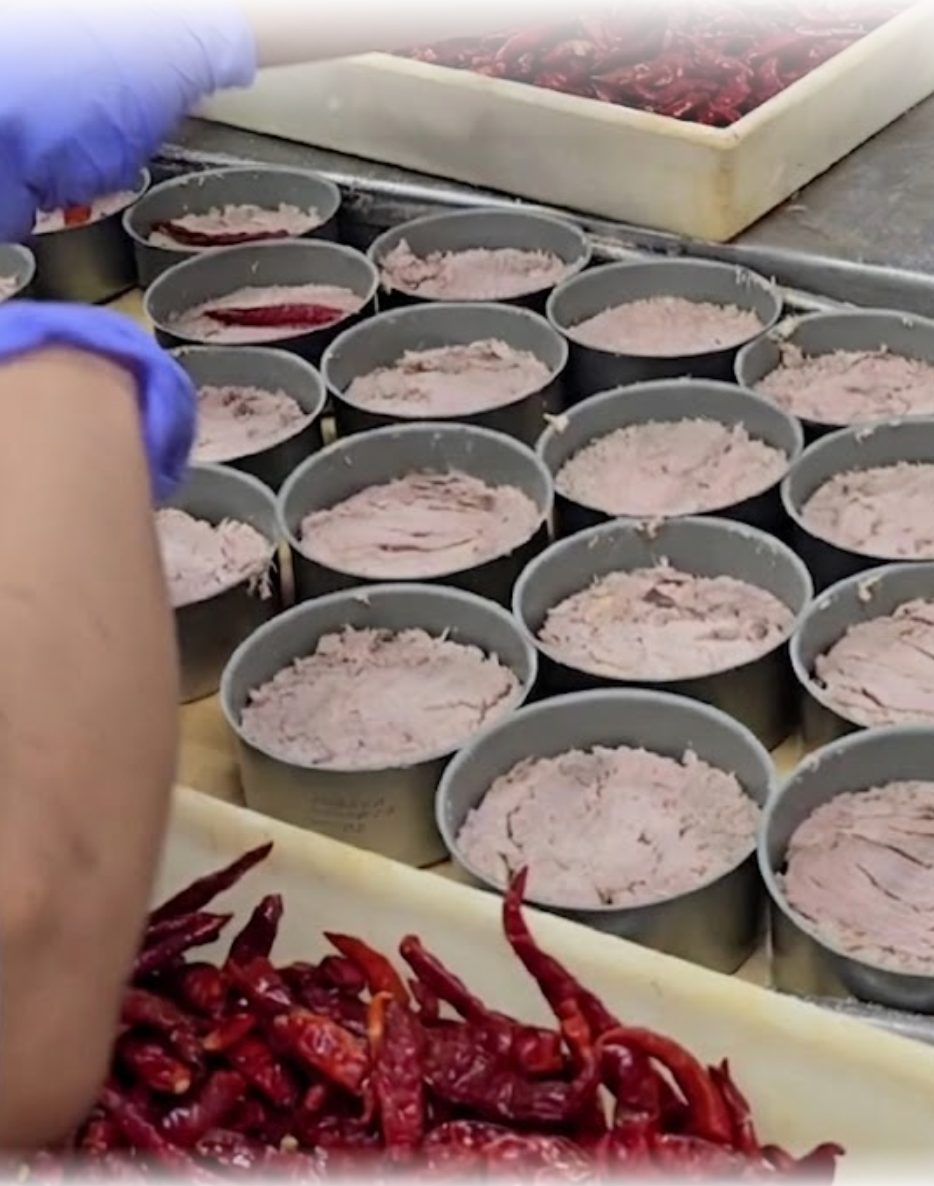
The Dominican Republic: The Caribbean’s Largest Economy and a Canned Tuna Market Shaped by Colmados, Tourism, and Re-Export
The Dominican Republic is the largest economy in the Caribbean and Central America by GDP, with a population of over 11 million and one of the region’s most dynamic retail food markets. What makes the DR structurally unique — unlike any other market in Latin America — is the colmado network: an estimated 100,000+ neighbourhood corner stores that function as the primary food distribution and credit system for the majority of Dominican consumers. Alongside this, the DR hosts the Caribbean’s largest tourism sector (Punta Cana, La Romana, Puerto Plata) generating over $9 billion USD annually — creating a substantial HORECA food service channel entirely separate from the consumer retail market.
100,000+ Neighbourhood Stores — The Dominican Republic’s Dominant Food Channel
The colmado is a uniquely Dominican institution with no direct equivalent elsewhere in Latin America. These neighbourhood corner stores — often family-operated from the ground floor of a residential building — number over 100,000 across the country and function simultaneously as grocery stores, social hubs, credit systems (the ‘fiao’ informal credit network), and community anchors. The colmado is the primary channel through which most Dominican households access everyday food staples including atún en lata. A canned tuna brand with strong colmado penetration commands a market position that cannot be replicated by supermarket-only distribution. Colmado supply typically flows through secondary-tier wholesale distributors (distribuidores) operating from regional distribution hubs in Santo Domingo (Distrito Nacional), Santiago de los Caballeros, La Romana, and San Pedro de Macorís.
Punta Cana and Santo Domingo HORECA — $9B Tourism Economy, 10M+ Annual Visitors
The Dominican Republic’s tourism sector is the largest in the Caribbean, receiving over 10 million international visitors annually and generating more than $9 billion USD in tourism revenue. The Punta Cana/Bávaro corridor in the east — home to some of the Caribbean’s largest all-inclusive resort complexes including Puntacana Resort, Hard Rock Hotel & Casino, and the Meliá/Catalonia chains — is a major institutional buyer of shelf-stable proteins including canned tuna for buffet preparation, staff canteens, and satellite kitchen operations. Unlike the consumer retail market where skipjack in brine dominates, the HORECA channel in Punta Cana often specifies solid yellowfin or premium albacore in extra-virgin olive oil for guest-facing applications.
DR as Caribbean Distribution Hub — Haiti, Puerto Rico, and Small Island Economies
The Dominican Republic’s geographic position — sharing a land border with Haiti and its position within the Caribbean Basin — makes it a natural distribution hub for re-exporting to smaller Caribbean markets. Goods cleared through Puerto Haina are redistributed by boat to Haiti (a major canned tuna consumer with limited formal import infrastructure), to nearby Puerto Rico (a US territory operating under FDA rules where Spanish-label DR products require re-labeling), and to smaller Eastern Caribbean islands. Dominican Zonas Francas (Free Trade Zones) also process and repack imported canned tuna for re-export under different brand configurations — qualifying for DR-CAFTA benefits on the outbound leg to Central American or US markets depending on transformation rules.
Six Dominican Republic Regulatory Requirements: MISPAS, DIGENOR, DGA, ITBIS, DR-CAFTA, and Zona Franca
The Dominican Republic’s import regulatory framework for canned tuna is administered by four principal government bodies — MISPAS/DIGEMAPS (food product registration), DIGENOR (standards compliance), DGA (customs), and DGII (tax) — plus a Zona Franca system that creates a parallel duty-free trade infrastructure used by Caribbean re-export operators. Unlike Mexico’s multi-agency COFEPRIS/SENASICA/SAT model or Canada’s CFIA/CBSA model, the DR’s system is less fragmented but requires careful navigation of informal enforcement patterns at port and market level.
The Ministerio de Salud Pública y Asistencia Social (MISPAS), through DIGEMAPS (Dirección General de Medicamentos, Alimentos y Productos Sanitarios), issues the Registro Sanitario — the mandatory product health registration required for commercial distribution of imported packaged foods in the Dominican Republic. Each distinct SKU requires its own registration, held by the Dominican importer. Required documents include: Spanish-language label artwork, product technical datasheet and specification, certificate of analysis (microbiological and physicochemical), manufacturer’s food safety certificate (FSSC 22000 or equivalent HACCP documentation), and a Certificado de Libre Venta (Certificate of Free Sale) issued by the competent authority of the exporting country. Processing time ranges from 3 to 6 months. MISPAS conducts market inspections and can issue product recalls for goods without valid registration.
Must be obtained before commercial retail/institutional distribution; shipments may be imported under a pending registration but cannot be sold
DIGENOR (Dirección General de Normas y Sistemas de Calidad) is the Dominican Republic’s national standards body, equivalent to ANSI (US), NRCS (South Africa), or DOST-BPS (Philippines). DIGENOR administers NORDOM standards — the Dominican national standards that adopt and adapt international CODEX Alimentarius and ISO standards for the DR market. For canned fish products, relevant NORDOM standards address microbiological safety thresholds, heavy metal maximum limits, fill-of-container requirements, and general food labeling. While compliance with specific NORDOM standards is not always enforced with the same granularity as COFEPRIS enforcement in Mexico, MISPAS technical inspectors reference NORDOM/CODEX standards when conducting laboratory analysis of import samples or responding to consumer complaints.
NORDOM standards are referenced by MISPAS during import sample testing and market inspections
The DGA (Dirección General de Aduanas) is the Dominican Republic’s customs authority, administering import classification, tariff assessment, and physical inspection at Puerto Haina, Puerto Caucedo, and Puerto Plata. Canned tuna imports are classified under Chapter 16 of the Dominican Arancel de Aduanas (equivalent to HS Chapter 16), with HS subheading 1604.14 for skipjack and yellowfin. A licensed Dominican aduanero (customs broker) is required to file the DAU (Declaración Aduanera Única) — the single customs declaration form — through SIGA (Sistema de Gestión Aduanera), the DGA’s electronic customs management system. Physical inspection frequency depends on the DGA’s risk-profiling system; imports from verified FSSC 22000 certified suppliers with a clean compliance history typically benefit from reduced inspection frequency.
Licensed Dominican aduanero required; DAU filing through SIGA system mandatory for all commercial imports
ITBIS (Impuesto sobre Transferencias de Bienes Industrializados y Servicios) is the Dominican Republic’s VAT, administered at a standard rate of 18%. However, basic food products — including canned fish — are classified as exentos de ITBIS (ITBIS-exempt) under Schedule I of the Dominican Ley 253-12 (Tax Reform Law). This means no ITBIS is collected on canned tuna at either the import stage or the consumer retail sale stage. The ITBIS exemption is not the same as zero-rating: Dominican importers cannot reclaim ITBIS credits on packaging or logistics inputs attributable to exempt products. The DAU filed by the aduanero must correctly declare the ITBIS exemption to prevent erroneous assessment of 18% ITBIS at customs — a classification error that significantly inflates landed cost. Verify current exemption status with a Dominican tax counsel as Ley 253-12 is subject to amendment.
Basic food ITBIS exemption is well-established for canned fish; verify current classification with Dominican tax counsel before import
DR-CAFTA (Dominican Republic-Central America-United States Free Trade Agreement, in force since March 2007) provides preferential tariff treatment for goods originating in the US, Costa Rica, El Salvador, Guatemala, Honduras, Nicaragua, and the Dominican Republic itself. For canned tuna imported into the DR from the US with qualifying origin, DR-CAFTA may provide preferential duty treatment — however, Southeast Asian origin canned tuna (Thailand, Indonesia, Vietnam, Philippines) does not qualify for DR-CAFTA, regardless of whether it transits through the US. The standard MFN tariff for canned tuna under the Dominican Arancel is approximately 20%. The DR also has bilateral trade agreements with the European Union (CARIFORUM-EU EPA, which the DR signed) providing preferential access for some EU-origin goods. Verify applicable FTA tariff for the specific origin with a licensed Dominican aduanero.
SE Asian origin tuna pays full ~20% MFN; DR-CAFTA benefits apply only to qualifying US/Central American origin goods
The Dominican Republic operates one of the Caribbean’s largest and most developed free trade zone systems — with over 55 Zonas Francas (Free Trade Zones) operating under Law 8-90 (Free Trade Zone Law), managed by CNZFE (Consejo Nacional de Zonas Francas de Exportación). Goods entering a Dominican Zona Franca pay zero customs duty and zero ITBIS — making the FTZ system highly attractive for companies that import raw or semi-processed canned tuna, repack or relabel it within the FTZ, and re-export to other Caribbean, Central American, or North American markets. Under DR-CAFTA, goods processed in Dominican FTZs may qualify for US preferential tariff treatment on the re-export leg if they meet applicable rules of origin and transformation requirements. This creates a viable supply chain model: import bulk canned tuna CIF Haina → enter FTZ → private-label repack → re-export duty-free to Caribbean or US markets.
Zona Franca model is particularly attractive for Caribbean re-export programmes and US market private-label operations
Dominican Republic Free Trade Zone Advantage for Caribbean Re-Export: Goods entering a CNZFE-registered Zona Franca pay zero import duty and zero ITBIS. For canned tuna importers using the DR as a Caribbean re-export hub, this creates a compelling supply chain: import bulk or branded canned tuna CIF Haina, transfer to a Santiago or San Pedro de Macorís Zona Franca for private-label repacking, and re-export duty-free to Haiti, Jamaica, Trinidad and Tobago, Puerto Rico (US territory — requires FDA compliance on re-export), or Central American markets with DR-CAFTA preferential treatment. Over 55 active free trade zones operate under Law 8-90, managed by CNZFE. Top Tide Canning provides bulk and unbranded formats suitable for Zona Franca repacking operations.
Four Dominican Republic Buyer Channels — Retail Supermarkets, Colmados, Tourism HORECA, Government PAE, and Zona Franca Re-Export
The Dominican market operates across four structurally distinct channels that require different product formats, price points, and compliance documentation. The colmado wholesale tier and the Punta Cana tourism HORECA sector are unique to the DR — no other market in the region combines these two channels at the same scale within a single country.
The colmado has no direct equivalent anywhere in Latin America. It is simultaneously a grocery store, credit facility (fiao informal credit), social hub, and community institution — and it is how most Dominican households access everyday food including canned tuna. Understanding and accessing the colmado channel through regional distribuidores is essential for any supplier seeking meaningful Dominican market penetration beyond the supermarket tier.
The Dominican Republic Import Clearance Sequence — Six Steps from Puerto Haina to Commercial Distribution
Importing canned tuna into the Dominican Republic involves coordinating customs clearance through DGA via the SIGA electronic system, food registration through MISPAS/DIGEMAPS, and either direct supermarket distribution or wholesale distributor engagement for the colmado channel. Unlike Mexico’s multi-agency model, Dominican clearance is more streamlined — but the MISPAS Registro Sanitario pre-clearance requirement and informal enforcement dynamics at the market level require careful management.
| Origin | HS Code | Duty Rate |
|---|---|---|
| SE Asian origin (Thailand, Indonesia, Vietnam) | 1604.14 | ~20% MFN |
| DR-CAFTA origin (US / CA / Central America) | 1604.14 | Preferential / 0% |
| CARIFORUM-EU EPA origin (EU member states) | 1604.14 | Reduced (EPA schedule) |
| CARICOM origin (Jamaica, T&T, etc.) | 1604.14 | MFN (DR not CARICOM member) |
| ITBIS on canned tuna (all origins) | — | Exento (0%) — canasta básica |
The DR is NOT a CARICOM member — no CARICOM preferences apply. SE Asian origin pays full ~20% MFN. ITBIS exemption on basic food is confirmed under Ley 253-12. Verify with a licensed Dominican aduanero before booking.
Puerto Haina, comprising Haina Oriental and Haina Occidental on the Haina River west of Santo Domingo, handles the majority of Dominican container imports. Operated by Caucedo Investments (DP World subsidiary) and HAINSA, the port provides direct rail and truck connectivity to Santo Domingo’s industrial zones and the country’s primary distribuidor warehousing belt. Imports from Southeast Asia typically route via the Panama Canal, with transit times of 20–26 days from major Thai, Indonesian, or Vietnamese ports. Puerto Caucedo (also DP World, southeast of Santo Domingo) handles a growing share of container volume and is often preferred for shipments destined for Zona Franca operators in the San Cristóbal and Bani areas. Top Tide Canning provides CIF pricing to either Haina or Caucedo.
Five Canned Tuna Formats for the Dominican Republic — Colmado, Supermarket, HORECA, Institutional, and Zona Franca
The Dominican Republic’s multi-channel structure requires distinct product configurations: the colmado channel’s dominant 140g economy format, the HORECA channel’s 1.7kg institutional can, the Zona Franca bulk pack for re-export repacking, the private label supermarket format for La Sirena and Nacional, and the PAE school feeding institutional specification. All retail formats require Spanish-language labels and MISPAS Registro Sanitario before commercial distribution.
140g — Formato Estándar de Colmado (Economy Skipjack)
The 140g can is the Dominican colmado channel’s dominant format — priced for daily purchase by working-class Dominican households and stocked by virtually every colmado in the country. Skipjack in brine (atún en agua) is the default specification at this price point. Labels must be in Spanish with all required information: denominación, lista de ingredientes, tabla nutricional, fecha de caducidad, país de origen, and importer’s Dominican address. The colmado channel’s distribuidor tier buys by the case (typically 24 x 140g per master case) and delivers by truck to individual colmados on daily or weekly routes across Santo Domingo, Santiago, and regional cities. Volume is continuous year-round with no seasonal peak.
160g–185g — Supermercado Private Label (La Sirena, Nacional, Jumbo)
La Sirena’s Marca Propia private label programme, Nacional’s house label, and Jumbo’s (Cencosud) own-brand tier all source canned tuna on a private label basis from regional importers. Private label supermarket SKUs in the DR typically run 160g (economy) to 185g (standard) with both brine-packed skipjack and oil-packed options. La Sirena’s Walmart corporate affiliation means it operates a global supplier qualification process — suppliers must meet Walmart’s Global Standards for Suppliers (GSS) requirements including GFSI-recognised food safety certification (FSSC 22000 or SQF Level 2+). Top Tide Canning’s FSSC 22000 certification satisfies this requirement. GS1 Dominican Republic barcode registration is mandatory for all supermarket retail SKUs.
1.7kg — Formato Institucional para Turismo y Servicio de Alimentos
The 1.7kg large-format can serves Punta Cana and Santo Domingo’s HORECA sector — all-inclusive resort kitchens, hotel staff canteens, hospital dietary services (IDSS), and Sysco DR’s restaurant accounts. Resort procurement teams specify premium formats for buffet applications: solid yellowfin or albacore in extra-virgin olive oil for guest-facing preparation. Bulk skipjack in sunflower oil or brine is specified for back-of-house staff feeding and kitchen prep. HORECA format labels use a simplified restaurant/food service label format rather than the full consumer Tabla Nutricional, but MISPAS Registro Sanitario is still required for all commercial food distribution in the DR regardless of channel.
PAE School Feeding Specification — MINERD Institutional Supply Format
MINERD’s PAE (Programa de Alimentación Escolar) serves over 2 million Dominican primary school students daily and is one of the largest institutional food purchasing programmes in the Caribbean. Canned tuna features prominently in PAE’s protein rotation — typically 140g or 170g skipjack in brine, specified to meet NORDOM microbiological standards, with a mercury limit per CODEX Alimentarius guidelines, minimum drained weight declaration, dolphin-safe documentation, and a certificate of analysis from an accredited laboratory. PAE tenders are published through DGCP (comprasdominicanas.gob.do) and awarded through public competitive bidding to Dominican-registered importers with valid MISPAS Registro Sanitario and DGCP vendor registration (RPE number).
Bulk Unbranded — Zona Franca Repacking for Caribbean Re-Export
For Zona Franca operators repacking and re-exporting canned tuna across the Caribbean, Top Tide Canning supplies unlabelled or bulk-labelled canned tuna in standard 155g, 170g, or 185g can formats, packed in plain master cases without brand identity. Zona Franca operators apply their own private labels, rebrand for specific Caribbean market requirements, and re-export under CNZFE’s export documentation. Goods entering a Dominican ZF pay zero customs tariff and zero ITBIS, making this the lowest-cost import model for distributors serving multiple Caribbean destinations from a single Dominican warehousing and processing operation. Minimum order quantities for Zona Franca bulk supply are negotiable based on annual volume commitments.
Dominican Republic Canned Tuna Label Requirements — Spanish Mandatory Elements and MISPAS Submission
Unlike Mexico’s NOM-051 black octagon system, the Dominican Republic does not currently require front-of-pack warning octagons or a Mexico-style NOM format. Dominican label requirements draw from CODEX Alimentarius General Standard for the Labelling of Prepackaged Foods (CODEX STAN 1-1985) as adopted through NORDOM standards, administered by DIGENOR. All mandatory text must be in Spanish.
Elementos Obligatorios — Canned Tuna Label for DR Market
- Denominación del producto en español: ‘Atún en Agua de Mar’ or ‘Atún en Aceite de Girasol’ — CODEX Alimentarius common name in Spanish
- Lista de ingredientes en español: ‘INGREDIENTES: Atún Listado (Katsuwonus pelamis), Agua, Sal’ in descending order by weight with scientific species name
- Declaración del contenido neto: ‘CONTENIDO NETO 140 g’ — metric units (grams) for solid/semi-solid foods
- Peso escurrido (drained weight): Required for products packed in liquid medium — ‘PESO ESCURRIDO: 100 g’
- Tabla de Información Nutricional: Spanish-language nutrition table per serving and per 100g; % daily values based on 2,000 kcal reference
- País de origen: ‘PRODUCTO DE TAILANDIA’ or ‘HECHO EN TAILANDIA’ — mandatory for all imported products
- Nombre y dirección del importador responsable (DR): Dominican importer’s full legal name, address, and RNC (tax registration number)
- Fecha de vencimiento: ‘VENCE: MM/YYYY’ or ‘FECHA DE VENCIMIENTO: MM/YYYY’ — expiry date clearly visible
- Número de lote: ‘LOTE: XXXXXXXXX’ — production lot number for traceability
- Número de Registro Sanitario MISPAS: ‘REG. SAN. No. XXXX-MISPAS-XX’ — once granted, must appear on label
- Código de barras GS1 DR: EAN-13 registered with GS1 Dominican Republic for all retail SKUs
- Leyenda de conservación: ‘CONSÉRVESE EN LUGAR FRESCO Y SECO’ — storage instructions in Spanish
DR Label vs. Mexico NOM-051 vs. US FDA — Key Differences
| Element | Dominican Republic | Mexico (NOM-051) |
|---|---|---|
| Language | Spanish mandatory | Spanish only (NOM-051) |
| Front-of-pack warning | Not required | Black octagons (mandatory) |
| Standard | CODEX / NORDOM | NOM-051-SCFI/SSA1-2010 |
| Net quantity units | Metric (g) required | Metric (g) only |
| Drained weight | Required for products in liquid | Required |
| Registro Sanitario on label | Required once issued | Not on label (held by importer) |
| Species scientific name | Required in ingredient list | Not specifically required |
| Importer RNC tax number | Required on label | Not required on label |
The absence of Mexico’s NOM-051 octagon system is commercially significant: oil-packed canned tuna that would require a calorie or saturated fat octagon warning in Mexico can be sold in the DR without any front-of-pack warning — making the Dominican market more receptive to oil-packed premium formats at standard Mexican-style price points.
Dominican Republic Canned Tuna FAQ — Registro Sanitario, Colmados, Tariff, Zona Franca, PAE, and HORECA
Answers to the most common questions from Dominican importers, distribuidor buyers, supermarket category managers, Zona Franca operators, and Punta Cana HORECA procurement teams about sourcing canned tuna for the Dominican market.
What is the Registro Sanitario and who obtains it for canned tuna imports into the Dominican Republic?
The Registro Sanitario is the mandatory product health registration issued by MISPAS (Ministerio de Salud Pública y Asistencia Social) through DIGEMAPS (Dirección General de Medicamentos, Alimentos y Productos Sanitarios). It is obtained and held by the Dominican importer — not the foreign manufacturer. Each distinct SKU (defined by product name, formulation, net quantity, and label) requires its own Registro Sanitario. The application must be submitted through MISPAS’s portal with the following documents: Spanish-language label artwork, product technical datasheet, certificate of analysis (microbiological and physicochemical from an ISO 17025 accredited laboratory), manufacturer’s food safety certificate (FSSC 22000 or equivalent), a Certificado de Libre Venta issued by the competent authority of the country of origin, and a power of attorney authorising the Dominican importer to act on the manufacturer’s behalf. Processing time is typically 3 to 6 months. Goods may be physically imported and warehoused under a pending Registro Sanitario application, but cannot be placed into commercial distribution until the registration is issued. Top Tide Canning provides the complete manufacturer documentation package required for the MISPAS application.
How does the colmado distribution channel work for canned tuna suppliers?
The colmado (neighbourhood corner store) is the Dominican Republic’s primary food distribution channel for everyday staples, with an estimated 100,000+ colmados operating nationwide — a density unmatched anywhere in Latin America. Colmados function as grocery stores, credit providers (the ‘fiao’ informal credit system), and community hubs simultaneously. Canned tuna is one of the most commonly stocked items in Dominican colmados due to its shelf stability, affordability, and high protein content. Suppliers do not sell directly to individual colmados — the channel operates through a tier of wholesale distribuidores (regional food distributors) who purchase container loads from importers and deliver to colmados by truck on daily or weekly rounds. Key distribuidores operate regional hubs in Santo Domingo (Distrito Nacional and surrounding provinces), Santiago de los Caballeros, La Romana, San Pedro de Macorís, and Puerto Plata. A supplier seeking colmado channel penetration must engage these distribuidores — a different commercial relationship than supermarket buyer negotiation, operating on shorter payment terms, higher volume, and lower per-unit margin.
What import tariff rate applies to canned tuna imported into the Dominican Republic?
The Dominican Republic applies an MFN (Most Favoured Nation) import tariff of approximately 20% on canned tuna classified under HS 1604.14. This is the standard rate for most Southeast Asian origins (Thailand, Indonesia, Vietnam, Philippines) which do not have a free trade agreement with the DR. Under DR-CAFTA (in force since 2007), goods originating in the United States, Costa Rica, El Salvador, Guatemala, Honduras, or Nicaragua with qualifying DR-CAFTA origin may benefit from preferential tariff treatment — but origin of the tuna itself determines eligibility, not the last point of export. Under the CARIFORUM-EU Economic Partnership Agreement (EPA), EU-origin goods may also benefit from reduced rates. The DR is not a CARICOM member, so CARICOM intra-regional preferences do not apply to the DR’s imports. ITBIS (18% VAT) is not applied to canned tuna because it is classified as canasta básica (basic food basket) and exempt under Ley 253-12. Verify applicable tariff classification and current rates with a licensed Dominican aduanero before committing to a shipment.
What are the Zona Franca import and re-export advantages for canned tuna in the DR?
Dominican Zonas Francas (Free Trade Zones), governed by Law 8-90 and supervised by CNZFE (Consejo Nacional de Zonas Francas de Exportación), offer zero customs tariff and zero ITBIS on goods imported into the FTZ. For canned tuna distributors using the DR as a Caribbean re-export hub, this creates a compelling supply chain model: import bulk or unbranded canned tuna CIF Haina with zero duty in the FTZ, conduct private-label repacking operations within the ZF, and re-export duty-free to Caribbean and Central American markets. Haiti is the most significant re-export destination — it has a large canned tuna consuming population and limited formal port infrastructure, making goods routed through Santo Domingo and Haina via the Jimaní or Dajabón land borders or Jacmel maritime route a critical logistics pathway. Under DR-CAFTA, goods sufficiently transformed in a Dominican Zona Franca may qualify for preferential tariff treatment on export to the US market — subject to applicable rules of origin and transformation thresholds. Over 55 active Zonas Francas operate across DR including major parks in Santiago, Santo Domingo, San Pedro de Macorís, and La Romana.
What is the PAE school feeding programme and how does a foreign supplier participate?
PAE (Programa de Alimentación Escolar) is the Dominican Republic’s national school lunch programme, administered by MINERD (Ministerio de Educación). It serves over 2 million primary school students daily across all 32 Dominican provinces — making it one of the largest institutional food purchasing programmes in the Caribbean region. Canned tuna is a regular component of PAE’s protein rotation due to its shelf stability, nutritional profile, and cost-per-gram protein value. PAE procurement is published as competitive tenders on DGCP’s portal (comprasdominicanas.gob.do). Foreign manufacturers cannot bid directly — participation requires engagement with a Dominican importer or distributor who holds: a valid MISPAS Registro Sanitario for the specific PAE-specification SKU; DGCP vendor registration (RPE — Registro de Proveedores del Estado); and compliance with PAE product specifications including NORDOM microbiological limits, mercury ceiling per CODEX CAC/GL 7-1991, minimum drained weight, dolphin-safe documentation, and lot traceability to production batch. PAE tenders typically require 12–24 month supply commitments and are awarded on a combined score of technical compliance and price.
Does the Dominican Republic require dolphin-safe certification for canned tuna imports?
The Dominican Republic does not have a domestic law equivalent to the US DPCIA (Dolphin Protection Consumer Information Act) that mandates dolphin-safe labeling as a legal requirement. However, dolphin-safe certification is commercially expected and practically required in the Dominican market for three reasons: first, La Sirena (Walmart DR) applies Walmart’s Global Standards for Suppliers which include sustainability and responsible sourcing requirements that align with dolphin-safe sourcing standards; second, PAE (MINERD school feeding) tender specifications often list dolphin-safe documentation as a mandatory compliance document alongside the certificate of analysis; third, Caribbean-region sustainability standards pressures have made dolphin-safe documentation a de facto expectation for premium retail and HORECA buyers. Top Tide Canning holds dolphin-safe certification under both DPCIA and IMMP (Inter-American Tropical Tuna Commission’s International Dolphin Conservation Programme), providing documentation accepted by Dominican retail buyers.
What laboratories provide certificates of analysis accepted by MISPAS for Dominican Republic import registration?
MISPAS/DIGEMAPS requires certificates of analysis from laboratories with recognised accreditation for food product testing. Accepted accreditation standards include ISO/IEC 17025 (international laboratory competence standard), ACLASS accreditation (recognised by DIGENOR for Dominican market), and equivalents from recognised national accreditation bodies (UKAS, DAkkS, A2LA, ENAC). The CoA for canned tuna MISPAS registration should cover: microbiological parameters (total aerobic count, S. aureus, Salmonella sp., Clostridium, coliforms), physicochemical parameters (pH, water activity, net weight, drained weight, salt content), heavy metals (mercury as methylmercury, lead, cadmium, arsenic), and histamine (scombrotoxin). Top Tide Canning uses ISO 17025-accredited third-party laboratories for all production lot CoA testing, and the resulting documentation is formatted to meet MISPAS/DIGEMAPS submission requirements. We provide CoA documentation in both English and Spanish translation for each production lot supplied to the Dominican market.
How does the tourism sector in Punta Cana procure canned tuna and what specifications are required?
Punta Cana and the broader La Altagracia province host the Caribbean’s highest concentration of all-inclusive resort properties — including Hard Rock Hotel & Casino Punta Cana, Barceló Bávaro Grand Resort, Meliá Punta Cana, Iberostar Selection Hacienda Dominicus, and dozens of other major chains collectively receiving millions of guests annually. These resorts operate 24-hour buffet operations that require consistent, high-volume supply of shelf-stable proteins. HORECA procurement in Punta Cana flows primarily through Sysco Dominican Republic (the largest national broadline food service distributor), Briansco (a Dominican food service distributor with strong Punta Cana penetration), and direct purchase contracts negotiated by hotel chain regional procurement managers. Supplier qualification for HORECA typically requires: FSSC 22000 or BRC Global Standard certification; dolphin-safe documentation; HACCP-based facility audit; product specifications in English and Spanish; and MISPAS Registro Sanitario. Premium specifications (solid yellowfin in extra-virgin olive oil, MSC-certified, 185g can) command significantly higher margin than the colmado economy skipjack SKU.
Top Tide Canning Dominican Republic Market Capabilities — Colmados, HORECA, PAE, and Zona Franca
From MISPAS Registro Sanitario manufacturer documentation and ISO 17025 certificates of analysis, through colmado economy format production, La Sirena private label qualification, PAE school feeding institutional specifications, Punta Cana HORECA supply, and Zona Franca bulk formats for Caribbean re-export — we cover every channel in the Dominican market.
Explore Other Top Tide Canning Export Markets
Top Tide Canning exports canned tuna to buyers across North America, the Caribbean, Europe, the Middle East, Asia-Pacific, and Africa. Each market page covers the specific regulatory, commercial, and logistical requirements for that destination.
Request a Quote for the Dominican Republic Market
Tell us your sales channel — wholesale distribution for colmados, private label for La Sirena or Nacional, HORECA supply for Punta Cana’s tourism sector, institutional PAE tenders, or Free Zone re-export throughout the Caribbean. We respond within one business day with CIF Puerto Haina or Caucedo pricing, MISPAS/DIGEMAPS documentation for Sanitary Registration, channel-specific product format recommendations, and ISO 17025 certificates of analysis covering mercury and microbiological testing.
MISPAS · DIGENOR / NORDOM · DGA · FSSC 22000 · Dolphin-Safe · DR-CAFTA · Zona Franca · CIF Haina